Equipment & Technology
The landscape of pool equipment has transformed dramatically in recent years. What was once a simple circulation pump and chlorine dispenser has evolved into an interconnected ecosystem of sophisticated technologies—each designed to reduce operating costs, minimize environmental impact, and simplify the complex task of pool ownership. Understanding this equipment is no longer optional for pool owners seeking to make informed decisions that affect both their wallets and their leisure time.
This comprehensive resource will walk you through the core technologies reshaping modern pool management. From sustainable sanitation methods that reduce chemical dependency to smart automation systems that monitor your pool remotely, you’ll discover how each piece of equipment fits into the bigger picture of an efficient, enjoyable swimming environment. Whether you’re planning a new installation, upgrading existing systems, or simply trying to understand what your pool professional is recommending, this foundation will equip you with the knowledge to navigate these choices with confidence.
Sustainable Water Treatment Technologies
The traditional approach to pool sanitation—heavy reliance on chlorine and other harsh chemicals—is giving way to more sophisticated, environmentally conscious methods. These modern systems don’t eliminate sanitizers entirely, but they dramatically reduce the chemical load required to maintain crystal-clear, safe water.
Chemical Reduction and Eco-Systems
Think of eco-sanitation systems as a team of specialists working together, each handling a specific task that chlorine used to manage alone. UV sterilization uses ultraviolet light to neutralize pathogens as water flows through a chamber, while ozone injection creates a powerful oxidizer that breaks down contaminants. These technologies can reduce chlorine usage by up to 70-90%, resulting in water that’s gentler on skin, eyes, and swimwear.
Converting an existing pool to an eco-system involves more than simply adding equipment. You’ll need to evaluate your current circulation system’s flow rate, ensure proper sequencing of sanitization stages, and adjust your maintenance routine. The initial investment is higher, but operating costs typically decrease within the first few seasons.
Understanding UV and Ozone Technologies
These two technologies often get mentioned together, but they work quite differently. UV systems excel at destroying microorganisms but don’t provide residual sanitization—the water is only treated while passing through the UV chamber. Ozone systems create a temporary oxidizer that continues working briefly after generation, but ozone dissipates quickly and also leaves no lasting residual.
This is why both systems still require a small baseline of chlorine or other sanitizer. The key advantage is that you’re maintaining much lower levels—often just 0.5-1.0 ppm instead of 3.0-5.0 ppm. This reduction translates to substantial savings over time and a noticeably more pleasant swimming experience.
Energy-Efficient Pool Heating
Extending your swimming season requires heating, but how you heat determines whether that extension is economically and environmentally sustainable. Modern heating technology has progressed far beyond simple gas heaters running at full blast.
Understanding Heat Loss Mechanisms
Before investing in heating equipment, understanding where heat escapes is crucial. The primary culprits are:
- Evaporation: Responsible for 70% of heat loss in most pools, particularly on windy days
- Radiation: Heat radiating to the cooler night sky, especially on clear evenings
- Conduction: Heat transferring to cooler surrounding ground and air
- Convection: Wind carrying warm air away from the water surface
This knowledge explains why a quality pool cover often provides more value than upgrading to a larger heater. Physical barriers address the root cause rather than simply compensating for losses.
Comparing Heating Energy Sources
Your heating options typically include gas (natural or propane), electric resistance, heat pumps, or solar systems. Each has distinct characteristics:
Gas heaters heat quickly and work in any temperature, making them ideal for occasional use or spa heating. However, operating costs are high, and efficiency rarely exceeds 85%. Electric resistance heaters are simple and inexpensive to install but extremely costly to operate—essentially turning expensive electricity directly into heat.
Heat pumps represent the most efficient option for most climates, moving existing heat from the air rather than creating it from fuel. We’ll explore these in detail below. Solar heating offers the lowest operating cost where sunshine is abundant, though it requires significant roof or ground space and works best for season extension rather than rapid heating.
Mastering Heat Pump Performance
Heat pumps have become the dominant heating technology for good reason: they typically deliver 4-6 units of heat energy for every unit of electricity consumed. This remarkable efficiency stems from the refrigeration cycle—the same physics that cools your home in summer, run in reverse.
The Inverter Advantage
Traditional heat pumps operate like a light switch: fully on or completely off. Inverter-driven heat pumps work more like a dimmer switch, modulating their output to match the exact heating demand. This technology delivers several critical benefits:
- Lower electricity consumption through precise modulation rather than wasteful cycling
- Extended equipment lifespan by avoiding the mechanical stress of constant start/stop operations
- Quieter operation at partial loads, often 10-15 decibels quieter than full-speed operation
- Better integration with renewable energy sources like solar panels
The modulation curve allows the unit to ramp up quickly during initial heating, then settle into a gentle maintenance mode once the target temperature is reached. This prevents the “short-cycling” wear pattern that degrades conventional units.
Optimizing COP Settings
The Coefficient of Performance (COP) measures how efficiently your heat pump converts electricity into heat. A COP of 5.0 means you get five units of heat for every unit of electricity—essentially 500% efficiency, though this defies thermodynamics because you’re moving heat, not creating it.
COP varies dramatically based on air temperature, water temperature, and humidity. A unit might achieve COP 6.0 on a mild day but drop to COP 3.0 when air temperatures fall. Understanding your unit’s performance curve helps you schedule heating cycles for maximum efficiency—running longer during warmer afternoon hours rather than struggling through cold nights.
Pool Covers: Your Primary Defense Against Energy Loss
If you implement only one efficiency upgrade, make it a quality pool cover. Covers address evaporation—the single largest source of both heat and water loss—while also reducing chemical consumption and keeping debris out.
Bubble covers (solar blankets) are the most economical option, providing insulation through thousands of air-filled bubbles while allowing some solar gain. Foam covers offer superior insulation—often double that of bubble covers—and greater durability, though at higher cost. Slat covers provide premium aesthetics and excellent insulation while supporting enough weight to function as a safety barrier.
The real efficiency gains come from consistent use. A cover that stays rolled up because it’s too cumbersome to deploy provides zero benefit. This is where automated cover systems shine: the convenience of push-button operation means you’ll actually use the cover daily. Many pool owners report that automation transforms their cover from an occasional tool to an every-night habit, delivering the full potential savings of 50-70% on heating costs and 30-50% on water consumption.
Variable Speed Pumps and Smart Circulation
Your circulation pump typically consumes more electricity than all other pool equipment combined—often 60-80% of total pool energy use. This makes it the highest-impact target for efficiency improvements.
Variable speed (VS) pumps use sophisticated motors that can run at different speeds, allowing you to match pump speed to the actual task at hand. Gentle filtration requires far less flow than a thorough vacuum or running a waterfall feature. The physics of pumping follows the affinity laws: cutting speed in half reduces energy consumption to just one-eighth of the original.
In practical terms, a traditional single-speed pump might consume 2,000-2,500 watts continuously. A properly programmed VS pump handling the same pool typically averages just 200-400 watts—a reduction of 80-90%. The energy savings often pay for the higher equipment cost within one to two swimming seasons.
Programming efficient schedules requires calculating your pool’s turnover rate—how long it takes to circulate the entire volume once—and distributing that across 24 hours at optimal speeds. Most pools benefit from continuous low-speed circulation rather than a few hours of high-speed operation.
Smart Automation and Remote Management
Modern pool control systems centralize management of pumps, heaters, lighting, sanitizers, and valves into a single interface accessible from your smartphone. This isn’t just about convenience—it’s about reducing the mental load that causes pool maintenance to slip and problems to develop.
Automated chemical dosing systems continuously monitor pH and sanitizer levels, making micro-adjustments throughout the day. This maintains more stable water chemistry than manual weekly adjustments, reducing chemical consumption and preventing the swings that cause irritation or algae blooms.
Remote monitoring proves especially valuable for second-home pool owners. Systems can alert you to equipment failures, unusual chemical readings, or rapid water loss that might indicate a leak—allowing you to dispatch a service professional before returning to find green water or a burned-out pump. Many platforms allow you to grant temporary access to service providers without sharing permanent credentials.
When selecting automation systems, consider whether to choose proprietary or open protocols. Proprietary systems often offer tighter integration and streamlined setup, while open protocols provide flexibility to mix equipment brands and avoid vendor lock-in as technology evolves.
Specialized Equipment: Lighting and Hydrotherapy
Beyond core systems, specialized equipment enhances the pool experience while presenting unique technical considerations.
LED underwater lighting has revolutionized pool illumination, offering dramatic energy savings (80-90% less than incandescent), longer lifespan (often 30,000+ hours), and color-changing capabilities. However, the underwater environment demands careful attention to electrical safety. Proper grounding, calculating voltage drop over cable runs, and ensuring watertight seals in the light niche are critical to preventing corrosion and electrical hazards.
Hydrotherapy jets use Venturi effect physics to create powerful massage streams by mixing air with pressurized water. The key to effective jets lies in optimizing the air-to-water ratio—too little air produces weak massage, while too much creates uncomfortable needle-like spray. Regular maintenance of air intakes prevents debris from disrupting this balance.
Modern pool equipment represents a significant leap forward in efficiency, sustainability, and user experience. The technologies described here aren’t futuristic concepts—they’re proven systems delivering measurable results for pool owners worldwide. By understanding how these pieces work together, you’re equipped to make decisions that align with your priorities, whether that’s minimizing operating costs, reducing environmental impact, simplifying maintenance, or simply maximizing your enjoyment of this valuable home investment.
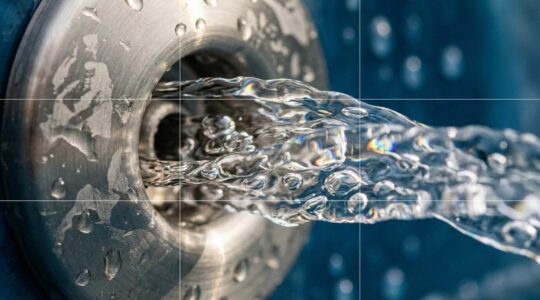
How Venturi Jets Multiply Massage Pressure Without Extra Energy?
The immense power boost you feel from spa jets isn’t from a bigger pump; it’s a brilliant physics trick that multiplies force for free. The Venturi effect uses the water’s…
Read more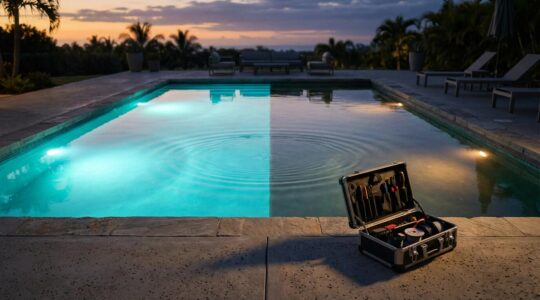
How to Upgrade Halogen Lights to LEDs Without Draining the Pool?
A successful LED pool light upgrade is an electrical system retrofit, not just a bulb swap. The most common failures—flickering, water leaks, and rust—stem from ignoring critical components beyond the…
Read more
Why a High COP of 16 is Meaningless Without Contextual Air Temperature
That impressive COP number on the brochure is a carefully constructed illusion; it doesn’t reflect what you’ll actually pay in electricity bills. Lab-tested COP is measured under ideal, unrealistic conditions…
Read more
How Do Thermodynamic Units Extract Heat from Air, Even at 5°C?
Contrary to the common belief that heat pumps are ineffective in the cold, their operation is not magic but a masterful application of physics. They function by using a refrigerant…
Read more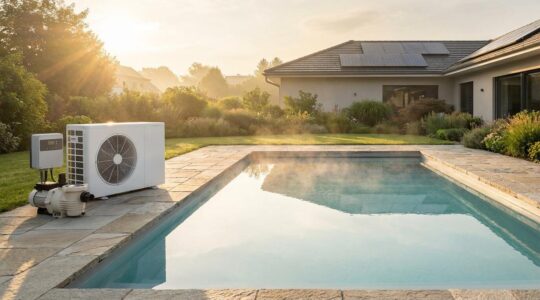
How Inverter Technology Reduces Your Pool’s Carbon Footprint by 40%?
True carbon reduction from an inverter pool pump is not a passive feature; it is the active result of strategic energy management that cuts consumption by over 80%. Operating a…
Read more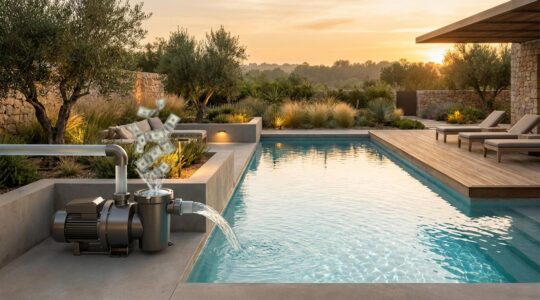
How Variable-Speed Pumps Pay for Themselves in Less Than 24 Months
A variable-speed pump is not an operational expense; it is a high-yield financial asset that can return its full initial cost in under two years through strategic energy management. The…
Read more
Remote Pool Freeze Protection: A Property Manager’s Guide to Vigilant, Worry-Free Ownership
In summary: Shift from passive winterizing to active, remote monitoring to truly protect your investment. Use smart sensors and data analysis to detect leaks and system failures before they become…
Read more
How to Manage Your Pool Chemistry from Your Office Desk?
Contrary to popular belief, effective smart pool management isn’t about remotely turning things on and off; it’s about building an autonomous ecosystem that anticipates issues before they become costly problems….
Read more
Which Isothermal Cover Best Protects Children While Retaining Heat?
The right pool cover is not just a lid; it’s the central command of your pool’s safety and energy management system. Safety and savings are interconnected: high-end automatic covers often…
Read more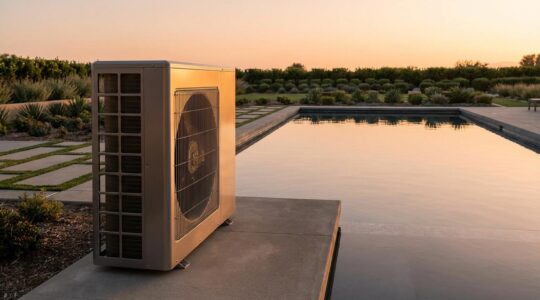
Why Inverter Heat Pumps Are Worth the Extra Upfront Cost for Large Pools
The high upfront cost of an inverter heat pump is not a liability, but a strategic investment that pays for itself in under two years for large pool owners. Full…
Read more