Bio-mineral filtration offers more than just comfort for eczema-prone swimmers; it provides a science-backed therapeutic solution that actively improves skin health.
- Superior filtration using activated glass media removes micro-irritants and allergens down to 5 microns, particles that standard filters miss.
- Magnesium-rich water helps reduce skin inflammation and supports the natural repair process of the skin’s protective barrier.
Recommendation: To transform your pool from a source of irritation into a daily wellness ritual, switching to a comprehensive bio-mineral system is the most effective long-term strategy.
The familiar sting of chlorine in your eyes, the tight, itchy feeling of your skin post-swim—for a daily swimmer living with eczema, the pool often represents a frustrating trade-off between a passion for fitness and the need for physical comfort. Many have been told that saltwater pools are the “gentler” alternative, a common solution that frequently just swaps one form of chemical irritation for another. The core problem for sensitive skin isn’t merely the presence of chlorine, but a complex cocktail of disinfection by-products (DBPs) and microscopic particulates that trigger inflammatory responses.
But what if the ultimate solution wasn’t just about *reducing* harsh chemicals, but about fundamentally re-engineering the water’s chemistry to create a therapeutic ecosystem? This is the core promise of bio-mineral filtration. It’s a sophisticated, multi-stage approach designed not just to sanitize water, but to actively enrich it for profound dermatological benefits. This system works by combining the soothing, anti-inflammatory properties of specific minerals like magnesium with an advanced filtration process that physically removes triggers that standard systems leave behind.
This comprehensive guide will deconstruct the science behind this revolutionary approach. We will explore exactly why magnesium outperforms salt, how to maintain the delicate biological balance of your filter, and what makes activated glass media a game-changer for water purity. By understanding these mechanisms, you can learn how to transform your daily swim from a potential trigger into a cornerstone of your skin wellness routine.
To fully grasp how these elements work in synergy, this article breaks down each critical component of the bio-mineral system. The following sections provide a detailed roadmap, explaining the science, the maintenance, and the tangible benefits for swimmers with sensitive skin conditions like eczema.
Summary: How Bio-Mineral Filtration Creates a Skin-Soothing Oasis
- Why magnesium-based minerals prevent the “red eye” effect better than salt?
- How to clean a bio-mineral glass filter without destroying the beneficial bacteria?
- Glass vs Sand Media: Which Captures Particulates Down to 5 Microns?
- The pH mistake that turns your expensive bio-media into a solid rock block
- When to replace bio-ceramic beads to maintain peak filtration performance?
- Why Magnesium Pools Are the New Standard for Wellness Retreats at Home?
- How to Replicate a Thermal Spa Balneotherapy Experience at Home?
- Why Switch to Eco-Friendly Water Treatment if Your Chlorine Pool Seems Fine?
Why magnesium-based minerals prevent the “red eye” effect better than salt?
That burning “red eye” sensation after a swim is a common complaint, often incorrectly blamed on chlorine alone. The real culprit is a group of chemical compounds called chloramines. These form when free chlorine reacts with organic waste from swimmers, such as sweat, oils, and skin cells. A salt-chlorinated pool is still a chlorine pool; it simply generates its own chlorine on-site. Therefore, it doesn’t solve the underlying problem of chloramine formation. This is where magnesium-based mineral systems offer a fundamentally different and more effective solution.
Magnesium chloride, the primary component in these systems, has natural flocculant properties. It causes tiny, suspended particles to clump together, making them large enough to be easily trapped by the filter. This process removes a significant portion of the organic waste *before* it can react with chlorine, drastically reducing the fuel for chloramine production. The result is water that requires significantly less chlorine to remain sanitized. In fact, research shows that a well-maintained mineral system can achieve an 80% reduction in chlorine levels compared to traditional pools, while maintaining superior purification.
This dramatic reduction in irritants is a key reason why these pools are so beneficial for sensitive individuals. As one dermatologist specializing in skin sensitivities notes, the gentler environment is a significant relief. This is especially true for those with pre-existing conditions where the skin barrier is already compromised.
Many of my patients experience skin dryness and irritation due to prolonged chlorine exposure. Mineral ionization provides a gentler alternative, especially for children and those with eczema or allergies.
– Dr. Lisa Reynolds, Dermatologist specializing in skin sensitivities
By targeting the root cause of irritation rather than just the sanitizer itself, magnesium-based mineral systems create a swimming environment that is measurably healthier for your eyes and skin.
How to clean a bio-mineral glass filter without destroying the beneficial bacteria?
A bio-mineral filtration system relies on a delicate synergy between its components, particularly the activated glass media in the filter. Unlike sand, this media has a slight negative charge that helps attract and trap fine particles. Furthermore, its surface can host beneficial bacteria that help break down organic waste. Using harsh, traditional cleaning methods like acid washes can strip this charge and kill the beneficial microbiome, turning your high-performance filter into little more than expensive gravel. The key is to use a gentle but effective purging protocol.
The goal is not to sterilize the filter but to remove the trapped physical debris and non-living organic waste (like lotions and oils) that can clog the media. This is best achieved with an enzyme-based cleaner designed specifically for pool filters. Enzymes work by breaking down organic matter without the corrosive effects of acid, preserving the integrity and surface charge of the glass media. A slow, extended backwash is also crucial for dislodging debris without causing abrasive damage to the media’s crystalline structure.
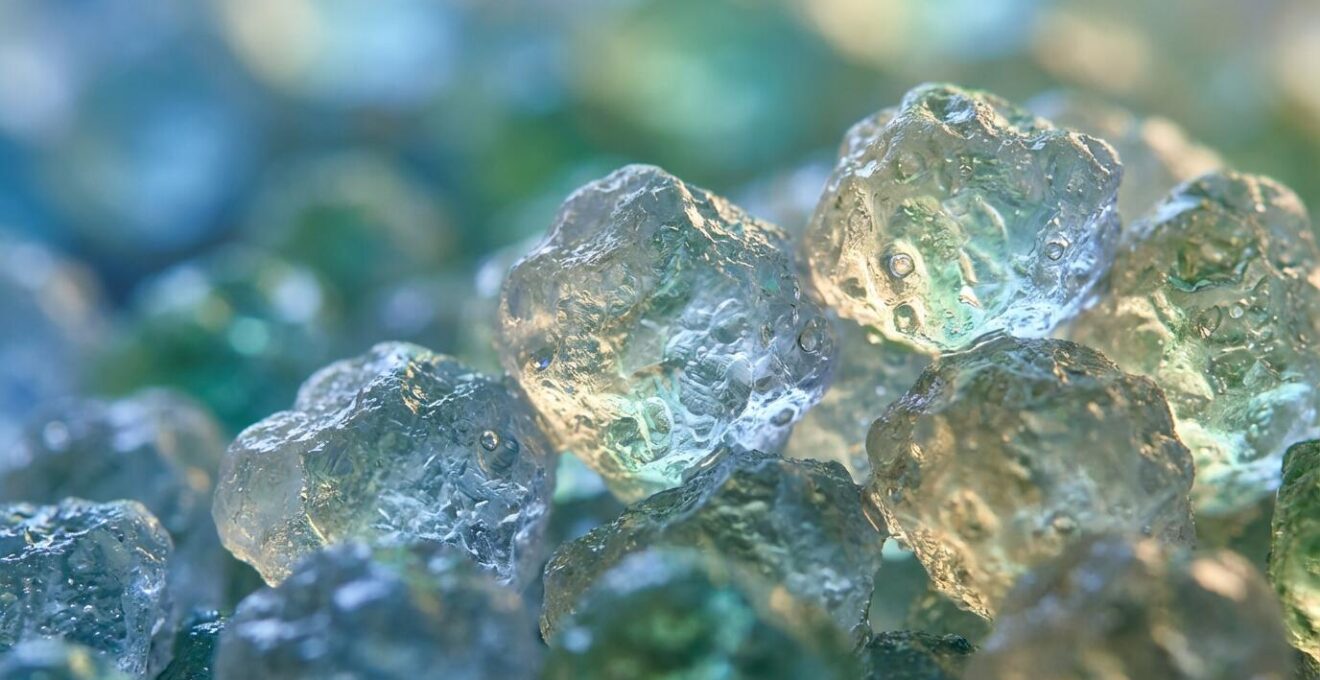
The microscopic, textured surface shown above is what gives activated glass media its immense filtration capacity. Protecting this structure during cleaning is paramount for long-term performance. Below is a step-by-step checklist for a gentle yet thorough cleaning process that preserves the filter’s biological and electrostatic properties.
Your Action Plan: Gentle Purge Protocol for Bio-Mineral Filters
- Initial Purge: Perform an extended, low-pressure backwash for 3-5 minutes. This removes loose, heavy debris without abrasive force.
- Enzyme Application: Apply a high-quality, enzyme-based filter cleaner as per the manufacturer’s instructions, ensuring you avoid all acid-based products.
- Overnight Soak: Allow the enzyme solution to soak in the filter overnight. This gives the enzymes time to digest stubborn oils, lotions, and other non-living organic waste.
- Final Rinse: Conduct a final, gentle backwash at approximately 50% of the normal flow rate to flush out the broken-down waste and residual cleaner.
- Resume Operation: Return the filter to its normal filtration cycle. The electro-statically charged surface remains intact and ready to continue capturing fine particles.
By adopting this approach, you ensure your filter continues to provide the crystal-clear, irritant-free water that is the hallmark of a true therapeutic ecosystem.
Glass vs Sand Media: Which Captures Particulates Down to 5 Microns?
The heart of any pool’s clarity and health is its filter media, and this is where one of the most significant advantages of a bio-mineral system becomes apparent. Traditional sand filters are a decades-old technology that typically can only capture particles down to about 25-30 microns. While this is adequate for visible debris, it allows a host of microscopic irritants—including allergens, dead skin cells, and certain bacteria—to pass right through and remain in the water. For an eczema-prone swimmer, these are precisely the triggers that can lead to a flare-up.
Activated glass media, made from 100% recycled glass, represents a monumental leap in filtration capability. Due to its unique angular shape and slight negative surface charge, glass media can filter particulates down to an incredible 5 microns. This is a 5 to 6-fold improvement in filtration power. This means it removes the very sub-visible triggers that irritate sensitive skin, leading to a level of water purity sand can never achieve. This superior performance is a key reason why the water in a glass-filtered pool often feels “silky” and looks visibly more polished.
The differences go far beyond just particle size. Glass media has a longer lifespan, requires less water for backwashing, and is inherently resistant to the formation of biofilm—a slimy layer of bacteria that can grow within sand filters. The table below, drawing from performance data, outlines the clear superiority of glass media.
| Criteria | Glass Media | Traditional Sand |
|---|---|---|
| Filtration Size | 5 microns | 25-30 microns |
| Lifespan | 10-15 years | 3-5 years |
| Water Clarity Improvement | 25% better | Baseline |
| Backwash Water Usage | 50% less | Standard |
| Surface Charge | Negatively charged (attracts particles) | Neutral |
| Bacterial Growth | Self-sterilizing surface | Prone to biofilm |
This level of filtration has tangible, life-changing benefits for those with skin conditions, as confirmed by a recent comparative analysis. The ability to physically remove irritants from the water is a cornerstone of creating a therapeutic swimming environment.
Case Study: Eva’s Eczema Relief with a Mineral & Ozone System
11-year-old Eva from Brisbane, who suffered from severe eczema, experienced a significant improvement in her symptoms after her family switched their pool to a magnesium and ozone system featuring advanced filtration. Her mother reported that Eva no longer needed to shower immediately after swimming, and her skin felt softer and more hydrated. The system, which combines the benefits of minerals with superior sanitization, allowed Eva to rejoin her swim squad, even during dry weather periods that previously exacerbated her condition.
Ultimately, choosing glass media is not just an upgrade; it is a fundamental shift toward creating a pool that prioritizes health and water quality on a microscopic level.
The pH mistake that turns your expensive bio-media into a solid rock block
While bio-mineral systems are remarkably robust, they are not immune to poor water chemistry. The single most destructive—and common—mistake a pool owner can make is allowing the pH to drift too high. When the pH level rises above 7.8, it triggers a chemical reaction called precipitation. Essentially, the beneficial minerals you’ve added to the water, primarily calcium and magnesium, begin to come out of solution and form a hard, crystalline deposit known as scale. This scale acts like a cement, binding the individual granules of your expensive glass filter media together.
Over time, this process can turn sections of your filter, or even the entire bed, into a solid, impenetrable block. When this happens, water can no longer pass through the media effectively. This leads to a cascade of problems: cloudy water that never clears, skyrocketing filter pressure, and a complete loss of the filter’s ability to capture fine particulates. You are left with a system that is not only failing to clean your water but is also actively working against you by creating channels where unfiltered water bypasses the media entirely.
The key to prevention is diligent monitoring and proactive pH management. You must maintain a stable pH between 7.2 and 7.6. Recognizing the early warning signs of scaling is also critical to averting a costly filter media replacement. If you notice any of the following symptoms, it is a clear indication that your pH has been running too high and that scale formation is likely underway.
- Chalky Residue: A fine, white, chalky residue begins appearing on pool surfaces, ladders, or equipment, even after cleaning.
- Persistent Cloudiness: The water remains cloudy or hazy despite running the filter for extended periods and performing regular backwashes.
- Increased Acid Demand: You find yourself needing to add significantly more acid (more than a 20% increase from your baseline) to keep the pH in the target range.
- Rising Filter Pressure: The pressure gauge on your filter climbs quickly after a backwash and remains stubbornly high.
- Visible Scale on Equipment: You can see crusty, white scale forming on inspection ports, in the pump basket, or on your heater’s elements.
By keeping your water chemistry balanced, you protect your investment and ensure that your bio-media can continue to deliver the exceptional water quality it was designed for.
When to replace bio-ceramic beads to maintain peak filtration performance?
Beyond the primary glass media, many advanced bio-mineral systems incorporate a secondary layer of bio-ceramic beads. These are not just passive filler; they possess a highly porous structure that provides an enormous surface area for beneficial bacteria to colonize. More importantly, they often have a catalytic surface that helps with the mineral ionization process, further enhancing sanitization and water quality. However, this catalytic surface is not infinitely durable. Over many years, the constant flow of water and chemical exposure can gradually wear down and foul this active surface.
When the beads become smooth or coated with mineral deposits, their effectiveness plummets. They lose their vast surface area for bacterial colonization and their catalytic properties diminish, forcing the system to work harder to maintain the same level of sanitation. While these beads are incredibly long-lasting, they do eventually need to be replaced to maintain the system’s peak performance. The key is knowing what signs to look for.

The visual difference between fresh and exhausted beads, as seen in the comparison above, is stark. New beads are rough and porous, while old ones become smooth and sealed. However, you don’t have to wait for a visual inspection. The most reliable indicator is a change in your system’s performance. According to a 10-year research study on bio-media performance, there is a clear metric for replacement. The study established that when your Oxidation-Reduction Potential (ORP) sensor indicates that you need 30% more mineral dosing to achieve the same sanitization level as the previous year, the beads’ catalytic surface has degraded enough to warrant replacement. For most residential pools with proper maintenance, this occurs within a 10 to 15-year lifespan.
Replacing the bio-ceramic beads at the right time is a crucial maintenance step that restores your system’s efficiency and ensures it continues to provide the healthiest, most therapeutic water possible.
Why Magnesium Pools Are the New Standard for Wellness Retreats at Home?
The shift towards magnesium pools represents more than just a trend in water treatment; it reflects a deeper understanding of the pool as an integral part of a home wellness sanctuary. The benefits extend far beyond simply being “gentler on the skin.” The water in a magnesium pool becomes a medium for delivering therapeutic benefits through a process known as transdermal absorption. Our skin, the body’s largest organ, is capable of absorbing minerals directly from the water, and magnesium is one of the most vital for our overall health.
Magnesium plays a crucial role in over 300 enzymatic reactions in the body. It is essential for muscle function, nerve transmission, and, critically, the regulation of the stress response. Soaking in magnesium-rich water can help replenish the body’s levels of this essential mineral. This has a direct, measurable effect on stress reduction. For instance, clinical research demonstrates that magnesium supplementation can lead to a significant reduction in cortisol, the body’s primary stress hormone. This transforms a simple swim into a powerful stress-management tool.
This is why high-end wellness centers are increasingly making magnesium pools their standard offering. They understand that the experience provides both dermatological and systemic benefits. The case of Vikasati Wellness Centers in Australia is a prime example. They utilize 37°C magnesium pools as a core part of their therapy programs, noting significant improvements in client skin conditions like eczema, coupled with measurable stress reduction. By combining the mineral-rich water with complementary therapies, they create a holistic wellness experience that clients can feel immediately.
Case Study: Vikasati Wellness Centers’ Magnesium Pool Integration
The Brisbane and Gold Coast wellness centers report significant improvements in client skin conditions after implementing warm magnesium pools. Regular users with eczema report enhanced comfort, reduced inflammation, and better skin appearance over time. The facility’s 90-minute sessions demonstrate how the combination of warm magnesium water and other therapies leads to measurable stress reduction and improved skin barrier function.
By installing a bio-mineral system, homeowners are no longer just building a pool; they are investing in a personal, daily retreat for physical recovery and mental rejuvenation.
How to Replicate a Thermal Spa Balneotherapy Experience at Home?
Balneotherapy, the treatment of health conditions by bathing in mineral-rich water, is an ancient practice now backed by modern science. With a bio-mineral pool, you have the perfect foundation to create these sophisticated spa experiences right in your own backyard. It’s about moving beyond casual swimming and creating intentional “rituals” that target specific wellness goals, from muscle recovery to skin soothing. Given that conditions like chronic eczema affect a significant portion of the population—for example, it is reported that 4% of Australians suffer from chronic eczema requiring specialized care—the need for accessible, at-home therapeutic options is clear.
The key to effective home balneotherapy is manipulating three variables: water temperature, duration, and complementary sensory inputs. By adjusting these elements, you can design a “protocol” for a desired outcome. A post-workout soak, for instance, is most effective in slightly warmer water to relax muscles, while a morning swim to energize the body is better in cooler water. Adding elements like targeted aromatherapy (using a diffuser near the pool, never in it) and adjusting lighting can dramatically enhance the therapeutic effect, fully engaging the mind-body connection.
Creating your own balneotherapy menu allows you to tailor the pool experience to your daily needs. This transforms your pool from a static feature into a dynamic wellness tool. Here are five sample protocols you can adapt to create your personal spa retreat:
- The Recovery Soak: Set water to a warm 38°C (100°F). Enjoy a 20-minute session post-workout to allow the transdermal magnesium to aid in muscle recovery and reduce soreness.
- The Skin Soother: Maintain a neutral water temperature of 36°C (97°F). Before entering, perform a gentle dry brushing of the skin to exfoliate. Soak for 30 minutes, and immediately after, apply a ceramide-rich moisturizer to lock in hydration.
- The Energizer: Use cool water around 30°C (86°F) for a 15-minute morning swim. Complement this with bright, full-spectrum LED lighting and a citrus-based aromatherapy diffuser placed nearby.
- The Sleep Inducer: An hour before bed, soak in warm 37°C (99°F) water. Use dim, amber-toned lighting around the pool area and a lavender diffuser placed a few meters from the water’s edge to promote relaxation.
- The Detox Session: For a circulation boost, alternate between warm (36°C) and cool (25°C) intervals, if you have a separate spa or plunge pool. Five minutes in each, for a total of 25 minutes, can help stimulate the lymphatic system.
This intentional approach allows you to unlock the full therapeutic potential of your mineral-rich water, making every dip a purposeful step toward better health.
Key Takeaways
- Bio-mineral systems actively improve skin health by delivering transdermal magnesium, which reduces inflammation, rather than just passively reducing chlorine.
- The combination of activated glass media and bio-ceramic beads provides superior micro-filtration, physically removing key eczema triggers like allergens and bacteria that sand filters miss.
- Proper maintenance, especially managing pH to prevent scaling and using gentle, enzyme-based cleaning protocols, is crucial to preserving the system’s long-term therapeutic effectiveness.
Why Switch to Eco-Friendly Water Treatment if Your Chlorine Pool Seems Fine?
For many pool owners, if the water is clear and blue, the system is working. However, this “out of sight, out of mind” approach ignores the hidden costs of traditional chlorine and saltwater systems—both to our health and the environment. What seems “fine” on the surface can be masking a chemical soup of toxic disinfection by-products (DBPs) and contributing to local ecological damage. The argument for switching to an eco-friendly bio-mineral system is about addressing these unseen risks.
The most significant health concern is the formation of DBPs. As leading research points out, the very process that keeps our water “clean” creates hundreds of potentially harmful compounds. This is not a fringe theory; it is a well-documented scientific reality.
Chlorination in drinking water over the past 20 years has led to the discovery of 600 toxic disinfectant by-products. The main ones: chloramines and trihalomethanes are now regulated in most countries and recognised as toxic, and, in the case of trihalomethanes, carcinogenic.
– Clear Water Revival Research Team, Natural Swimming Pool Filtration Technology Study
Bio-mineral systems tackle this issue at its source. By requiring far less chlorine and excelling at removing the organic precursors to DBP formation, they create a healthier swimming environment. Efficiency testing shows that magnesium-based mineral pools produce 40% fewer chloramines than even modern saltwater pools. From an environmental perspective, the difference is just as stark. The backwash from traditional chlorine and high-salt pools is toxic to plant life and can contaminate local waterways. In contrast, studies on bio-mineral systems demonstrate that the backwash, with its low salinity and beneficial mineral content, is safe enough to be used for garden irrigation without harming plants or soil.
To transform your swimming experience from a source of irritation to a pillar of your wellness routine, the next step is to explore how a bio-mineral system can be tailored to your specific needs.