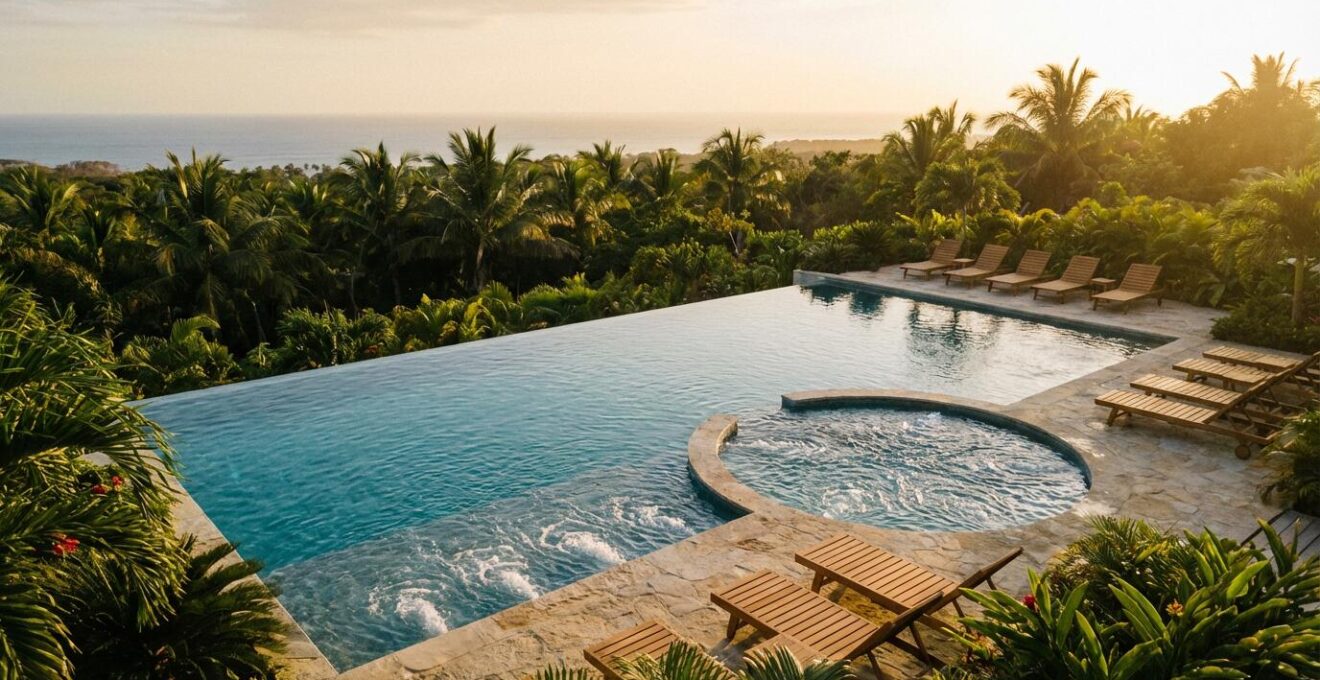
True luxury isn’t about having a pool; it’s about curating an unforgettable resort experience right in your backyard.
- Strategic hydrotherapy design focuses on “social hydrodynamics” to enhance conversation, not just provide a simple massage.
- The difference between a nice feature and a showstopper lies in “experiential choreography”—timed reveals and sensory details that captivate guests.
Recommendation: Focus investment on features that deliver a high-impact sensory and social return, transforming your pool from a utility into a destination.
For the discerning host, a swimming pool is more than just a body of water; it’s the centerpiece of your home’s entertainment and social life. You’ve likely considered adding standard jets or a heater, but the conversation around true luxury has evolved. It’s no longer about simply having features, but about how those features combine to create an unparalleled guest experience. Anyone can install a spa, but few can replicate the feeling of a world-class wellness retreat.
The secret lies in moving beyond basic amenities and embracing what we call sensory orchestration. This is the art and science of designing an environment that engages the senses on every level—the gentle hum of perfectly engineered bubbles, the visual delight of choreographed water arcs, and the seamless control that puts your guests in a state of pure relaxation. It’s the difference between a pool and a destination.
This guide isn’t about listing gadgets. It’s about revealing the strategic thinking that transforms a high-end pool into a legitimate 5-star hydrotherapy experience. We will explore how to design for social interaction, create breathtaking visual moments, and make the technological investments that deliver both prestige and tangible value, culminating in a pool house that functions as a true second home. Prepare to become the host that everyone remembers.
To guide you through this transformation, we have structured this article to cover every critical aspect of luxury hydrotherapy design. Explore the topics below to master the art of creating a resort-level experience at home.
Summary: Elevating Your Pool to a Hydrotherapy Masterpiece
- How to arrange hydro-jets to encourage conversation while relaxing?
- Why dedicated spa-side controls are essential for the guest experience?
- Air Blowers vs Water Jets: Which Offers a Better “Champagne” Effect?
- The blower location mistake that ruins the relaxing ambiance
- When to activate water features for maximum visual impact at parties?
- Which Luxury Pool Features Add Real Value to a $2 Million Property?
- How to Heat the Spa to 38°C While Keeping the Pool at 26°C?
- How to Design a Pool House That Functions as a Second Home?
How to arrange hydro-jets to encourage conversation while relaxing?
The ultimate sign of a poorly designed spa is when the jets are so aggressive or poorly aimed that they make conversation impossible. True luxury is about fostering connection, not blasting your guests into silence. This is where the concept of social hydrodynamics comes into play. The goal is to create distinct zones: areas for quiet, therapeutic massage and separate, larger areas designed specifically for social interaction.
The key is strategic placement. Instead of a rigid grid, jets in social areas should be arranged in circular or semi-circular configurations. This allows guests to face each other naturally without receiving a direct blast of water. Jets should be angled at approximately 45 degrees away from the center of the conversation pit. For these zones, low-volume air injectors, which create soft “champagne” bubbles, are far superior to high-pressure water jets, as they provide a gentle, effervescent sensation without the disruptive noise and force.
Case Study: The SoJo Spa Club Design Philosophy
The renowned SoJo Spa Club’s outdoor hydrotherapy pool is a masterclass in this philosophy. It features numerous coves and seating arrangements with aqua-jets positioned to massage the body from neck to calves. Critically, the layout ensures that guests can stretch and relax while comfortably engaging in conversation, demonstrating how thoughtful jet placement can create a harmonious balance between therapeutic treatment and social comfort.
High-pressure, deep-tissue therapy jets should be reserved for individual “loungers” or solo seats, physically separated from the main social seating. This ensures that a guest seeking an intense massage doesn’t inadvertently disrupt the relaxed ambiance of a group conversation nearby. This thoughtful zoning is a signature of high-end design.
Why dedicated spa-side controls are essential for the guest experience?
Imagine your guests, comfortably settled in the warm, bubbling spa, wanting to turn on the waterfall feature. Do they have to get out, walk across a wet deck, and fiddle with a complex control panel by the pool equipment? In a luxury setting, the answer must be a resounding “no.” The experience must be seamless and intuitive, and that begins with placing control directly at their fingertips.
Dedicated, waterproof spa-side control panels are no longer a luxury; they are an expectation. These panels offer instant, one-touch access to the most-used features: jet intensity, lighting, temperature, and water features. The ability for a guest to personalize their environment without leaving the comfort of the spa is the very definition of 5-star service. While mobile apps offer comprehensive control, they can be slow to connect and are impractical to handle with wet hands. A physical, backlit panel provides instant gratification and ease of use.
As All Aqua Pools, experts in automation, aptly state in their Pool Automation Systems Guide:
Gone are the days of fumbling with complex controls. With EasyTouch®, you get intuitive push-button operation, simplifying the process of controlling all your pool and spa equipment.
– All Aqua Pools, Pool Automation Systems Guide
This convenience is also a hallmark of smart, modern luxury. Advanced systems not only provide a superior guest experience but also incorporate efficiencies, as modern pool automation systems demonstrate that variable speed pumps can deliver up to 90% in energy savings compared to their single-speed counterparts. The following table breaks down the user experience for each control type.
| Control Type | Response Time | User Experience | Maintenance Access |
|---|---|---|---|
| Waterproof Spa-Side Panel | Instant | One-touch presets, backlit display | Basic adjustments only |
| Mobile App Control | 3-5 seconds | Full system access, remote monitoring | Complete diagnostics |
| Manual Valves | 30-60 seconds | Physical effort required | Direct mechanical access |
Air Blowers vs Water Jets: Which Offers a Better “Champagne” Effect?
When creating a truly luxurious ambiance, not all bubbles are created equal. Your guests will immediately notice the difference between the forceful, targeted stream of a hydrotherapy water jet and the gentle, effervescent lift of what is known as the “champagne effect.” While water jets are essential for deep-tissue massage, they are not the right tool for creating a sophisticated, relaxing atmosphere. For that, air blowers are the undisputed champion.
An air blower system works by injecting millions of tiny air bubbles directly into the spa water from the floor or lower part of the seats. These bubbles create a soft, full-body effervescence that shimmers and sparkles as it rises, closely mimicking the experience of sitting in a glass of fine champagne. This effect is visually stunning, especially with underwater LED lighting, and provides a gentle, caressing sensation that is profoundly relaxing without being overpowering. It’s all about ambiance engineering—crafting a feeling, not just a function.

The most sophisticated designs often use a hybrid approach. A custom spa build might feature both systems, allowing users to choose their experience. With the jet pump off, the air blower provides a silent, air-only bubble experience perfect for quiet conversation. With both systems running, the air is mixed with the water flow from the jets, intensifying the therapeutic massage. This flexibility ensures you can cater to every guest’s preference, from tranquil relaxation to invigorating hydro-massage.
Expert Insight: The Hybrid Approach
Discussions among elite pool builders reveal a consensus: for the ultimate in flexibility, install both. An 8’x8′ spa, for example, can be equipped with a quiet-operation air blower for the champagne effect and a separate pump for high-powered water jets for therapy. This dual system offers maximum control over the spa’s ambiance and function, separating the gentle “champagne” feel from the powerful massage action.
The blower location mistake that ruins the relaxing ambiance
You have invested in a top-of-the-line air blower to create that sublime champagne effect. The ambiance is set, your guests are relaxing… and then a loud, industrial hum shatters the tranquility. This is the result of the single most common—and entirely avoidable—mistake in spa design: improper placement of the blower motor. The most luxurious feature in the world is worthless if its operation creates a stressful environment.
The blower motor is essentially a powerful fan, and it generates noise. Placing it directly next to the spa, even in a concealed housing, is a recipe for disaster. The sound will travel through the ground and the plumbing, creating a constant, low-frequency drone that completely undermines the relaxing experience. Proper ambiance engineering dictates that the equipment must be completely isolated from the social space. The goal is to feel the bubbles, not hear the machinery.
To achieve a whisper-quiet operation, follow these non-negotiable professional guidelines:
- Isolate the Equipment: Install the blower in a dedicated plant room or an insulated equipment shed, ideally a minimum of 50 feet away from the spa area.
- Specify for Silence: When selecting equipment, insist on models with a dBA rating below 60 decibels for residential use.
- Manage Air Temperature: Position the air intake in a warm, dry location. Drawing in cold air can create an unpleasant “cold shock” in the spa, which should ideally be maintained between 33°C and 36°C for hydrotherapy. If this isn’t possible, an in-line air heater is essential.
- Prevent Water Backflow: A properly installed “Hartford loop” (a section of plumbing that goes above the water line before dropping back down to the blower) is critical to prevent water from flowing back and destroying the motor.
These technical details are what separate an amateur installation from a professional, resort-quality result. The silence you achieve is as much a part of the luxury experience as the bubbles themselves.
When to activate water features for maximum visual impact at parties?
Luxury is often about the reveal—the moment of surprise and delight that captivates your guests. Your pool’s water features, like deck jets and laminar arcs, are not just background elements; they are performers waiting for their cue. Activating them randomly diminishes their power. The key to maximizing their impact is experiential choreography: timing their activation to create a dramatic, unforgettable moment.
The most powerful moment for this reveal is almost always at sunset or twilight. As natural light fades, the internal LED illumination of modern water features takes center stage, creating a mesmerizing show of light and water. Imagine your guests enjoying cocktails on the patio as dusk settles. On your command (via a remote or mobile app), a series of perfectly silent, glass-like laminar jets suddenly spring to life, arching over the pool in a vibrant, color-changing display. This isn’t just turning on a feature; it’s creating a theatrical moment.
As the experts at California Pools & Landscape put it when describing their advanced water features:
By day, they create a playful atmosphere; by night, they transform into a mesmerizing visual experience.
– California Pools & Landscape, Pool Technology & Smart Automation Integration
Case Study: Choreographed Laminar Jet Reveals
High-end automation systems like OmniLogic allow for the creation of pre-programmed “themes.” California Pools showcases how they use this technology to design choreographed water shows. With a single button press, high-tech laminar jets can activate in a pre-set sequence, change colors in unison, or appear to “jump” to different heights. A popular party trick is the “sunset reveal,” where the features remain off all day, only to be activated in a dazzling, synchronized performance the moment the sky turns a deep blue.
Instead of having everything running at once, consider a sequence. Start with the gentle bubbling of the spa, then activate the main pool waterfall as the main course is served, and save the grand finale—the choreographed, illuminated deck jets—for the evening’s peak. This turns your pool area from a static scene into a dynamic, evolving experience.
Which Luxury Pool Features Add Real Value to a $2 Million Property?
On a property valued in the millions, “value” is measured in two ways: the tangible increase in appraisal value and the intangible—but equally important—boost to its marketability and “wow” factor. Not all features are created equal in this regard. For a home of this caliber, you must focus on investments that deliver a clear Value Signature—features that are immediately recognized by appraisers and coveted by discerning buyers as a mark of true luxury.
An infinity edge spa is perhaps the most powerful statement piece. The visual of a seamless sheet of water spilling over the horizon evokes the world’s finest resorts. It’s a feature that photographs beautifully for real estate listings and is consistently recognized by appraisers as a high-value addition. Similarly, dramatic fire and water features—like fire bowls flanking a waterfall—create an elemental, high-impact aesthetic that elevates the entire property, especially for evening entertainment.
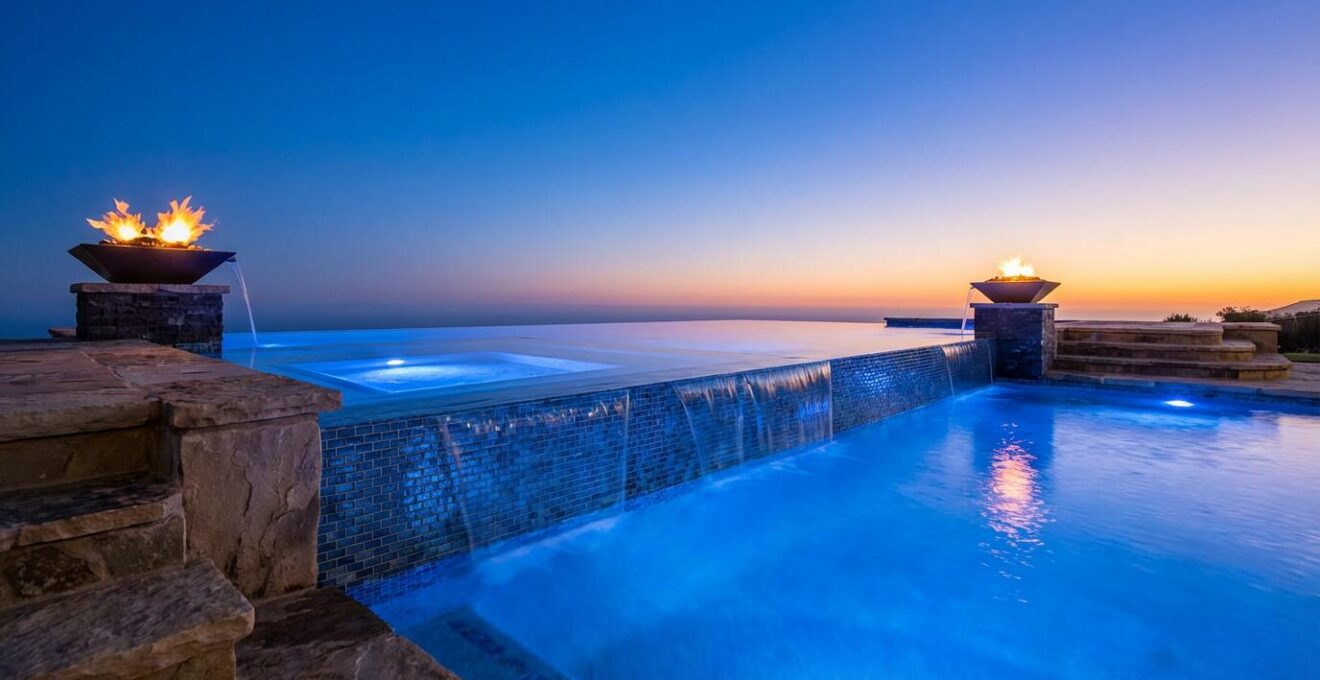
While smart automation adds more in marketability than raw appraisal dollars, its contribution to the “effortless luxury” narrative is immense. However, the feature with arguably the highest return on investment is a fully integrated pool house. This isn’t a simple shed; it’s a second living space that extends the property’s utility across all four seasons, significantly boosting both its usability and its overall value proposition. The following table provides a clear analysis of where your investment will have the most impact.
| Feature Category | Investment Range | Value Impact | Key Benefits |
|---|---|---|---|
| Infinity Edge Spa | $25,000-$45,000 | High appraisal value | Resort aesthetic, consistent appraiser recognition |
| Smart Automation | $3,000-$15,000 | Marketability value | Remote control, energy savings |
| Fire & Water Features | $5,000-$20,000 | Visual impact value | Unique listing photos, entertainment appeal |
| Integrated Pool House | $60,000-$240,000 | Highest ROI | Second living space, year-round utility |
How to Heat the Spa to 38°C While Keeping the Pool at 26°C?
The ability to offer two distinct aquatic experiences simultaneously is a hallmark of a truly custom, high-end installation. Your guests should be able to enjoy a therapeutic, muscle-soothing soak in a 38°C spa while others comfortably swim laps in a refreshing 26°C pool. Achieving this dual-temperature zoning is not possible with a single-pump system; it requires dedicated, independent systems for each body of water.
The secret lies in designing the pool and spa with separate plumbing from the outset. Each must have its own pump, filter, and, most importantly, its own heater. A common and highly effective setup involves a high-BTU gas heater dedicated solely to the spa. A 400,000 BTU gas heater can raise the spa’s temperature rapidly, allowing you to heat it on demand in under an hour, providing ultimate flexibility and energy efficiency. You don’t need to keep it hot 24/7.
For the main pool, where temperature fluctuations are less dramatic, a more energy-efficient electric heat pump is the ideal solution. It works to maintain the consistent, refreshing 26°C temperature at a much lower operational cost than a gas heater. This combination provides the best of both worlds: rapid, on-demand heat for the spa and cost-effective maintenance for the pool. For deep muscle relaxation and therapeutic benefits, expert sources note that spa temperature can be increased to up to 99°F (37°C), making precise control essential.
Your Action Plan for Perfect Dual-Temperature Control
- Design Separate Systems: Insist on completely independent plumbing, pumps, and heaters for the pool and spa during the design phase.
- Specify a High-BTU Spa Heater: Select a dedicated 400,000 BTU gas heater for the spa to ensure rapid, on-demand heating.
- Use a Heat Pump for the Pool: Install an energy-efficient electric heat pump to maintain the main pool’s temperature consistently and affordably.
- Automate the Spa Cover: An automated, insulated spa cover is non-negotiable. It can reduce heat loss by up to 75%, preserving the spa’s temperature and reducing reheating time.
- Program a Pre-Heat Schedule: Use your pool automation system to schedule the spa heater to turn on an hour before your typical evening use, ensuring it’s always perfectly ready.
Key Takeaways
- True luxury is experiential: Focus on how features feel and the social moments they create, not just their technical specifications.
- Control is paramount: The ability for a guest to effortlessly customize their environment (lighting, jets, temperature) is a defining feature of a 5-star experience.
- Choreograph your moments: Use automation to time the reveal of water and light features for maximum dramatic impact, especially at twilight.
How to Design a Pool House That Functions as a Second Home?
The ultimate expression of a resort-style property is a pool house that transcends a simple changing room and becomes a fully functional second home. This is the feature that provides year-round value, turning your pool area into a self-sufficient destination for entertaining, relaxation, or even hosting overnight guests. The investment can be significant, as studies show that custom-built pool houses with full amenities typically cost from $60,000 to over $240,000, but the return in lifestyle and property value is unparalleled.
The key to a successful design is creating a seamless flow between indoors and outdoors while establishing distinct functional zones. As the design experts at Advanced House Plans explain, a truly functional pool house requires a clear, three-zone structure:
A true second home requires: a Transition Zone (bathroom, shower, changing area), a Social Zone (full kitchenette/bar, indoor lounge with fireplace, media wall), and a Retreat Zone (private guest bedroom or quiet wellness room).
– Advanced House Plans, Pool House Plan Collection 2026
This framework ensures the building serves every possible need. The Transition Zone keeps wet traffic out of the main house. The Social Zone becomes the hub of every party, with a full kitchen and bar eliminating the need to run back and forth. An indoor lounge with a fireplace extends the usability of the space into cooler evenings and shoulder seasons. Finally, the Retreat Zone provides a quiet space for guests to relax or a private suite for overnight stays, adding immense value and flexibility.
Award-Winning Design: The Charlotte Pool Cabana
A prime example is the award-winning Charlotte Pool Cabana, which masterfully blurs the lines between inside and out. It features NanaWall systems—retractable glass walls—that open completely to merge the indoor lounge with the outdoor patio. The design incorporates the three essential zones: a changing and bathroom area, a central social hub with a full kitchen and fireplace, and a private retreat space. With its own electrical sub-panel and water-resistant composite decking, it operates as a completely independent, highly functional second home.
Now that you understand the strategic elements, from social jet design to the architecture of a second home, you possess the blueprint for creating an unparalleled entertainment space. The next logical step is to begin outlining a plan that integrates these features into a cohesive vision for your own property.