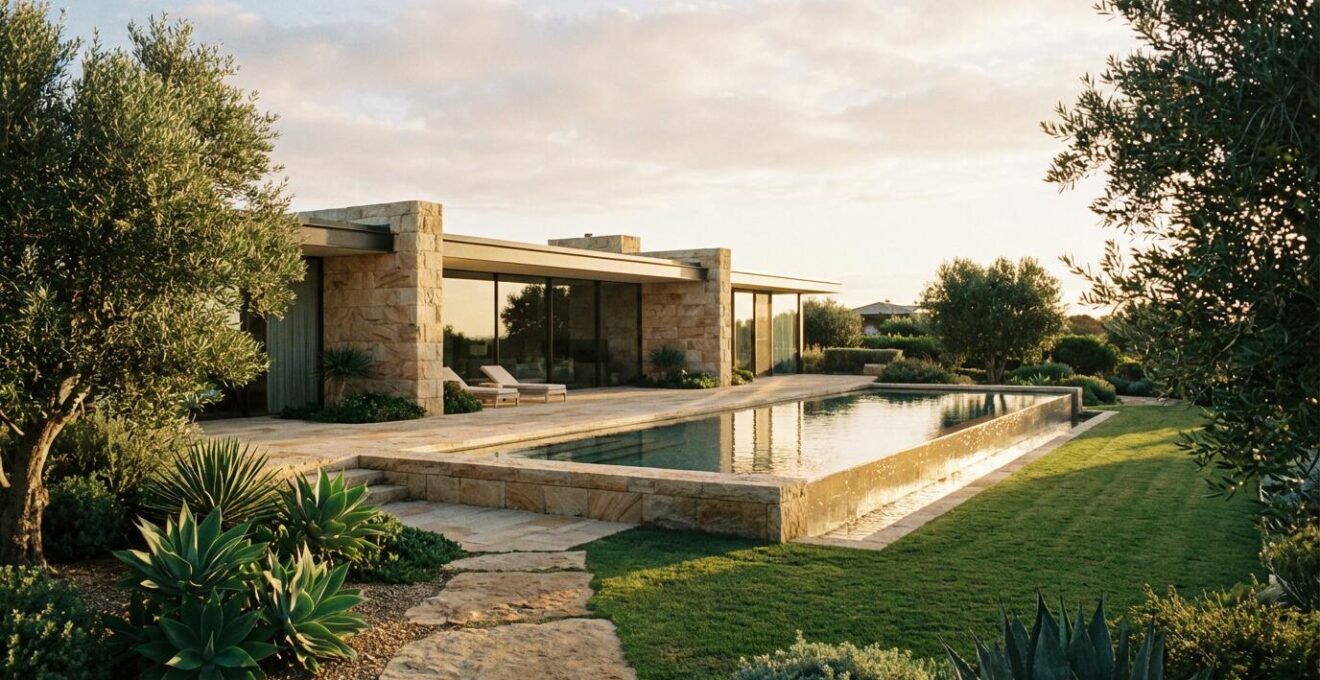
The secret to a truly integrated pool is not imitation, but a sophisticated visual dialogue with the main residence.
- Architectural harmony is achieved by treating the pool as an extension of the home’s core design principles, not just a backyard feature.
- Timeless value comes from strategic choices in scale, materials, and lighting, which create a unified aesthetic experience.
Recommendation: Prioritize the sightlines from your primary living spaces and the principle of ‘negative space as luxury’ before considering any other feature.
For discerning homeowners, the addition of a pool presents a significant architectural challenge. The fear is a disjointed aesthetic, where a newly installed aquatic feature feels like an afterthought rather than an integral part of the property’s soul. The common advice often revolves around superficial solutions: “match the paving stone,” “plant some shrubs to hide the pump.” These platitudes barely scratch the surface and often lead to results that lack sophistication and fail to enhance the property’s intrinsic value. The goal is not merely to add water, but to compose a seamless indoor-outdoor experience.
But what if the true path to harmony lies not in simple mimicry, but in orchestrating a deliberate and dynamic conversation between the structures? This is the core of architectural integration. It requires shifting perspective from seeing a house *and* a pool to envisioning a single, cohesive residential estate. This is achieved by mastering a series of foundational design principles—sightlines, material counterpoint, proportional scale, and choreographed lighting—that together forge a powerful visual and experiential bond. This approach moves beyond trends to establish a timeless connection that elevates the entire property.
This guide will deconstruct the key strategic considerations that senior landscape architects employ to achieve this seamless integration. We will explore how to transform a potential design conflict into a harmonious composition, ensuring your pool becomes a testament to sophisticated design rather than a costly appendage.
Summary: A Guide to Integrating a Pool with Your Home’s Architecture
- Why Ignoring Sightlines From the Living Room Ruins 70% of Pool Designs?
- Travertine or Wood: Which Material Best Complements a Modern Minimalist Facade?
- How to Manage the 5 Critical Phases of Construction Without Damaging Existing Landscaping?
- The Oversizing Mistake That Makes Large Properties Feel Cluttered and Small
- When to Plan Lighting Schematics to Transform the Pool Into a Night-time Sculpture?
- How to Create a Biophilic Transition That Hides Equipment Without Blocking Access?
- Why Shotcrete Is the Only Viable Option for Complex Free-Form Pool Designs?
- Which Luxury Pool Features Add Real Value to a $2 Million Property?
Why Ignoring Sightlines From the Living Room Ruins 70% of Pool Designs?
The most fundamental error in pool placement is treating it as an isolated outdoor object. A pool’s success is determined not from the deck, but from the primary living spaces within the home. It must perform as a captivating visual anchor year-round. This is why a well-conceived integration is so critical; recent market analysis reveals that well-designed pools can boost home value by up to 7%, a figure largely dependent on this visual synergy. The view from the living room, kitchen, or master suite should frame the pool like a living work of art. This requires positioning the water’s edge to align with key architectural lines of the house—the edge of a window, the line of a roof, or the axis of a central hallway.
This principle of “framing the view” is paramount. It involves a deliberate choreography of perspective, where the pool and its surrounding landscape are composed to create a perfect vista. The goal is to establish a seamless flow between indoor and outdoor spaces, making the pool feel like a natural extension of the interior.
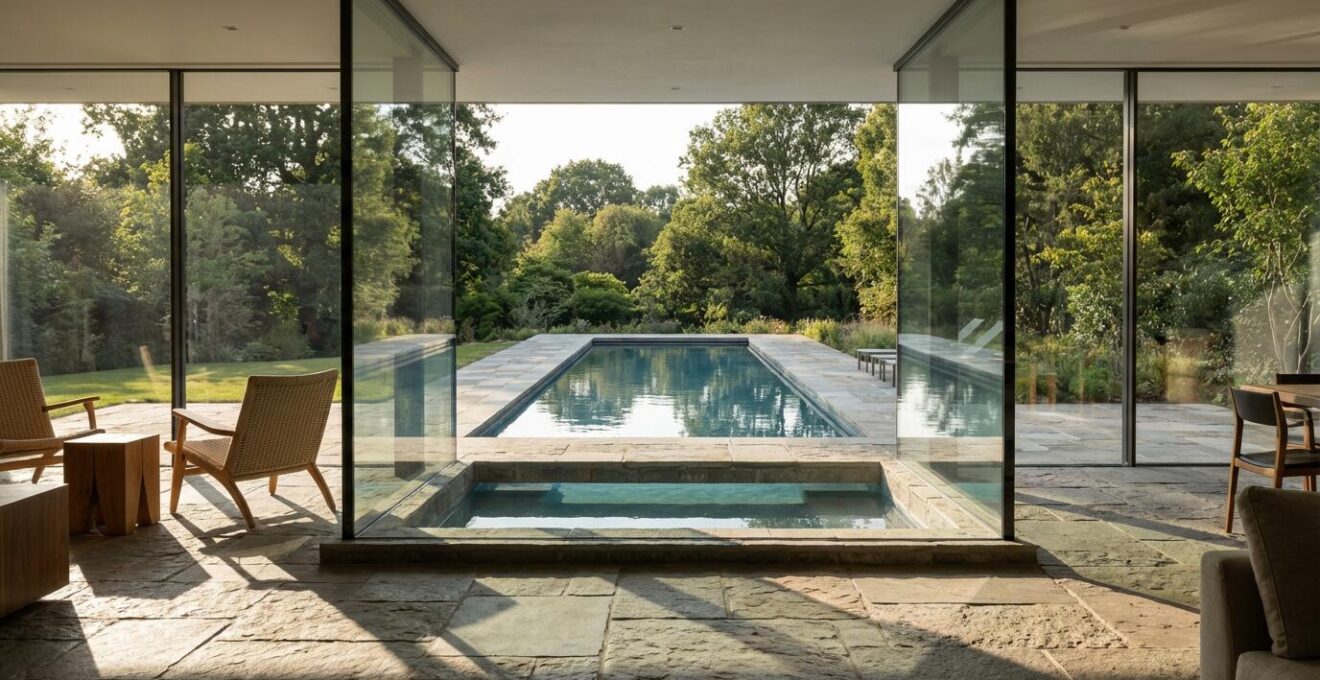
As this composition demonstrates, when the pool is perfectly framed, it becomes an integral part of the home’s daily experience. This is achieved by focusing on several key design checkpoints:
- Frame key perspectives: Position the pool to be the focal point from the most-used rooms.
- Respect architectural lines: Ensure the pool’s shape and proportions harmonize with the home’s style.
- Create visual transitions: Incorporate coherent axes that guide the eye naturally from inside to out.
- Manage level differences: Optimize the layout to avoid abrupt visual cuts in the landscape.
- Consider four-season appeal: Design for year-round aesthetic value, even when the pool is covered.
Ultimately, a pool that is disconnected from the home’s primary viewpoints will always feel separate and less valuable, no matter how beautiful it is in isolation.
Travertine or Wood: Which Material Best Complements a Modern Minimalist Facade?
The choice of material for the pool surround is not about simple matching; it’s about creating a sophisticated “material dialogue” with the home’s facade. For a modern minimalist residence, characterized by clean lines and a restrained palette, the goal is to choose materials that either echo this serenity or provide a deliberate, elegant counterpoint. The two primary candidates, travertine and high-end woods like IPE or Teak, offer distinctly different contributions to this dialogue. Travertine provides a cool, planar, and monolithic extension of minimalist geometry, while wood introduces organic warmth, texture, and a connection to nature.
To make an informed decision, one must analyze how each material performs visually, sensorially, and over time. This comparative analysis, as detailed by a recent architectural harmony study, moves beyond simple aesthetics to consider the lived experience of the space.
| Aspect | Travertine | Wood (IPE/Teak) |
|---|---|---|
| Thermal Comfort | Stays cool underfoot | Warm to touch |
| Aging Process | Develops elegant patina | Grays naturally over time |
| Maintenance | Annual sealing required | Regular oiling needed |
| Visual Weight | Cool, planar, minimal | Warm, textured, organic |
| Cost Range | $15-30 per sq ft | $20-35 per sq ft |
The most advanced strategies often involve using both materials in a complementary fashion, assigning them to zones based on function and desired sensory experience. This avoids a monotonous landscape and creates a richer, more intentional design.
Case Study: The Material Dialogue Approach
A recent project successfully demonstrated this ‘dialogue’ approach by using cool travertine for high-traffic pool exits near the home’s glass doors, creating thermal comfort and visual lightness. Meanwhile, warm IPE wood was strategically placed around the lounging area, providing tactile warmth and defining the relaxation zone. This deliberate contrast created harmony through intentional material placement based on function and sensory experience.
In the end, the right choice is not about which material is “better,” but which one best serves the architectural narrative you wish to create in concert with your home.
How to Manage the 5 Critical Phases of Construction Without Damaging Existing Landscaping?
For a property with mature, established landscaping, the prospect of pool construction can be daunting. The conventional image of heavy machinery and widespread disruption is the primary source of anxiety. However, a meticulously planned, low-impact construction protocol can not only preserve but enhance the existing landscape. The key is to view construction not as a destructive force, but as a surgical design process. This philosophy of enhanced site optimization through proper construction planning is what separates standard installations from architecturally integrated projects. The process must be managed through five critical phases, each with its own set of protective measures.
This begins long before the first shovel hits the ground. It requires a deep understanding of the site’s existing conditions, from underground root systems to the delicate balance of patios and garden beds. By planning access routes and excavation methods with the same care as the pool design itself, you can transform potential damage into design opportunities. For example, excavated earth, rather than being hauled away, can be sculpted into intentional berms or terraces that create a more graceful transition between the house and the new pool elevation.
Your Low-Impact Construction Action Plan
- Phase 1 – Pre-construction mapping: Use ground-penetrating radar to identify and map the major root systems of valuable trees before any excavation begins.
- Phase 2 – Access planning: Specify the use of spider excavators or light-footprint machinery that can step over or navigate around established patios and garden beds without causing damage.
- Phase 3 – Excavation management: Plan to repurpose a significant portion of excavated earth to create intentional elevation changes, such as landscape berms or gentle tiers, improving the house-pool transition.
- Phase 4 – Design checkpoints: Schedule mandatory architectural reviews at each key construction stage (excavation, shell, decking) to ensure the on-site execution aligns perfectly with the harmony goals.
- Phase 5 – Landscape restoration: Implement a construction-integrated landscaping plan that leverages the temporary disturbance to introduce enhanced drainage, irrigation, and new plantings that strengthen the design.
By treating the construction process with this level of precision and foresight, the integration of the pool becomes an act of careful choreography, not chaotic disruption.
The Oversizing Mistake That Makes Large Properties Feel Cluttered and Small
On a large property, the intuitive approach is often to design a commensurately large pool. This is a fundamental and costly mistake. True luxury in landscape architecture is not defined by sheer size, but by proportion and the thoughtful use of “negative space.” An oversized pool devours the very breathing room that gives an estate its sense of grandeur. It creates visual tension and makes the entire zone feel cramped and cluttered, regardless of the actual acreage. The pool should not dominate the landscape; it should harmonize with it.
The most successful designs consistently adhere to classical principles of proportion, such as the Rule of Thirds. This principle, when applied to pool design, suggests that the water’s surface should occupy no more than one-third of the total dedicated pool zone (which includes the deck, immediate landscaping, and lounging areas). The remaining two-thirds—the “negative space”—are what create the feeling of calm, scale, and luxury. This unbuilt area is not empty space; it is a deliberate design element that allows the architecture of both the home and the pool to be fully appreciated.
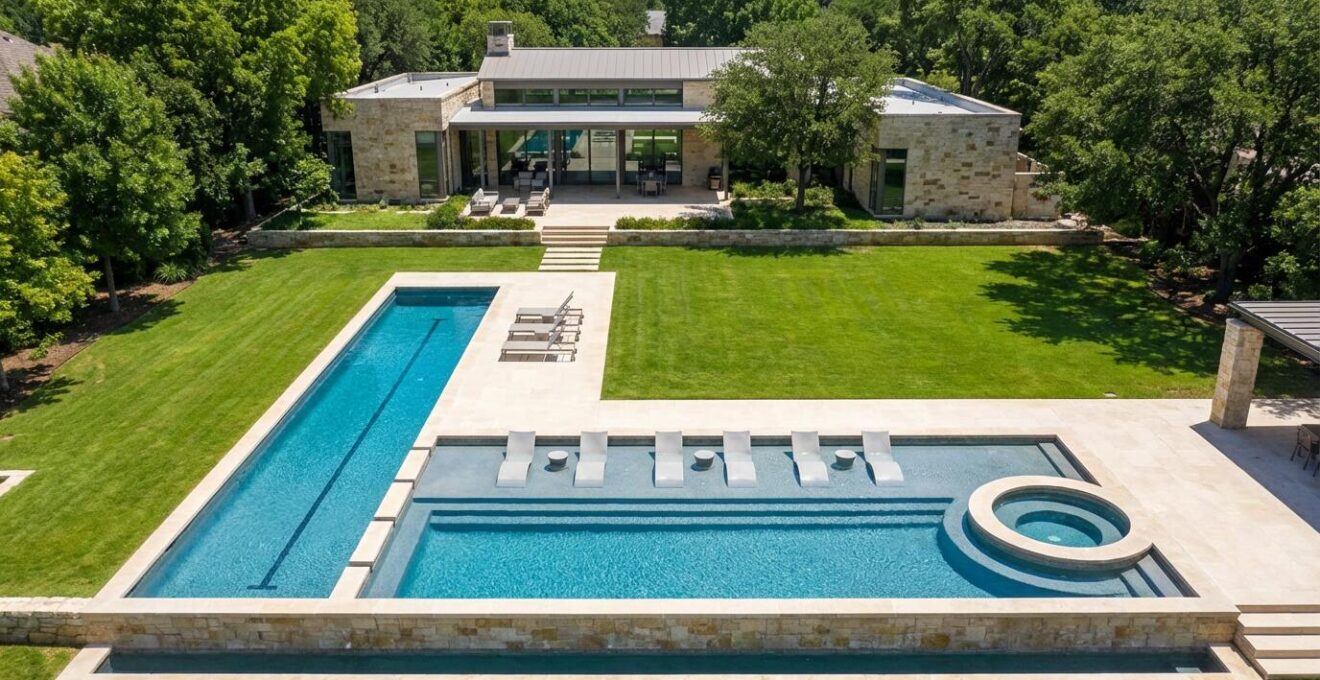
This aerial view illustrates the power of proportional balance. The generous decking and manicured lawns are not leftover space; they are essential components of the composition. Furthermore, breaking up a large pool’s visual mass into distinct functional zones (e.g., a lap lane, a shallow sun shelf, an integrated spa) helps it feel integrated rather than monolithic. This strategy maintains a functional scale without sacrificing visual elegance.
Case Study: Negative Space as Luxury
An analysis of several award-winning luxury property pools reveals a consistent application of the 1/3 rule for water surface area. Properties that violated this ratio by building oversized pools consistently felt cramped and their landscapes less resolved, despite having ample space. In contrast, those that preserved two-thirds of the zone as deck and green space achieved a sense of serene grandeur, where the pool was a jewel set within the landscape, not a concrete expanse that consumed it.
Ultimately, restraint is the hallmark of sophisticated design. Allowing for generous negative space is the most effective way to ensure your pool enhances, rather than diminishes, the magnificent scale of your property.
When to Plan Lighting Schematics to Transform the Pool Into a Night-time Sculpture?
Pool lighting should never be an afterthought. To achieve a truly transformative effect, the lighting schematic must be conceived in parallel with the initial architectural and landscape designs. The optimal time to plan is during the structural engineering phase, well before any construction begins. This allows for the seamless integration of conduits, niches, and fixtures directly into the pool shell and surrounding hardscaping. Waiting until after construction relegates you to surface-mounted fixtures and compromises that can never achieve the clean, sculptural quality of a fully integrated system. The goal is not merely to illuminate the water but to engage in “choreographed lighting”—a layered approach that sculpts the entire nighttime environment.
A sophisticated lighting plan operates on three distinct layers. The Ambient layer provides the base glow, often from soft, warm-temperature LEDs within the pool. The Task layer ensures safety and function, discreetly lighting steps, edges, and pathways. Finally, the Accent layer creates drama, highlighting specific features like a waterfall, a specimen tree, or the pool’s unique geometry. The interplay between these layers transforms the pool area from a dark void into a captivating nocturnal landscape.
The choice of color temperature is also critical for architectural harmony. An optimal color temperature for pool lighting falls within the 2700K to 4000K range, with warmer tones (around 2700K) creating a cozy, inviting glow near the house and cooler tones (3000K-4000K) used at the far end of the pool to create an illusion of depth.
Case Study: Layered Lighting and the “Borrowed Light” Technique
A recent high-end project successfully implemented a three-layer lighting choreography. The ambient layer used a soft in-pool LED glow at a 2700K warm temperature near the house. Task lighting for steps and edges used discrete, low-profile fixtures. Accent lighting highlighted a waterfall feature and surrounding specimen trees. Critically, the design employed the “borrowed light” technique: pool lighting was strategically aimed to softly wash the home’s rear facade, visually stitching the structures together at night. This created a cohesive scene where the pool and house were in a constant, luminous dialogue.
By planning early and thinking in layers, the lighting schematic becomes one of the most powerful tools for forging an unbreakable bond between your home and pool after the sun sets.
How to Create a Biophilic Transition That Hides Equipment Without Blocking Access?
The hum and visual clutter of pool equipment—pumps, filters, heaters—are the antithesis of architectural harmony. The default solution, a flimsy screen or a hastily planted bush, is a functional failure and an aesthetic compromise. The sophisticated approach is to design a biophilic transition: a structure that not only conceals the machinery but also enhances the landscape, echoes the home’s architecture, and thoughtfully manages acoustics. This is not about hiding, but about intelligent, beautiful integration.
The most effective solutions are dual-purpose. An equipment enclosure can be designed so its top surface serves as a cantilevered bench, or its structure can support a vertical garden. Materials should be chosen to create a dialogue with the main residence; if the home features IPE wood or specific stucco, these elements should be incorporated into the enclosure to create a sense of architectural lineage. Furthermore, acoustic management is paramount. This involves using sound-dampening insulation within the structure and planting dense, evergreen foliage nearby to absorb and deflect noise, preserving the tranquility of the space.
Case Study: The Living Wall Equipment Enclosure
An innovative project transformed a necessary evil into a stunning biophilic feature by designing the equipment housing as the structural support for a living wall. The enclosure was built with sound-dampening insulation panels within its walls, while the exterior vertical garden provided an additional layer of acoustic absorption. The structure was strategically placed so that dense evergreen hedges stood between it and the primary outdoor living areas, further reducing the acoustic footprint to a near-imperceptible hum. This solution not only concealed the equipment but created a vibrant, green focal point that enhanced the garden’s overall design.
These strategies ensure the functional aspects of the pool do not detract from its beauty:
- Design dual-purpose structures: Create housing that doubles as bench seating or a garden feature.
- Implement acoustic solutions: Use sound-dampening materials and dense evergreen plantings.
- Echo home architecture: Match enclosure materials like IPE wood or stucco to the main residence.
- Ensure accessibility: Design for clear service access on one side while completely concealing the structure from primary views.
This thoughtful approach to a mundane problem is a hallmark of high-end design, where every detail contributes to the harmonious whole.
Why Shotcrete Is the Only Viable Option for Complex Free-Form Pool Designs?
When the architectural vision calls for a pool that is truly an extension of the landscape—with organic curves, integrated planters, and underwater benches—prefabricated fiberglass or vinyl liner pools are non-starters. Their rigid, factory-made shapes impose limitations. For complex, free-form designs, shotcrete is the only construction method that offers the necessary structural and creative freedom. Shotcrete is a process where concrete is pneumatically projected at high velocity, allowing a pool shell of any shape to be custom-formed on-site. This method enables complete geometric freedom in design, which is essential for true architectural integration.
The primary advantage of shotcrete is its ability to create a monolithic structure. Unlike panel-built pools, a shotcrete shell is a single, continuous, steel-reinforced body of concrete. This monolithic nature allows for the seamless integration of features that would otherwise be separate, bolted-on elements. Sun shelves, swim-up bars, steps, and spa walls can all be formed as integral parts of the pool shell itself. This not only creates a far superior aesthetic but also eliminates joints and seams that are prone to leaks and failure over time.
This structural integrity is particularly crucial on complex sites, such as hillsides or properties with challenging soil conditions. The strength and adaptability of a monolithic shotcrete shell allow it to be engineered to work with the site, preventing future conflicts from settling or soil movement that could damage both the pool and the home’s foundation.
Case Study: Monolithic Integration on a Challenging Site
A recent hillside project demonstrated shotcrete’s unique capabilities by creating a seamless, free-form pool structure that perfectly mirrored the home’s curved roofline while adapting to difficult geotechnical conditions. Features like underwater benches, a wide sun shelf, and integrated planters for specimen trees were formed directly into the shell. This created an innate architectural coherence that would have been impossible with any prefabricated shape. The monolithic structure effectively became part of the landscape’s retaining system, ensuring long-term stability and a visual flow that made the pool appear as if it were carved from the hillside itself.
It is the foundational technology that empowers architects to move beyond mere installation and engage in true, site-specific sculptural design.
Key Takeaways
- True pool harmony is a ‘visual dialogue’ with the home, not just matching materials.
- Proportion is key: use the ‘Rule of Thirds’ and value negative space to avoid a cluttered look.
- Plan lighting schematics early to transform the pool into a ‘night-time sculpture’, using layered, choreographed light.
Which Luxury Pool Features Add Real Value to a $2 Million Property?
In the context of a high-value property, a luxury pool feature is not defined by its trendiness or technological gimmickry, but by its ability to deliver a unique experience and contribute to the timeless architectural narrative. As one luxury design expert noted in a recent trends analysis, “A feature’s true worth lies in the unique experience it creates.” This principle is the essential filter for distinguishing between fleeting gadgets and investments that add genuine, lasting value.
A feature’s true worth lies in the unique experience it creates.
– Luxury Pool Design Expert, JDesigns Pool Trends Analysis 2026
Features that enhance the visual dialogue with the home, extend the usability of the space across seasons, and blur the boundaries between water and land are those that consistently prove their worth. A “knife-edge” or “perimeter overflow” design, for example, creates a stunning, mirror-like surface that reflects the sky and the home’s architecture, becoming a powerful design element in itself. An integrated spa provides a reason to engage with the space in cooler months, while a shallow sun shelf creates a transitional zone for lounging that elegantly merges wet and dry areas.
Conversely, features that are purely technological or trend-driven often have a short lifespan and can detract from a timeless aesthetic. The key is to assess each potential addition not on its “wow” factor alone, but on its contribution to the overall harmony and experiential quality of the space.
| Feature | Investment | Value Type | Longevity |
|---|---|---|---|
| Knife-edge perimeter | $25,000-40,000 | Experiential – seamless view borrowing | Timeless |
| Integrated spa | $15,000-25,000 | Four-season usability | Timeless |
| Sun shelf extension | $8,000-15,000 | Blurs wet/dry boundary | Timeless |
| Acrylic viewing panels | $30,000-50,000 | Gallery-like drama | Timeless |
| Smart tech gadgets | $5,000-10,000 | Convenience | Transient trend |
To truly elevate your property, select features that deepen the architectural conversation, offering enduring elegance and a richer, more versatile outdoor living experience.