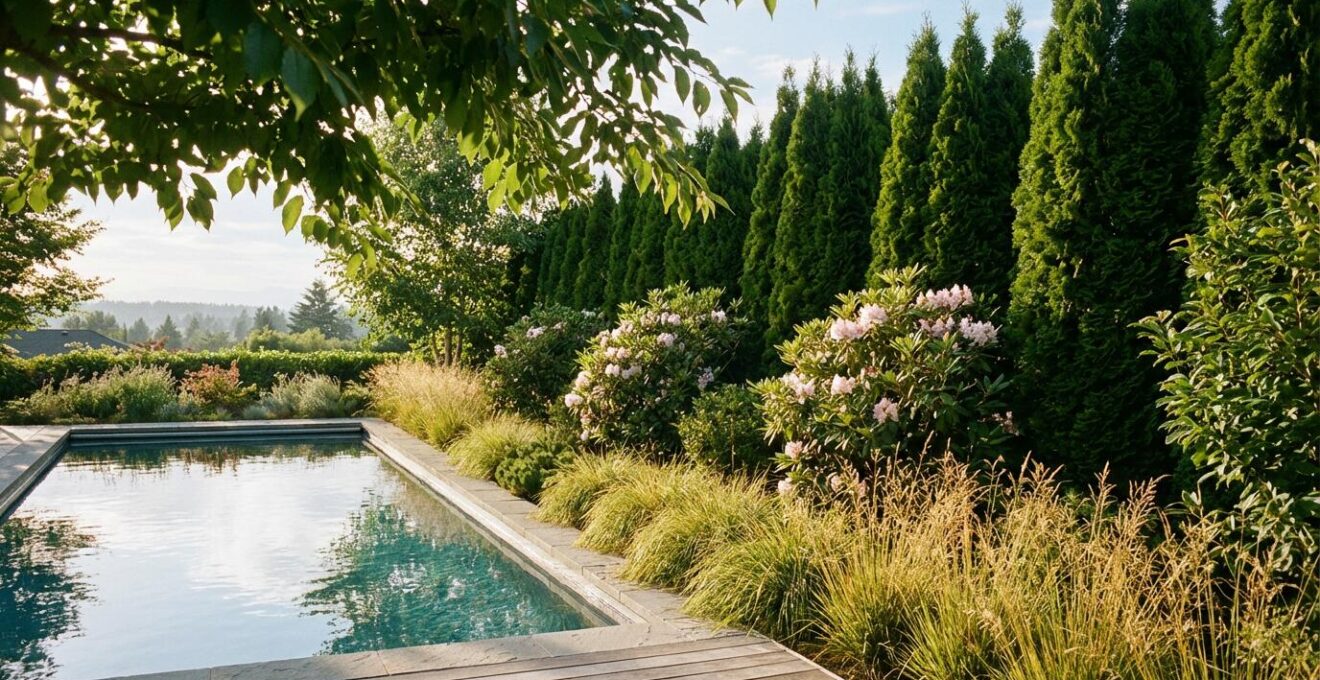
Contrary to popular belief, achieving true pool privacy isn’t about planting the fastest-growing hedge; it’s about deploying a strategic living barrier system that surgically blocks specific sightlines.
- Effective privacy requires analyzing sightline geometry, especially from second-story windows, before planting anything.
- “Fast-growing” plants often become a maintenance liability, while options like bamboo pose a significant risk to pool infrastructure if not properly contained.
Recommendation: Prioritize evergreen plants for year-round coverage and use mobile, potted screens for immediate, flexible solutions while permanent barriers mature.
The feeling is immediate and unmistakable: a flicker of movement in a window, the sense of being observed. Your private backyard oasis suddenly feels like a stage. For homeowners in dense subdivisions, the dream of a secluded pool can be shattered by a single, poorly placed neighbor’s window. The common advice is to plant a fast-growing hedge and wait. This approach, however, often trades one problem for another, leading to unmanageable growth, invasive roots, and seasonal gaps in coverage that leave you just as exposed as before.
The conventional wisdom focuses on adding elements—a fence, a row of plants, a pergola. But it rarely addresses the core strategic challenge: creating an impenetrable visual fortress that is both effective year-round and sustainable for the long term. This isn’t just a gardening project; it’s an exercise in defensive landscape architecture. The goal is not merely to plant something, but to deploy a living barrier system with tactical precision.
This guide reframes the problem. We will move beyond simply listing plant species and instead focus on the strategic thinking required to win back your privacy. We’ll analyze sightline geometry, explore the critical differences in plant density, and expose the hidden dangers of “quick-fix” solutions. You will learn why the most aggressive plants are often the worst choice and how to build a layered defense that provides both immediate relief and permanent peace of mind.
text
This article provides a tactical roadmap to securing your pool’s privacy. We will dissect plant choices, mobile screening tactics, the risks of rapid growth, and the crucial techniques for containment and sightline analysis to build a complete defensive strategy.
Summary: A Tactical Guide to Securing Poolside Privacy
- Bamboo vs Photinia: Which Plant Offers the Best Density for Thin Spaces?
- How to create a mobile privacy screen using large potted plants?
- Why “fast-growing” hedges often become unmanageable nightmares?
- The barrier mistake that allows bamboo to destroy your pool pipes
- When to check line-of-sight angles from the neighbor’s second-floor window?
- Why Evergreen Hedges Are the Only Sane Choice for Poolside Screening?
- How to Create a Biophilic Transition That Hides Equipment Without Blocking Access?
- How to Maintain the Rich Color of Exotic Wood Decking Without Constant Oiling?
Bamboo vs Photinia: Which Plant Offers the Best Density for Thin Spaces?
In the quest for a dense visual barrier in tight spaces, bamboo is often the first consideration due to its vertical growth and rapid screening ability. However, its effectiveness comes with a significant, often underestimated, risk. The choice is not just about aesthetics but about a crucial trade-off between density and containment. Photinia, a broadleaf evergreen, offers a dense, leafy screen, but bamboo’s unique structure of closely packed culms can create a more solid wall of green in a narrower footprint.
The primary threat from bamboo lies underground. Clumping bamboo is generally manageable, but running bamboo varieties are territorially aggressive. Their rhizomes are relentless, and some species can spread at a rate of 3 to 20 feet per year, actively seeking moisture and weak points. Your pool’s plumbing system is a prime target. As one case study notes, buried pipes and pumps are highly prone to blockages and leaks from invasive rhizomes. The very thing that makes your pool enjoyable—its water system—becomes a magnet for a plant that can destroy it from below.
Photinia, by contrast, grows from a traditional, non-invasive root ball. While it may require more width to achieve the same opacity as a mature bamboo stand, it carries none of the subterranean risk. The decision, therefore, hinges on your risk tolerance and commitment to a containment strategy. If you cannot guarantee a failsafe underground barrier, the density offered by bamboo is a liability, not an asset. Photinia represents a safer, albeit potentially wider, alternative for achieving a dense screen.
How to create a mobile privacy screen using large potted plants?
Permanent solutions take time to mature. For immediate privacy, a mobile screening system using large potted plants offers a brilliant tactical advantage. This approach allows you to deploy a visual block exactly where it’s needed, adapt to changing sightlines, and create privacy without the commitment of in-ground planting. The key is to build a system that is both effective and stable, transforming simple planters into a movable green wall.
The foundation of a mobile screen is a combination of weight and mobility. Start with large, heavy containers with a low center of gravity to resist tipping in the wind. Adding ballast stones at the bottom before soil and plants enhances stability. The mobility comes from heavy-duty casters rated for outdoor use. Crucially, select casters with a robust locking mechanism to secure the planters in place once positioned. This combination ensures your screen is both easy to move when you need to and steadfast when you don’t.
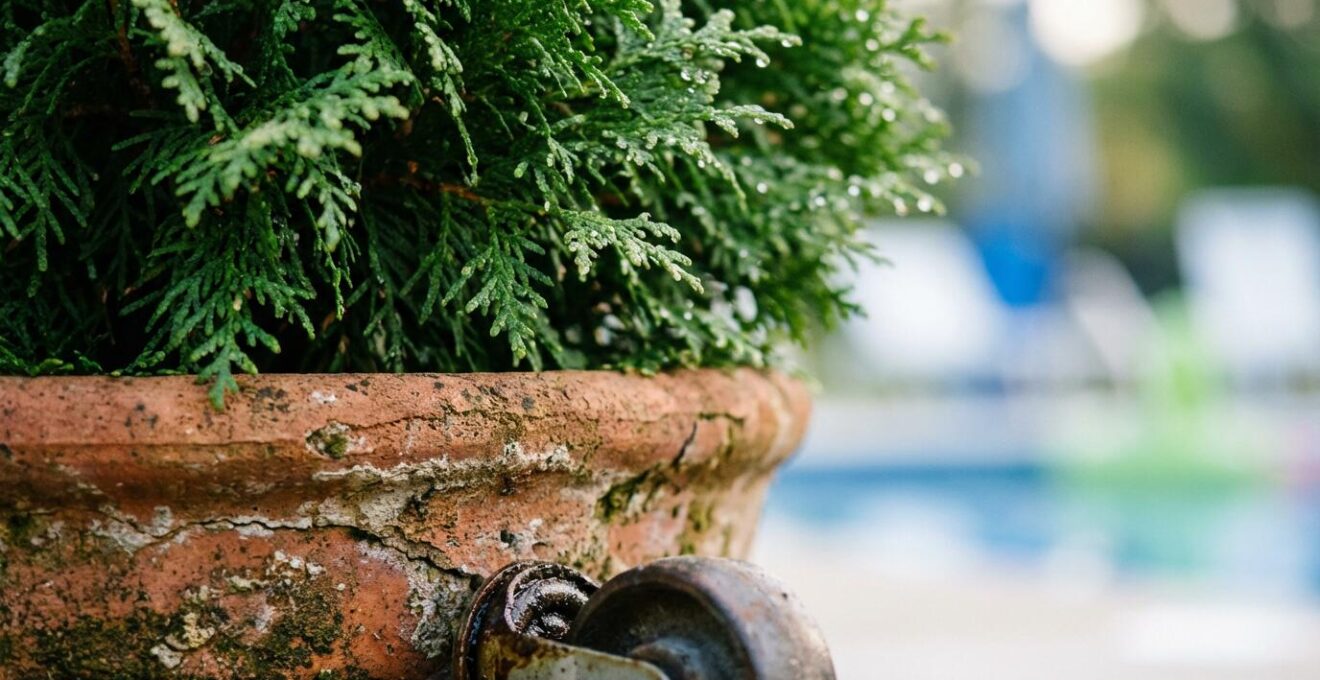
As the illustration demonstrates, the effect can be both elegant and highly functional. To make this system sustainable, especially in hot climates, integrating a drip irrigation system with lines running to each pot is a strategic move. This automates watering, ensuring the plants remain lush and healthy with minimal effort. The best plant choices for this application are dense evergreens like Arborvitae or Boxwood, which provide solid, year-round coverage. These mobile screens can be clustered together to block a wide view or placed individually to surgically obscure a specific line of sight.
Why “fast-growing” hedges often become unmanageable nightmares?
The promise of a “fast-growing” hedge is seductive for anyone seeking immediate privacy. This marketing term, however, often conceals a significant long-term consequence: a massive and relentless maintenance liability. Plants engineered for rapid growth do not simply stop when they reach a desirable height. They continue to expand with voracious energy, quickly outgrowing their intended space and becoming a source of constant labor, and in some cases, significant expense.
Consider the Norway Spruce, often touted for its growth rate. While it can provide a quick screen, its genetic destiny is to become a forest giant. A typical specimen will grow to 100 feet tall and 40 feet wide, a scale completely inappropriate for most residential subdivisions. What begins as a privacy solution becomes a neighborhood-dwarfing monster that requires expensive professional arborists to manage or remove. Similarly, running bamboo, the poster child for fast growth, can lead to astronomical remediation costs. The work often requires heavy machinery, with one source putting a price tag of $3,000 to $5,000 for professional removal.
The strategic flaw is choosing speed over suitability. A “slow-growing” plant, while requiring patience, is a far more strategic investment. Plants like Emerald Green Arborvitae or Yew grow to a predictable, manageable size. They require minimal trimming and will not threaten to overwhelm your property or your neighbor’s. The initial wait for them to mature is a small price to pay to avoid the long-term financial and physical burden of a fast-growing nightmare that demands to be tamed several times a year.
The barrier mistake that allows bamboo to destroy your pool pipes
For those who still choose to deploy bamboo for its unmatched density, success or failure rests entirely on one element: the rhizome barrier. This is not a component to be taken lightly; it is a non-negotiable containment system. The most common and catastrophic mistake is underestimating the power of bamboo rhizomes and installing an inadequate barrier. This single error can lead to the complete failure of the privacy screen and extensive damage to underground infrastructure like pool plumbing.
The two critical properties of a barrier are depth and thickness. Bamboo rhizomes are opportunistic and will exploit any weakness. If a barrier is too shallow, they will simply dive underneath it and surface on the other side. Experts recommend a barrier installed to a minimum depth of 30 inches to effectively block this escape route. The barrier must also protrude at least two inches above the soil line to allow for visual inspection and trimming of any rhizomes attempting to “jump” over the top.
The thickness of the High-Density Polyethylene (HDPE) material is equally crucial. A thin, flimsy sheet will eventually be punctured by the sharp, powerful tip of a searching rhizome. The required thickness is directly related to the aggressiveness of the bamboo species you are planting.
| Barrier Thickness | Application | Effectiveness |
|---|---|---|
| 30 mil | Lightly aggressive bamboo | Adequate for most residential |
| 40-60 mil | Standard aggressive bamboo | Recommended by architects |
| 60-80 mil | Extremely aggressive species | Maximum protection |
Action Plan: Proper Rhizome Barrier Installation
- Dig a trench around the entire perimeter of the planned bamboo planting area to the required depth (minimum 30 inches).
- Place the HDPE barrier vertically in the trench, ensuring the top edge extends 2 inches above the soil level.
- When joining sections of the barrier, overlap the material by at least 4 feet and use double-sided seam tape within the overlap to create an impenetrable seal.
- Backfill the trench, compacting the soil firmly against the barrier to eliminate any air pockets that could provide an easy path for rhizomes.
- Perform annual inspections of the top edge of the barrier, trimming any rhizomes that attempt to grow over it.
When to check line-of-sight angles from the neighbor’s second-floor window?
The most critical tactical error in creating poolside privacy is planting without first conducting a thorough analysis of sightline geometry. Homeowners often place a hedge along a property line, only to discover it fails to block the most intrusive vantage point: a neighbor’s second-story window. The time to check these angles is before a single shovel of dirt is turned. This proactive assessment dictates the height, density, and, most importantly, the precise placement of your living barrier.
This analysis should be done from the perspective of the observer. If possible and appropriate, ask your neighbor for permission to look from their window. If not, you must estimate. Stand at your property line and have someone hold a telescoping pole or a long piece of lumber at various points around your pool deck. Walk back and forth, imagining a line from the top of the pole to the estimated height of the neighbor’s window. This will reveal the true height and location required for your screen. You may find that a shorter screen placed closer to your pool is far more effective than a taller one on the distant property line.
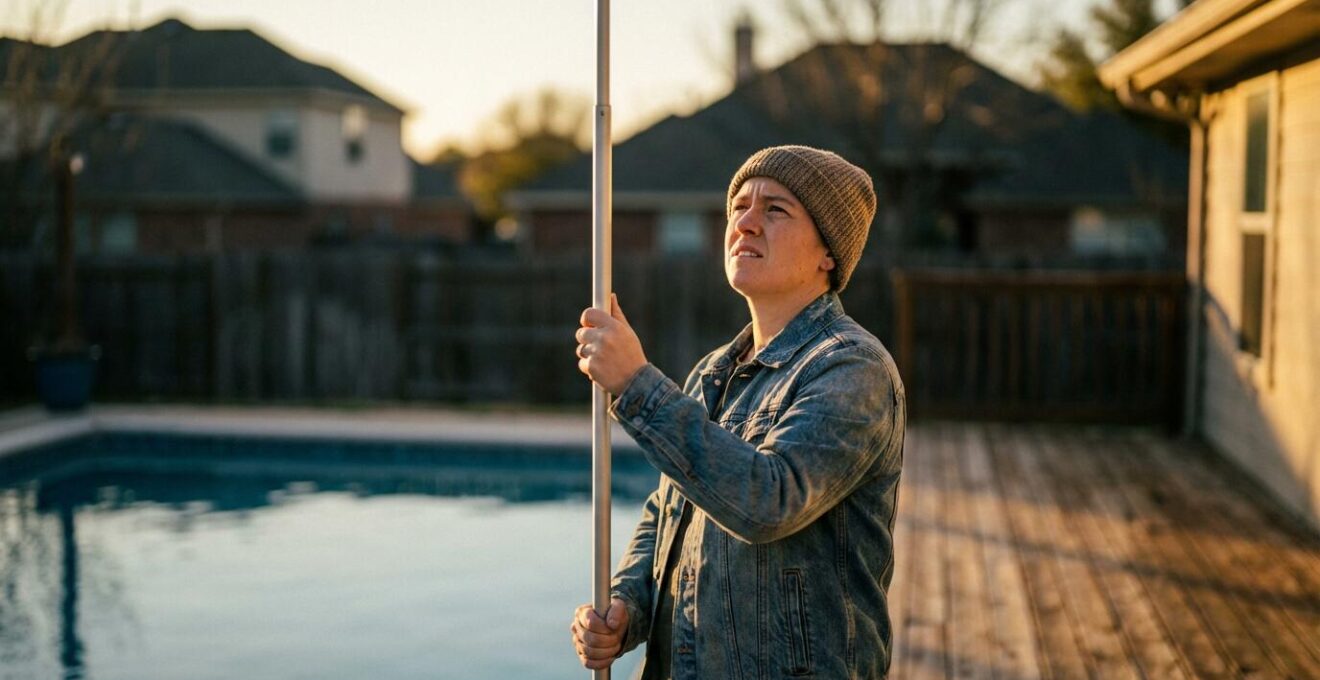
Your assessment must also account for variables. Check sightlines at different times of day as changing sun angles can create new visibility issues. Consider peak pool usage times—when are you most likely to want privacy? Finally, if you are considering deciduous plants, remember that their beautiful summer foliage disappears in winter, potentially leaving you completely exposed during the off-season. An effective privacy plan is a year-round strategy, not a seasonal one. This methodical check of all possible angles is the foundation of a successful visual defense.
Key Takeaways
- True privacy is achieved through strategic placement based on sightline analysis, not just planting along a fence line.
- “Fast-growing” plants are a long-term maintenance trap; prioritize plants with a predictable, manageable mature size.
- Mobile screens with potted evergreens offer an immediate, flexible solution for targeted privacy needs.
Why Evergreen Hedges Are the Only Sane Choice for Poolside Screening?
After analyzing the risks of aggressive growers and the complexities of sightline geometry, a clear conclusion emerges: for reliable, year-round poolside screening, evergreen hedges are the only truly sane strategic choice. The fundamental requirement of a privacy screen is that it provides privacy. Deciduous plants, no matter how dense or fast-growing they are in the summer, fundamentally fail this test for half the year.
As one pool company guide astutely points out, the popular Privet hedge is a perfect example of this strategic flaw. Venture Pool Company notes in their guide:
Privet is a fast-growing hedge that provides a lush and dense screen around your pool area. However, since they are deciduous, they will lose their foliage in the fall.
– Venture Pool Company, Landscape Privacy Ideas Guide
This single fact—the loss of foliage—negates its primary purpose during the cooler months when pool areas are often still in use or at least visible. An evergreen, by contrast, is a four-season fortress. Its needles or leaves remain year-round, ensuring your visual barrier is never compromised. This reliability is the cornerstone of a low-stress privacy solution.
Furthermore, many of the best evergreen options offer a manageable growth habit that avoids the “fast-growing nightmare” scenario. The Emerald Green Arborvitae is a prime case study. It is slow-growing, maintains a slim pyramidal shape perfect for tight spaces, and is extremely low-maintenance. By planting them approximately three feet apart, homeowners can create a dense, living wall that rarely, if ever, needs trimming. This combination of year-round coverage and predictable, manageable growth makes evergreens the superior tactical choice for any serious poolside privacy strategy.
How to Create a Biophilic Transition That Hides Equipment Without Blocking Access?
An effective privacy strategy extends beyond blocking neighbors’ views; it also involves concealing the less aesthetic elements of the pool itself, namely the pump, filter, and heater. However, the solution cannot be a simple wall. Pool equipment requires adequate ventilation and, most importantly, regular access for service and maintenance. The challenge is to create a biophilic screen that is both beautiful and functional, hiding the machinery without imprisoning it.
The core principle is creating a removable or permeable barrier. Instead of a fixed hedge, consider using hinged lattice panels that can swing open like a gate. Another excellent option is to use the same wheeled planter concept from mobile screening, allowing a section of the green wall to simply roll aside when a technician needs access. If using fixed shrubs, it is imperative to respect clearance requirements. Most pool equipment requires a minimum of 3 feet of clearance for proper airflow and to provide service space. Planting dense shrubs just outside this three-foot perimeter can effectively mask the equipment from most angles.
Freestanding trellises covered in non-aggressive climbing vines or removable bamboo screen panels set on a simple track system are other highly effective strategies. These solutions create a “soft” transition, integrating the mechanical zone with the rest of the landscape design. They turn a purely functional necessity into an intentional design element, maintaining the natural, biophilic feel of the poolside environment while ensuring that vital access is never compromised. The key is to think in terms of gates, wheels, and clearance rather than permanent blockades.
How to Maintain the Rich Color of Exotic Wood Decking Without Constant Oiling?
A living privacy screen has benefits that extend beyond just blocking sightlines; it also provides shade. This can have a significant impact on adjacent materials, particularly exotic wood decking like Ipe or Cumaru. While the increased shade from your new hedge reduces the bleaching effect of harsh UV rays, it also increases moisture retention on the deck surface. This creates a new maintenance dynamic that requires a shift in strategy from constant oiling to moisture management and advanced protection.
Traditional deck oils offer UV protection but can become a food source for mold and mildew in damp, shady conditions. A more modern and effective approach is to use a nano-coating penetrating sealer. These advanced sealants create a hydrophobic barrier within the wood itself, preventing water absorption while still allowing the wood to breathe. They offer excellent UV protection and typically last for two to three years, drastically reducing the maintenance cycle compared to annual oiling.
Proactive moisture management becomes equally important. Ensure there is a clearance of at least 18 inches between the bottom of your hedge and the edge of the deck to promote airflow. Regularly clean fallen leaves and organic debris from the deck surface, as they trap moisture and can release tannins that stain the wood. An annual cleaning with an oxygen-based wood brightener before resealing will remove any nascent mildew and restore the wood’s natural tones. This strategic approach allows you to preserve the rich color of your exotic wood without being locked into a cycle of constant, laborious oiling.