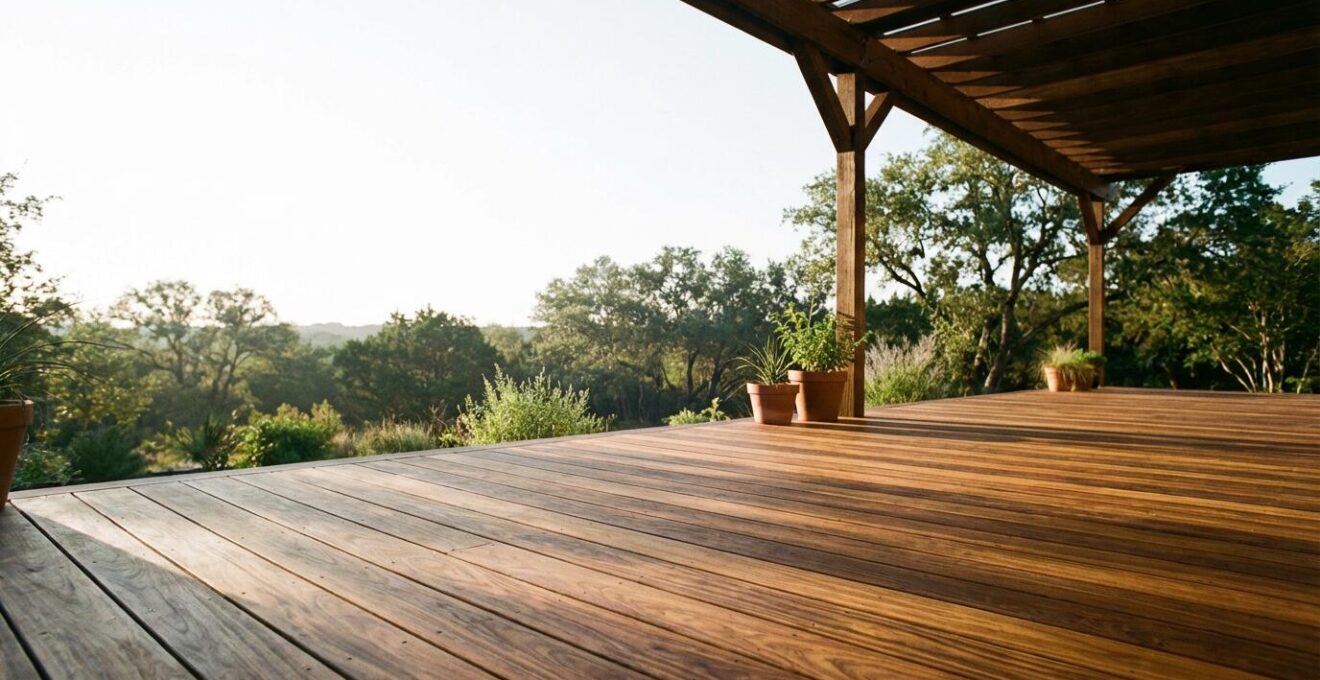
Contrary to popular belief, the secret to a vibrant exotic wood deck isn’t found in a can of oil, but in a systemic approach that begins long before the first board is laid.
- True color preservation relies on ethical sourcing, intelligent structural design, and understanding the wood’s natural properties.
- Maintenance is a strategic intervention to guide the wood’s aging process, not a constant battle against it.
Recommendation: Shift your focus from “how to re-oil” to “how to build correctly” by prioritizing subsurface ventilation, proper fastening, and choosing the right species from the start.
For design lovers, the allure of an exotic hardwood deck is undeniable. The deep, rich tones of Ipe or Cumaru promise a luxurious outdoor space that feels like an extension of the home. Yet, this dream is often shadowed by a persistent fear: the inevitable “greying out.” Many homeowners find themselves locked in a seemingly endless cycle of cleaning, sanding, and oiling, fighting a losing battle against the sun and weather. The common wisdom dictates that this high-effort maintenance is simply the price to pay for such beauty.
But what if this approach is fundamentally flawed? What if the key to preserving that coveted color isn’t about constant reapplication of finishes, but about a series of intelligent, upstream decisions? The truth that seasoned wood specialists understand is that a deck’s longevity and beauty are determined by a holistic system. This system encompasses everything from the wood’s ethical origins and the unseen structure beneath your feet to the specific methods used for installation and, eventually, restoration. It’s about working with the wood’s inherent nature, not against it.
This guide moves beyond the superficial layer of oil and delves into the foundational principles of a truly enduring exotic wood oasis. We will explore how your choices in sourcing, construction, and even adjacent materials like stone paving and privacy screens all contribute to a cohesive, beautiful, and surprisingly manageable outdoor environment. By understanding this systemic approach, you can protect your investment and enjoy the profound beauty of natural wood for decades to come, without becoming a slave to its upkeep.
This comprehensive guide will walk you through the critical decisions that define a high-performance deck. From the ethical implications of your purchase to the science behind keeping surfaces cool underfoot, you will gain the knowledge to create an outdoor space that is as intelligent as it is beautiful.
Summary: How to Maintain the Rich Color of Exotic Wood Decking Without Constant Oiling?
- Why buying non-FSC Ipe contributes to illegal deforestation?
- How to install exotic hardwood without visible screw heads?
- Ipe vs Cumaru: Which Hardwood is More Stable in Humid Climates?
- The joist spacing mistake that rots exotic decks from underneath
- When to apply a brightener to restore the original wood color?
- Why Travertine Stays Cooler Than Granite on Hot Summer Days?
- How to Block the Neighbor’s View of Your Pool Immediately?
- Why Travertine Remains Cool to the Touch Even in 35°C Direct Sunlight?
Why buying non-FSC Ipe contributes to illegal deforestation?
The first and most critical choice in your decking project happens far from your backyard, in the forests where the wood is harvested. The stunning look of Ipe comes with a heavy responsibility. Due to massive global demand and illegal logging, these slow-growing species are under immense pressure. Choosing non-certified wood directly fuels a cycle of forest degradation that has devastating environmental consequences. The supply chain for tropical hardwoods can be notoriously opaque, making it easy for illegally harvested timber to be laundered into the market.
The international community has recognized this crisis. A landmark decision was made in 2022, when both Ipe and Cumaru were listed under CITES Appendix II. This designation means that their trade is now strictly controlled to prevent over-exploitation. As of late 2024, CITES permits are required for all imports, a significant step toward accountability. However, the most reliable safeguard for a consumer remains the Forest Stewardship Council (FSC) certification. This label ensures that the wood comes from a forest managed to the highest environmental and social standards, protecting biodiversity and local communities.
Insisting on FSC-certified wood is not just an ethical statement; it’s a quality assurance measure. It guarantees you are not contributing to the problem but are part of the solution, supporting sustainable forestry practices like those that have had success in places like Bolivia. To ensure you are making a responsible choice, you must be proactive in verifying the source of your lumber. Here are the key steps to take:
- Request CITES permits and all related documentation for Ipe imports (a legal requirement as of November 25, 2024).
- Verify the supplier’s FSC certification directly through the official FSC database.
- Ask the supplier for specific documentation on the harvest location and the forest concession.
- Check that the supplier complies with FSC’s Policy for Association.
- For U.S. buyers, request proof of legal compliance with the Lacey Act requirements.
Making this ethical footprint a non-negotiable part of your project is the true foundation of a deck you can be proud of. It ensures the beauty in your backyard doesn’t come at the expense of the world’s vital ecosystems.
How to install exotic hardwood without visible screw heads?
Once you’ve sourced your wood responsibly, the focus shifts to aesthetics and flawless execution. For a design-conscious homeowner, the last thing you want is a beautiful expanse of rich hardwood marred by hundreds of visible screw heads. Achieving a clean, uninterrupted surface is essential for a high-end look, and this is accomplished through hidden fastening systems. These clever devices not only enhance the deck’s beauty but also contribute to its health by ensuring consistent spacing for drainage and airflow.
There are several methods to achieve this seamless finish. The most common involves using clips that fit into grooves cut into the sides of the deck boards. These clips are then screwed into the joists below, making the fasteners completely invisible from the surface. This is the preferred method for material intelligence, as it avoids piercing the top face of the wood, which can create entry points for moisture over time. The result is a smooth, barefoot-friendly surface that lets the grain and color of the wood take center stage.
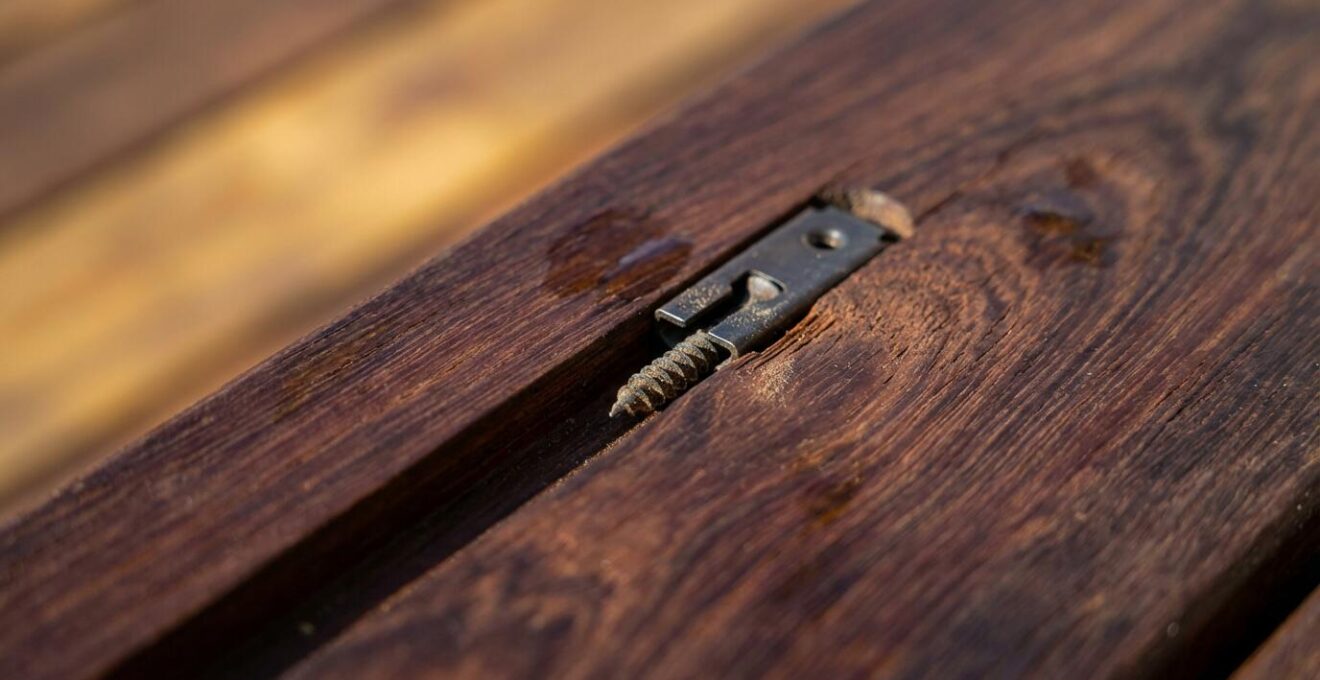
As the image above illustrates, the clip is discreetly secured into the board’s edge, leaving the top surface pristine. Another popular, though more labor-intensive, technique is the plug system. This involves counter-sinking screws and then gluing a matching wood plug over the top. When done skillfully, the plugs are nearly invisible and create an incredibly strong bond. While face-screwing with color-matched stainless steel screws is an option for budget projects, it sacrifices the premium aesthetic that most people seek when investing in exotic hardwood.
Ipe vs Cumaru: Which Hardwood is More Stable in Humid Climates?
Choosing the right species of exotic hardwood is a crucial decision that impacts everything from color and grain to long-term performance, especially in humid environments. While Ipe is often seen as the king of decking, Cumaru (also known as Brazilian Teak) is a formidable contender. Both are exceptionally dense, hard, and naturally resistant to rot and insects, but they have subtle differences that can make one a better fit for your specific climate and maintenance tolerance.
In terms of raw durability, the two are nearly equals. For perspective, Ipe’s Janka hardness rating hits 3,680 pounds, making it three times tougher than oak, with Cumaru close behind at 3,540 pounds. This incredible hardness means both are highly resistant to dents and scratches. Where they begin to differ is in their dimensional stability and oil content. Both species are excellent at resisting warping and cupping in high humidity, but Ipe has a slight edge in overall stability. Conversely, Cumaru often has a higher natural oil content, which can sometimes interfere with the adhesion of certain water-based finishes but also gives it a forgiving nature if a maintenance cycle is missed.
The aesthetic evolution is another key differentiator. Ipe typically starts as a deep, rich brown and weathers to a beautiful silvery-gray. Cumaru presents a wider range of reddish-brown and golden hues, which also patinate to a similar gray over time. The choice often comes down to your initial color preference and how you plan to manage the wood’s natural aging process.
This comparative table highlights the key characteristics of each wood, providing the data needed for an informed decision based on your priorities in a humid climate.
| Property | Ipe | Cumaru | Impact in Humid Climates |
|---|---|---|---|
| Janka Hardness | 3,680 lbs | 3,540 lbs | Higher resistance to denting |
| Natural Oils | Moderate | Higher content | May interfere with water-based finishes |
| Color Evolution | Deep brown to silver | Reddish to gray | Cumaru more forgiving if maintenance missed |
| Dimensional Stability | Excellent | Very Good | Both resist warping in humidity |
| Fire Rating | Class A | Class B | Ipe matches concrete/steel rating |
The joist spacing mistake that rots exotic decks from underneath
The most devastating threat to an exotic wood deck doesn’t come from the sun above, but from the moisture trapped below. Even the most durable hardwoods like Ipe can fall victim to rot if the substructure is not designed for adequate ventilation. This is where the concept of structural integrity becomes paramount. Homeowners and even some builders focus intensely on the surface but neglect the critical environment beneath the deck boards, leading to premature failure. The most common and costly mistake is improper joist spacing combined with poor ground clearance and a lack of cross-ventilation.
Standard deck building often uses 16-inch joist spacing. While this may be acceptable for elevated decks with plenty of air circulation, it can be a recipe for disaster on low-profile decks. When a deck is built close to the ground (less than 30cm or 12 inches), the space beneath it can become a humid microclimate, trapping moisture against the joists and the underside of the deck boards. This constant dampness prevents the wood from drying out, creating the perfect conditions for fungal growth and rot. For these low-level designs, reducing joist spacing to a maximum of 12 inches and ensuring robust cross-ventilation is not optional—it’s essential.
Furthermore, protecting the joists themselves with waterproof tape before installing the decking adds an invaluable layer of defense. This simple step prevents water from sitting in the screw holes and on the tops of the joists. A comprehensive ventilation strategy involves thinking about the entire system: ground cover, clearance, and airflow through the skirting.
Your Action Plan: Ensuring Sub-Deck Ventilation and Longevity
- For low-level decks (under 30cm off the ground): Mandate a maximum 12-inch joist spacing and design for mandatory cross-ventilation in the deck’s skirting.
- For elevated decks: Confirm that the standard 16-inch spacing is paired with a proper drainage slope away from the house.
- Protect the substructure: Insist on the application of joist protection tape to all joists before any deck boards are installed.
- Maximize clearance: Ensure there is a minimum of 18 inches of clearance between the ground and the bottom of the joists to promote airflow.
- Manage ground moisture: Use a gravel ground cover instead of soil or grass beneath the deck to reduce moisture evaporation.
Case Study: Pacific Northwest Deck Ventilation Strategy
In the notoriously damp Pacific Northwest, experienced contractors have learned that a comprehensive underside ventilation strategy is the only way to ensure a deck’s survival. They have found that success goes beyond simple joist spacing. Their standard practice for high-end decks includes a minimum ground clearance of 30cm, designing skirting with visible ventilation gaps every few feet, and using gravel as a ground cover. This systemic approach actively prevents the moisture buildup that causes premature failure, even with ultra-durable hardwoods like Ipe.
When to apply a brightener to restore the original wood color?
Despite the best design, the sun’s UV rays will eventually begin to break down the lignin in the wood, initiating the natural graying process known as the wood’s patina. While some embrace this silvery look, many wish to restore the wood’s original, vibrant color. This is where a two-step cleaning and brightening process comes in, but timing and technique are everything. Applying a new coat of oil over a dirty, grayed-out deck will only trap the grime and result in a dark, muddy appearance. The key is to properly prep the wood to receive a new finish.
The first step is to determine if the wood is even ready for treatment. A simple “water drop test” can tell you what you need to know. If a droplet of water beads up on the surface, it means a previous finish is still present and sealing the wood. In this case, you must use a stripper to remove the old finish first. If the water soaks in immediately, the wood is porous and ready for cleaning and brightening. The process involves an alkaline-based cleaner to open the wood pores and remove dirt, followed by an acid-based brightener (typically containing oxalic acid) to neutralize the wood’s pH and chemically reverse the graying effect.
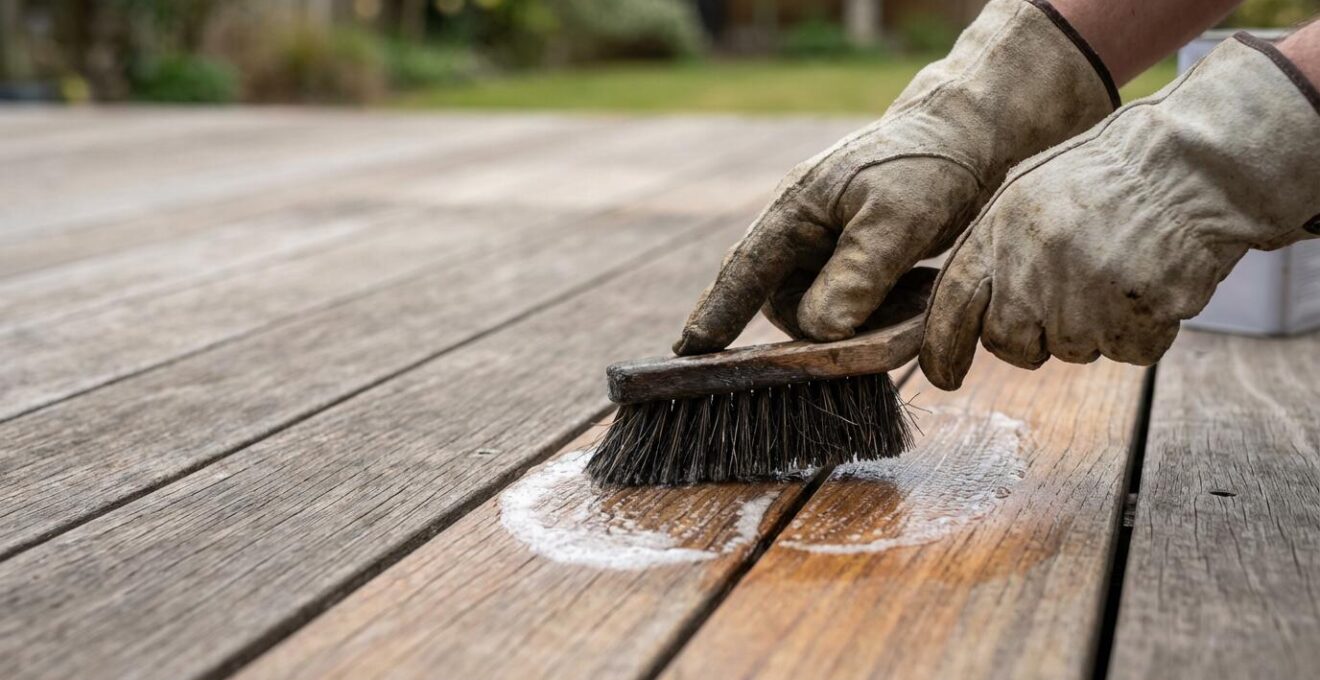
As shown in the image, the transformation can be dramatic. However, a word of extreme caution is needed regarding application, particularly with pressure washers. As wood specialist Tim Keating warns:
A pressure washer can destroy wood fibers, create a ‘fuzzy’ surface, and lead to uneven color and finish absorption. Use a setting of 1000 PSI maximum and test in an inconspicuous area first.
– Tim Keating, AdvantageLumber Hardwood Maintenance Guide
Gentle application with a brush and a light rinse with a garden hose is always the safer, more professional method. Following the correct sequence is critical for achieving a clean, uniform canvas ready for a new protective finish.
- Perform the water drop test: Place a water droplet on the deck surface.
- If water beads, the previous finish is still present. You must use a deck stripper before proceeding.
- If water soaks in, the wood is porous. Apply an alkaline-based deck cleaner to open the pores and lift out dirt.
- Let the cleaner sit for about 20 minutes, then rinse it thoroughly.
- While the deck is still wet, apply an oxalic acid-based brightener to neutralize the pH and reverse UV graying.
- Allow the brightener to soak for 20 minutes, then perform a light final rinse with a garden hose.
- Allow the deck to dry for a minimum of 3 days before applying any new oil or finish.
Why Travertine Stays Cooler Than Granite on Hot Summer Days?
Expanding our lens from the deck itself to the surrounding pool area, material intelligence remains the guiding principle. The choice of stone for a pool surround, or coping, has a massive impact on comfort and safety. Anyone who has walked barefoot on dark pavement on a sunny day understands that different materials absorb and retain heat differently. When it comes to barefoot comfort, travertine is a vastly superior choice to granite for one simple scientific reason: thermal effusivity.
Thermal effusivity is a material’s ability to exchange thermal energy with its surroundings. Materials with high effusivity, like granite, feel hot to the touch because they rapidly transfer heat to your skin. Granite is dense and non-porous, allowing it to absorb and conduct heat very efficiently. Travertine, on the other hand, is a porous stone. These tiny, interconnected pores trap air, which acts as a natural insulator. This gives travertine a low thermal effusivity; it absorbs heat much more slowly and doesn’t transfer it to your feet as quickly, so it feels significantly cooler to the touch even under the same direct sunlight.
This difference is not subtle. On a hot summer day, the surface temperature variance between different materials can be dramatic, directly impacting the usability of your outdoor space. The following “Barefoot Comfort Index” from a recent analysis clearly illustrates why material selection is so critical for poolside areas.
As confirmed by a comparative analysis of surface temperatures, the right material can make the difference between a comfortable oasis and an unusable hot-zone.
| Material | Thermal Effusivity | Surface Temp in 95°F Sun | Barefoot Comfort |
|---|---|---|---|
| Travertine | Low (porous) | 105-110°F | Excellent |
| Ipe Hardwood | Moderate | 115-120°F | Very Good |
| Cumaru | Moderate | 115-125°F | Good |
| Composite Decking | High | 135-145°F | Poor |
| Granite | Very High | 140-150°F | Very Poor |
How to Block the Neighbor’s View of Your Pool Immediately?
An outdoor oasis is not complete without a sense of privacy and seclusion. The goal is to create a personal sanctuary, and that often means blocking unwanted views from neighboring properties. The challenge is to do so immediately and elegantly, without waiting years for hedges to grow in. The most effective solution is a well-designed privacy screen, and by applying the same principle of material intelligence, you can integrate it seamlessly with your exotic hardwood deck.
Using the same species of wood for your privacy screen as you used for your deck creates a stunning, cohesive look. A horizontal slat design is a modern and highly effective choice. By spacing 1×6 slats with a 1-inch gap, you can achieve approximately 85% visual blockage while still allowing for essential airflow. This airflow is crucial to prevent the screen from acting like a sail in high winds and to promote a comfortable, breezy atmosphere in the pool area. This approach turns a purely functional element into a deliberate architectural feature.
Building a hardwood screen is a straightforward project that delivers instant results. The process involves setting sturdy posts, framing the sections, and then attaching the slats. Sealing the end grain of each board is a critical step to prevent moisture from wicking into the wood and causing splitting. From there, you have the same choice as with your deck: apply a finish to maintain the rich color or allow it to patinate to a beautiful silver-gray for a unified, low-maintenance aesthetic.
Case Study: Integrated Hardwood Privacy Screen Design
Contractors in the Pacific Northwest have found great success in creating cohesive outdoor spaces by using the same exotic hardwood for both decks and privacy screens. Their preferred method is a horizontal slat design with 1-inch spacing, which provides significant privacy without obstructing airflow. To further enhance the design, they often integrate planter boxes at 4-foot intervals, adding “green screening” elements that soften the look. Whether built from Ipe or Cumaru, these screens can be finished to match the deck or left to age naturally, ensuring perfect visual harmony.
For a quick and effective installation, follow these key steps:
- Choose a matching exotic hardwood species for perfect cohesion with your deck.
- Install 6×6 posts at 8-foot intervals using secure post anchors.
- Frame each section with 2×4 hardwood rails at the top and bottom.
- Attach 1×6 slats horizontally, using 1-inch spacers to ensure consistent gaps for airflow.
- Seal all cut end grain with a specialized wax-based sealer.
- Apply the same finish used on your deck or allow both to patina naturally together.
Key Takeaways
- The longevity of a deck’s color is primarily determined by foundational choices: ethical sourcing, subsurface ventilation, and correct installation.
- Material intelligence—understanding the inherent properties of different woods and stones—is more effective than reactive maintenance.
- A truly luxurious outdoor space is a cohesive system where the deck, surrounding materials, and privacy elements work in harmony.
Why Travertine Remains Cool to the Touch Even in 35°C Direct Sunlight?
We’ve established that travertine stays cooler than dense stones like granite due to its porous nature and low thermal effusivity. This quality makes it a premier choice for pool surrounds in hot climates, where surface temperatures can make or break the outdoor experience. Even in direct sunlight reaching 35°C (95°F), a travertine paver will feel pleasantly warm rather than searingly hot. Data from safety testing indicates that travertine pool coping can remain 11-17°C (20-30°F) cooler than adjacent concrete, a testament to its remarkable thermal properties.
This “cool touch” is a direct result of its geologic formation. Travertine is a form of limestone deposited by mineral springs. The process creates a network of natural pores and cavities within the stone. These pockets of trapped air disrupt the flow of heat, giving the material a high heat capacity—it requires more energy to raise its temperature—and the low thermal effusivity we discussed. It simply doesn’t absorb and conduct solar radiation as efficiently as a solid, crystalline stone like granite does.
However, this very porosity, which is travertine’s greatest thermal advantage, also presents its most significant weakness: slipperiness. The smooth surface of many travertine finishes can become extremely slick when wet, posing a serious safety hazard around a pool. This is a crucial trade-off that must be addressed. As decking specialist Steven Wells points out, material selection is always a balance of properties.
While travertine stays cooler due to its porosity giving it low thermal effusivity and high heat capacity, it becomes extremely slippery when wet – a safety concern around pools. Dense exotic hardwoods offer superior slip resistance with only slightly higher surface temperatures.
– Steven Wells, Decks & Docks Hardwood Specialist
This highlights the ultimate expression of material intelligence: understanding not just the benefits of a material but also its limitations. For those set on travertine, choosing a tumbled or brushed finish, which has more texture, or applying a non-slip sealer is not just recommended; it is essential for creating a safe and enjoyable poolside environment.
By embracing a systemic approach—from the ethical source of your wood to the scientific properties of your stone—you move beyond the frustrating cycle of constant maintenance. You become the architect of an enduring and intelligent outdoor oasis. To put these principles into practice, the next logical step is to evaluate your own project through this holistic lens.