Outdoor Design & Garden
The outdoor space surrounding a swimming pool represents far more than an aesthetic afterthought. It functions as a critical intersection where architecture, horticulture, materials science, and environmental design converge to create a cohesive living environment. When executed thoughtfully, this integration transforms a simple water feature into a natural extension of both the home and the landscape, enhancing property value while delivering year-round functionality and beauty.
The complexity of outdoor pool design lies in balancing competing priorities: visual harmony with existing structures, material durability under harsh conditions, ecological sustainability, safety compliance, and long-term maintenance efficiency. This comprehensive resource explores the fundamental principles and technical considerations that separate exceptional outdoor pool environments from merely functional ones, providing a framework for understanding how each design decision ripples through the entire project.
Architectural Integration: Harmonizing Pool and Home
The visual relationship between your main residence and aquatic features determines whether the pool feels like an organic part of your property or an isolated addition. This integration begins with understanding sightlines—the visual pathways that connect different areas of your property and create a sense of flow.
Material and Scale Coherence
Matching materials between your home’s facade and the pool deck creates subconscious visual continuity. If your residence features limestone cladding, echoing this material in coping or accent walls reinforces architectural unity. However, perfect matching isn’t always necessary—complementary textures and tones often prove more dynamic than identical replication.
Scale disproportion represents one of the most common integration failures. A modest cottage paired with an Olympic-sized basin creates jarring visual discord, while an expansive estate with a small plunge pool may appear incomplete. The pool’s dimensions should feel proportional to both the building footprint and the available outdoor space, typically occupying between 15-25% of the backyard area in residential settings.
Phasing and Lighting Strategy
Construction phasing dramatically impacts final integration quality. Building the pool before completing landscape maturation often yields better results, as plantings can be positioned to naturally frame the finished basin rather than working around established garden beds. This sequence also prevents root systems from interfering with excavation work.
Night-time aesthetics deserve equal attention to daytime views. Strategic lighting transforms the pool surface into a luminous focal point while highlighting architectural features of the home. Underwater LED fixtures, perimeter uplighting on specimen trees, and subtle path illumination create layers of visual interest that extend the space’s usability into evening hours.
Material Selection and Transitions
The materials immediately surrounding your pool endure extraordinary stress—constant moisture exposure, chemical contact, temperature fluctuations, and heavy foot traffic. Selecting appropriate materials requires balancing aesthetic preferences with practical performance characteristics.
Creating Seamless Transitions
The junction between garden, deck, and water represents a critical design challenge. Abrupt material changes create visual disruption and potential trip hazards, while thoughtful transitions guide movement naturally through zones. Successful approaches include:
- Gradual texture shifts: Moving from rough-textured garden pavers to smoother deck surfaces to polished coping
- Color progression: Selecting materials with complementary undertones that create visual flow
- Flush installation: Eliminating height differentials between surfaces for seamless accessibility
Natural Stone: Porosity and Patina
Natural stone offers timeless beauty and exceptional durability, but requires understanding of geological properties. Sedimentary stones like travertine and limestone feature inherent porosity that affects both slip resistance and maintenance requirements. Their porous structure provides natural texture that enhances safety when wet, but demands proper sealing to prevent staining and erosion.
Metamorphic stones such as slate and quartzite offer denser compositions with lower absorption rates. While these materials require less intensive sealing schedules, their smoother natural finishes may necessitate textured treatments for adequate slip resistance.
The patina process—how materials age and weather over time—should inform material selection rather than being viewed as deterioration. Travertine develops a graceful weathered appearance, while certain hardwoods transition to distinguished silver-gray tones. Designing with these transformations in mind creates landscapes that improve with age rather than fighting inevitable natural processes.
Wood Decking: Durability Meets Ethics
Wood decking delivers unmatched warmth and tactile comfort, but demands careful species selection and installation techniques. Sustainably sourced tropical hardwoods like Ipe and Cumaru offer extreme durability (25-50 year lifespans) with natural rot and insect resistance. However, ethical sourcing verification remains essential—certifications like FSC (Forest Stewardship Council) ensure responsible forestry practices.
Installation quality determines longevity as much as wood species selection. Hidden fastener systems eliminate exposed screws that create rust stains, while proper ventilation spacing beneath boards prevents moisture accumulation that accelerates decay. Understanding the silvering process—the natural oxidation that transforms wood to gray tones—allows homeowners to either embrace this aesthetic evolution or commit to regular maintenance that preserves original coloration.
Landscaping Strategies for Pool Environments
The immediate pool perimeter presents unique botanical challenges. Plants must tolerate occasional chemical splash, thrive in reflected heat and light, coexist with irrigation systems, and avoid root systems that threaten structural integrity. Yet these constraints don’t limit aesthetic possibilities—they simply require informed plant selection.
Designing Natural Ecosystems
Mimicking natural ecosystems around chemically treated water requires selecting chlorine-resistant flora with adaptable root systems. Ornamental grasses like fountain grass and blue fescue tolerate splash while providing movement and texture. Succulents such as agave and sedum offer sculptural forms with minimal water requirements and high salt tolerance.
Organic versus geometric edging establishes the design philosophy for the entire space. Geometric edging with clean lines reinforces formal architectural styles and simplifies maintenance through defined boundaries. Organic edging with naturalistic curves creates softer transitions that blend pool and garden into unified landscapes—particularly effective for properties emphasizing environmental integration.
Sensory Garden Perimeters
Pools engage primarily visual and tactile senses, but thoughtful plant selection activates olfactory and auditory dimensions. Fragrant plantings like lavender, jasmine, and gardenia release aromatic compounds intensified by poolside warmth. Ornamental grasses produce subtle rustling sounds that complement water movement, creating layered acoustic environments.
Planting timing significantly impacts maturity coordination. Installing young specimens during pool construction yields cost savings but requires patience as plantings develop—typically 2-3 growing seasons for meaningful coverage. Mature plantings deliver immediate impact but demand professional installation and extensive irrigation during establishment.
Root Management and Irrigation
Root damage to pool shells ranks among the most expensive repair scenarios, yet remains entirely preventable through proper species selection and placement. Trees and large shrubs should maintain minimum distances of 10-15 feet from the basin edge, with specific spacing determined by mature root spread characteristics.
Irrigation near decking requires careful management to prevent subsurface erosion and material degradation. Drip systems positioned 12-18 inches from deck edges deliver targeted moisture to plant root zones while minimizing overspray onto porous materials. Mulch selection matters equally—organic options like shredded hardwood bark provide superior moisture retention but require periodic replacement, while inorganic materials like river rock offer permanence with reduced insulation properties.
Engineering Solutions for Complex Terrain
Challenging topography transforms pool installation from straightforward excavation into sophisticated engineering exercises. Slopes, however, create opportunities for dramatic design effects impossible on flat lots—infinity edges, elevated decks with panoramic views, and terraced gardens that frame water features.
Foundation and Drainage Fundamentals
Slope construction demands specialized foundation approaches. Options include:
- Full excavation with retaining walls: Creating level platforms that support traditional construction while managing soil retention
- Pier and beam systems: Elevating structures above grade on engineered supports—ideal for steep terrain or unstable soils
- Cantilevered designs: Extending decking beyond foundation footprints for dramatic overhangs
Drainage failures on sloped sites cause catastrophic damage, from deck subsidence to complete structural compromise. Comprehensive systems integrate French drains behind retaining walls, deck drainage channels that direct runoff away from foundations, and perimeter swales that intercept upslope water before reaching pool zones.
Construction Sequencing and Site Access
Building on slopes requires meticulous sequencing. Retaining walls must cure fully before excavation begins, foundation work precedes deck installation, and temporary access routes protect finished landscaping. Site access for machinery often determines project feasibility—properties without adequate equipment pathways may require crane placement or specialized compact machinery that increases costs significantly.
Privacy and Sensory Design
Visual privacy transforms pool environments from exposed spaces into intimate retreats. Strategic landscaping creates living architecture that shields sightlines while maintaining air circulation and aesthetic appeal.
Creating Visual Fortresses with Plants
Dense foliage plantings function as green walls that obscure views without the stark appearance of fencing. Bamboo species like Bambusa oldhamii reach 15-25 feet with tight clumping habits ideal for screening, though containerization may be necessary to prevent aggressive spreading in certain climates. Photinia, privet, and Italian cypress offer alternative options with varying growth rates and mature heights.
Container planting provides flexibility for renters or those desiring seasonal configuration changes. Large-format containers (24-36 inch diameters) support substantial root systems capable of supporting 6-8 foot screening plants, though irrigation demands increase substantially compared to in-ground installations.
Understanding growth rates prevents disappointment and manages budget expectations. Fast-growing species like Leyland cypress achieve screening coverage in 2-3 seasons but require frequent pruning to maintain density. Slower-growing options like yew and boxwood demand patience—5-7 years for mature screening—but reward with manageable growth habits and exceptional longevity.
Evergreens for Year-Round Coverage
Deciduous privacy plantings defeat their purpose six months annually. Evergreen selections maintain coverage across seasons while minimizing maintenance through reduced leaf drop. Non-shedding varieties like holly, cherry laurel, and false cypress maintain clean pool environments by eliminating the constant debris management required with deciduous alternatives.
Pruning strategies determine density and height outcomes. Shearing encourages branching that creates thick, impenetrable screens, while selective pruning maintains natural forms with less density. Annual fertilization timing—early spring for most evergreens—supports vigorous growth without stimulating vulnerable late-season shoots susceptible to winter damage.
Acoustic Landscaping and Water Features
Urban pool environments contend with ambient noise that compromises tranquility. Architectural water features mask disruptive sounds through principles of acoustic frequency optimization. Rushing water produces broad-spectrum white noise that psychologically obscures traffic, conversation, and mechanical sounds more effectively than physical barriers.
Wall-mounted fountains and spillways integrate seamlessly into retaining walls or privacy screens, while freestanding features offer flexibility for placement adjustments. Wind drift management becomes critical—fountains positioned perpendicular to prevailing winds minimize spray onto decking and furniture. Material selection influences acoustic character, with slate and rough stone producing deeper, more resonant tones compared to smooth stainless steel’s higher-frequency sounds.
Bioclimatic and Environmental Optimization
Pools function as environmental tools beyond recreation when designed with climatic awareness. Water bodies moderate temperature through evaporative cooling, reflect light to brighten adjacent spaces, and capture breezes that enhance natural ventilation.
Passive Cooling and Solar Geometry
Pool surfaces act as passive cooling devices through evaporation that can reduce ambient temperatures in immediate areas by 5-10 degrees. Positioning basins on the southern or western exposures (in northern hemisphere locations) maximizes afternoon cooling effects when temperatures peak. This strategic placement also optimizes wind patterns—afternoon breezes crossing water surfaces deliver cooled air toward primary entertainment zones.
Interior liner color influences both aesthetic and thermal performance. Light-colored liners enhance light reflection that brightens surrounding spaces and reduces artificial lighting requirements during evening use. Darker liners absorb solar heat more efficiently, extending comfortable swimming seasons in cooler climates but potentially creating uncomfortably warm conditions in hot regions.
Balancing Shade and Sun Exposure
The shade-sun ratio determines both user comfort and maintenance requirements. Full sun exposure maximizes solar heating and reduces algae growth in natural ecosystem pools, but creates harsh conditions during peak summer months. Strategic shading through pergolas, shade sails, or carefully positioned deciduous trees (with proper root management) provides seasonal relief while maintaining winter sun access.
Seasonal maintenance sequencing for bioclimatic efficiency aligns tasks with natural cycles. Spring preparation focuses on equipment activation and water chemistry balancing, summer emphasizes debris management and chemical monitoring, autumn prioritizes leaf protection and winterization preparation, while winter maintenance remains minimal in temperate climates or includes freeze protection protocols in cold regions.
Safety, Accessibility, and Practical Details
Functional excellence in pool design requires meticulous attention to safety standards and ergonomic details that determine daily usability. These elements often receive insufficient consideration during initial planning, yet dramatically impact long-term satisfaction.
Transition Zone Engineering
The deck-to-water transition presents the highest slip and trip hazard concentration. Flush transitions eliminate height differentials that create stumbling risks, while properly designed expansion joints accommodate material movement without creating dangerous gaps. Joint spacing typically occurs every 8-12 feet for concrete and stone installations, with flexible sealants maintaining water-tightness while permitting thermal expansion.
Coping edge profiles significantly influence safety and aesthetics. Bullnose profiles feature rounded edges that provide comfortable handholds and reduce injury risk from impacts, making them ideal for family-oriented installations. Square edge profiles deliver clean, contemporary aesthetics but create sharper contact points—appropriate for adult-focused environments prioritizing modern design.
Deck Width Optimization
Adequate deck width determines furniture placement options and circulation patterns. Minimum functional widths start at 4 feet for basic access, but comfortable entertainment spaces require 8-12 feet to accommodate loungers, dining sets, and foot traffic without crowding. Properties with space constraints benefit from variable width designs—wider zones adjacent to entry points and primary seating areas, narrower sections where circulation alone occurs.
Long-Term Maintenance Considerations
Material selection ultimately proves less important than proper installation and maintenance protocols. Natural stone requires periodic resealing—frequency depends on porosity and exposure, ranging from annually for highly porous limestone to every 3-5 years for dense granite. Wood decking demands cleaning and refinishing cycles that preserve moisture resistance and prevent UV degradation.
Sealant application timing affects performance dramatically. Freshly installed materials typically require 30-90 day curing periods before initial sealing, allowing residual moisture escape and chemical bonding completion. Premature sealing traps moisture that causes delamination and efflorescence—white crystalline deposits that mar appearances and indicate subsurface moisture problems.
The intersection of outdoor design and pool installation represents one of residential construction’s most complex challenges, demanding expertise across multiple disciplines. Success requires viewing the project holistically—not as separate elements of architecture, landscaping, and water feature, but as an integrated ecosystem where each decision influences overall harmony. By understanding these fundamental principles and their interconnections, you create outdoor environments that deliver lasting beauty, functionality, and value.
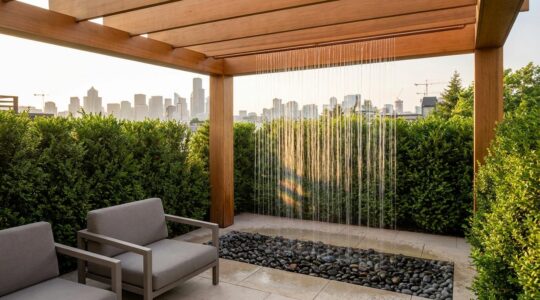
How Water Curtains Block Traffic Noise in Urban Backyards?
The key to silencing city noise isn’t just adding water; it’s about engineering its sound to create a precise acoustic barrier. The pitch and volume of a water curtain can…
Read more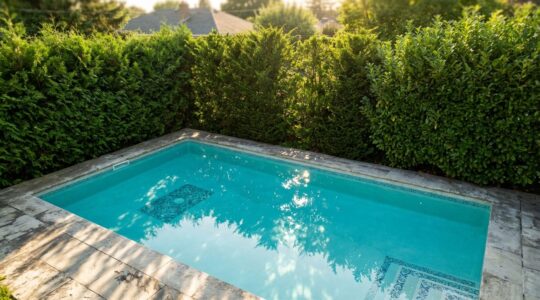
Why Evergreen Hedges Are the Only Sane Choice for Poolside Screening
The secret to a pristine pool isn’t better cleaning tools; it’s a smarter garden design that prevents debris from ever reaching the water. Success lies in choosing evergreens with a…
Read more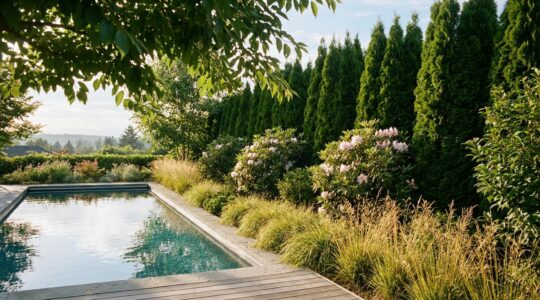
How to Block the Neighbor’s View of Your Pool Immediately?
Contrary to popular belief, achieving true pool privacy isn’t about planting the fastest-growing hedge; it’s about deploying a strategic living barrier system that surgically blocks specific sightlines. Effective privacy requires…
Read more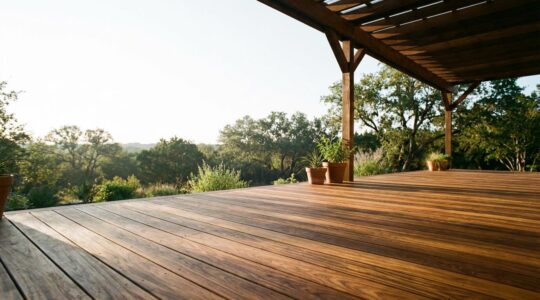
How to Maintain the Rich Color of Exotic Wood Decking Without Constant Oiling?
Contrary to popular belief, the secret to a vibrant exotic wood deck isn’t found in a can of oil, but in a systemic approach that begins long before the first…
Read more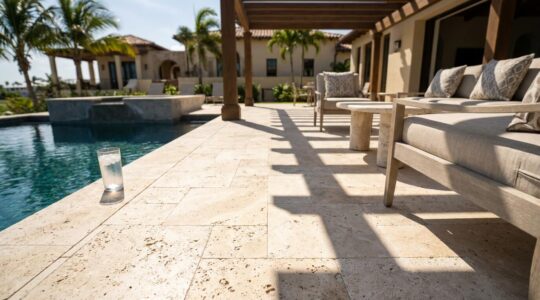
Why Travertine Remains Cool to the Touch Even in 35°C Direct Sunlight?
Travertine’s remarkable coolness is not magic; it’s a result of an active thermal regulation system, unlike the passive heat absorption of other materials. Its porous capillary network allows it to…
Read more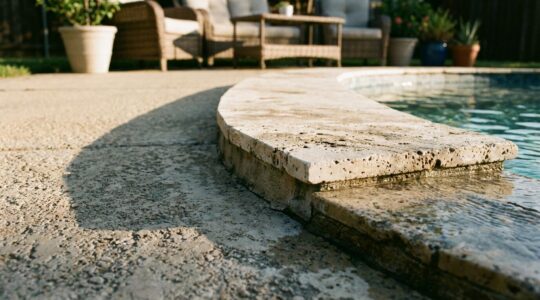
How to Eliminate Trip Hazards Between the Coping and Decking?
Contrary to popular belief, a trip hazard around your pool isn’t a simple repair job—it’s a critical symptom of systemic failure in your deck’s safety and construction. The root cause…
Read more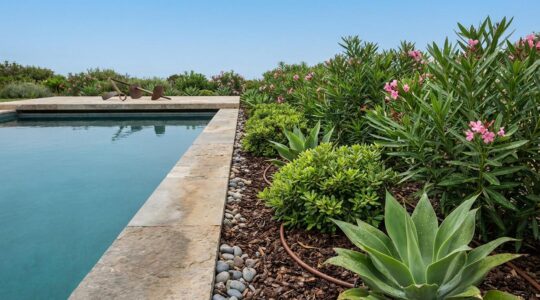
The Resilient Poolside Garden: How to Create a Lush Oasis in a Hostile Microclimate
In summary: Treat your poolside area as a unique micro-ecosystem, not just a difficult patch of dirt. Select plants based on their physical traits (like waxy leaves) that provide natural…
Read more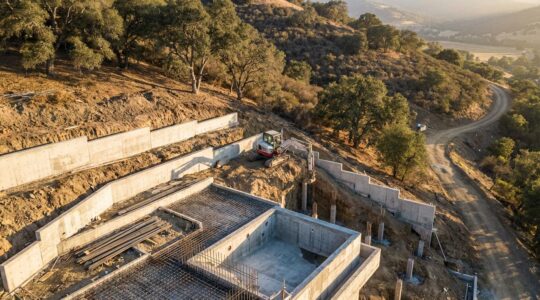
How to Build a Pool on a 20% Slope Without Risking a Landslide?
Building a pool on a steep slope is not a simple construction task but a complex geotechnical engineering challenge. The primary risk isn’t aesthetic but catastrophic failure from soil movement…
Read more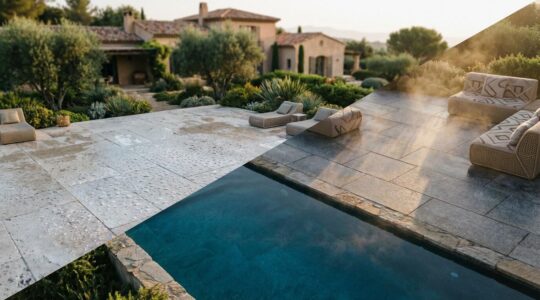
Why Does Travertine Stay Cool While Granite Scorches Your Feet?
Travertine’s coolness isn’t magic; it’s a result of its porous structure that actively dissipates heat, a feature inert stones like granite lack. Light color and high Solar Reflectance Index (SRI)…
Read more
How to Create a Biophilic Transition That Hides Equipment Without Blocking Access
The secret to a truly natural-looking pool is not just hiding the equipment, but dissolving it into a living, multi-sensory ecosystem that blurs the line between the man-made and the…
Read more