Types of Swimming Pools
Choosing a swimming pool represents one of the most significant investments a homeowner can make in their property. Beyond the initial appeal of backyard recreation, the type of pool you select influences everything from installation timeline and long-term maintenance to structural durability and resale value. The decision involves balancing aesthetic vision with practical considerations like soil conditions, climate, budget constraints, and how you plan to use the space.
Modern pool construction has evolved into distinct categories, each offering unique advantages and trade-offs. Understanding the fundamental differences between construction methods—from spray-applied concrete to pre-fabricated shells—empowers you to make an informed choice that aligns with your property’s characteristics and your lifestyle needs. This comprehensive exploration covers the primary pool types, essential design features, and critical structural considerations that will help you navigate this complex but rewarding decision.
Concrete Pools: The Foundation of Custom Aquatic Design
Concrete pools stand as the most versatile option in residential aquatic construction, offering virtually unlimited design possibilities. Unlike pre-manufactured alternatives, concrete allows builders to create custom free-form shapes, complex curves, and integrated architectural features that respond to your property’s unique topography and your personal vision.
Shotcrete and Gunite: Building Complex Shapes
The pneumatic application of concrete—whether called shotcrete or gunite—forms the backbone of high-end pool construction. This method involves spraying a concrete mixture at high velocity onto a framework of steel reinforcement (rebar), creating a monolithic shell with exceptional structural density. The primary distinction lies in when water is added: gunite uses dry concrete mixed with water at the nozzle, while shotcrete arrives pre-mixed.
This construction approach excels at creating complex geometries that would be impossible with other methods. The application process allows builders to form vanishing edges, beach entries, multi-level designs, and integrated spa spillovers within a single structural shell. A skilled crew can apply several inches of thickness in a single pass, building up layers to achieve optimal strength while minimizing material waste through careful control of “rebound”—the concrete that bounces off the surface.
Structural Reinforcement and Longevity
The steel reinforcement grid that underlies the concrete shell determines the pool’s ability to withstand decades of ground pressure, hydrostatic forces, and seasonal ground movement. Properly designed rebar spacing and the quality of the bond beam—the reinforced concrete collar at the pool’s perimeter—are critical factors in preventing cracks and maintaining structural integrity over time.
Concrete pools are often described as legacy construction because, when built correctly, they can outlast the property ownership trends of multiple generations. The interior finish can be renovated repeatedly throughout the structure’s lifespan, allowing homeowners to update aesthetics without replacing the fundamental shell. This longevity advantage comes with a trade-off: concrete pools typically require more intensive initial construction time, often taking several months from excavation to completion.
Fiberglass Pools: Pre-Fabricated Precision and Speed
Fiberglass pools represent a fundamentally different approach to pool ownership, leveraging factory-controlled manufacturing to deliver consistent quality and dramatically faster installation timelines. These pre-fabricated shells arrive at your property as a single molded piece, ready for placement and backfilling.
Installation Timeline and Process
The speed advantage of fiberglass cannot be overstated. While concrete pools measure their construction timeline in months, a fiberglass installation can often be completed in one to three weeks from excavation to swim-ready status. The process involves precise excavation, crane placement of the shell, careful backfilling with appropriate material (often gravel or sand), and connection of plumbing and electrical systems.
This efficiency stems from the fact that the curing and finishing work happens in a controlled factory environment rather than on-site. The gel-coat surface that forms the pool’s interior is applied and cured under optimal conditions, resulting in a smooth, non-porous finish that resists algae growth more effectively than traditional plaster.
Surface Quality and Maintenance Advantages
The non-porous gel-coat surface of fiberglass pools offers significant maintenance benefits. This smooth finish requires fewer chemicals to maintain water balance and resists staining from minerals and organic material. However, this advantage comes with responsibility: preventing osmosis blistering—small bubbles that can form when water penetrates the gel-coat—requires maintaining proper water chemistry and addressing any surface damage promptly.
The trade-off with fiberglass is design flexibility. You’re limited to shapes and sizes that can be manufactured and transported, which typically means avoiding extremely large or highly customized geometric designs. Additionally, while the gel-coat surface is durable, any necessary repairs are more specialized than concrete refinishing, requiring specific materials and techniques to maintain the surface integrity.
Luxury Features That Elevate Pool Design
Regardless of the basic construction method, certain design elements transform a functional pool into a luxury amenity that enhances both daily enjoyment and property value. These features often represent the difference between a standard backyard pool and a resort-quality retreat.
Infinity Edges and Visual Drama
The infinity edge—also called a vanishing edge or negative edge—creates the optical illusion that water extends to the horizon by allowing it to spill over one or more sides into a catch basin. This design element commands a significant premium in construction costs due to the complexity of the spillway engineering, the secondary basin and pump system, and the precision required in cladding the spillover wall.
Beyond aesthetics, infinity edges introduce acoustic elements that can define the entire backyard experience. The sound of falling water creates ambient tranquility, though balancing pump flow to achieve the desired visual effect without noise fatigue requires careful calibration. When executed properly, especially on properties with views or elevation changes, this feature can justify its substantial cost through both enjoyment and enhanced real estate value.
Integrated Spa Systems
Incorporating a spa within the pool structure introduces significant engineering complexity, particularly in managing dual-temperature zones within a shared shell. The challenge lies in maintaining spa water at comfortable temperatures (typically 100-104°F) while keeping the main pool cooler, all while managing the spillover between zones.
Modern systems address this through sophisticated valve actuators that control water flow between compartments, allowing you to heat the spa independently while managing cross-contamination. The design choice between raised spa configurations (which enhance visual hierarchy) and flush designs (which create seamless integration) affects both the aesthetics and the hydraulic engineering required to optimize heat-up time and maintain temperature separation.
Functional Design Elements for Family Use
While luxury features capture attention, functional design elements often determine how much your family actually uses and enjoys the pool. These practical additions create comfortable spaces for varying ages, abilities, and activities.
Tanning Ledges and Shallow Zones
Tanning ledges—also called Baja shelves or sun shelves—provide shallow areas typically 6-12 inches deep, creating safe zones for young children, spots for lounge chairs partially submerged in water, and comfortable spaces for those who want to enjoy the pool without full immersion. The ideal depth balances safety with functionality: too shallow and water circulation suffers, too deep and the feature loses its purpose.
These areas can be enhanced with bubblers (upward-flowing water jets) for sensory appeal and improved circulation. The surface texture requires careful consideration to prevent slippery conditions while maintaining comfort for bare feet. Properly designed tanning ledges integrate with the pool’s circulation system rather than creating dead spots where debris accumulates and water stagnates.
Built-In Seating and Social Spaces
Integrating benches and seating areas into the pool structure transforms it into a social gathering space rather than purely an exercise venue. The ergonomics matter significantly: seat height should position users with shoulders comfortably above water when seated, typically 12-16 inches from the pool floor, while backrest contouring provides support without feeling restrictive.
Surface texture selection represents a balance between comfort and traction. Smooth finishes feel more comfortable but can be slippery, while heavily textured surfaces provide grip but may be abrasive during extended use. Strategic jet placement can provide massage functions, but the plumbing design must avoid creating circulation dead spots that compromise water quality in these frequently-used areas.
Ground Conditions and Structural Integrity
The most beautifully designed pool will fail if the ground beneath it cannot provide stable, long-term support. Understanding soil composition and ground behavior before breaking ground is not optional—it’s the foundation of every successful pool installation.
Soil analysis reveals critical information about load-bearing capacity, drainage characteristics, and the potential for ground movement. Expansive clay soils that swell when wet and shrink when dry pose particular challenges, potentially causing differential settlement that stresses the pool shell. Sandy soils may require different reinforcement strategies than dense clay, and high water tables introduce hydrostatic pressure considerations that affect waterproofing and structural design.
Both concrete and fiberglass pools face ground-related risks, but they respond differently. Concrete pools rely on their monolithic structural density and reinforcement to resist ground movement, while fiberglass shells depend on proper backfill material and technique to distribute forces evenly around the pre-formed structure. Identifying early signs of structural stress—such as cracks, tile separation, or equipment alignment issues—allows for intervention before minor problems become major failures.
The timing of backfilling deserves particular attention. Filling the pool with water before completing backfill can prevent inward collapse from external soil pressure, while proper drainage solutions around the pool perimeter—including gravel beds, drainage pipes, and slope management—prevent water accumulation that can cause ground sinking and structural shifting over time. Monitoring ground movement, especially during the first year after installation, helps identify issues while they’re still manageable.
Selecting the right pool type begins with understanding your unique combination of priorities: design flexibility versus installation speed, upfront cost versus long-term maintenance, and aesthetic ambitions balanced against site conditions. Concrete construction offers maximum customization and proven longevity, while fiberglass provides efficiency and ease of maintenance. Luxury features like infinity edges and integrated spas can transform the space, but functional elements like tanning ledges and built-in seating often determine daily satisfaction. Throughout every decision, ground conditions and structural integrity remain the non-negotiable foundation that supports everything above. By understanding these fundamental categories and considerations, you’re equipped to explore specific aspects of pool design and construction with confidence, focusing your research on the details that matter most for your particular situation.
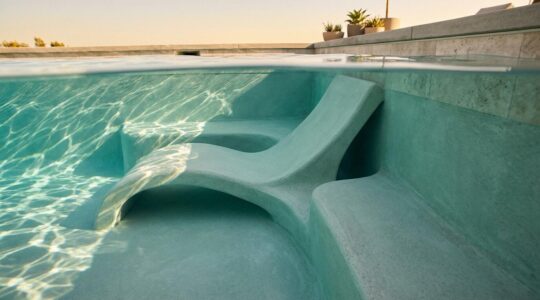
How to Design In-Pool Seating That Doesn’t Hurt Your Back?
In summary: Design seating for a water depth of 50 cm (20 inches) to enable comfortable, chest-level conversation. Integrate a 10-15 degree angled backrest with a subtle lumbar curve to…
Read more
Why Are Baja Shelves the Most Requested Feature for Families with Toddlers?
A well-designed Baja shelf is more than a pool feature; it’s a dedicated ‘aquatic living room’ engineered for family safety and social connection. Safety is built-in through specific water depths,…
Read more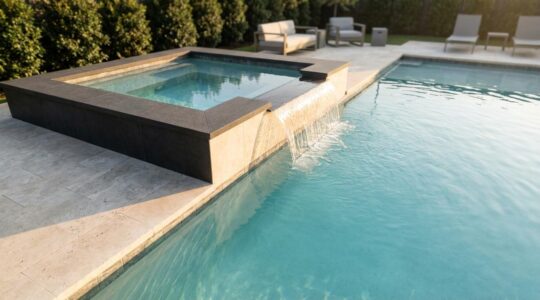
Why Spillover Spas Are the Ultimate Focal Point for Flat Yards?
A spillover spa transforms a flat landscape not through its mere presence, but through the deliberate engineering of its visual and acoustic drama. The perfect, glass-like sheet of water is…
Read more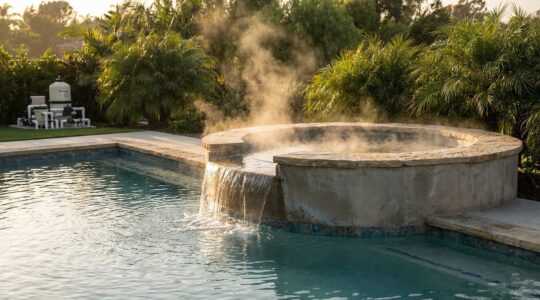
How to Heat the Spa to 38°C While Keeping the Pool at 26°C?
Maintaining a 12°C temperature difference between a pool and a conjoined spa isn’t magic; it’s a matter of mastering hydraulic isolation and thermal management. Effective heating relies on creating a…
Read more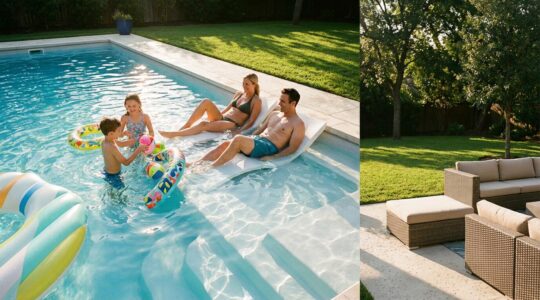
Why Fiberglass Pools Are the Best Choice for Families with Active Kids
A fiberglass pool is the fastest and safest way to get your active family swimming, thanks to its pre-engineered shell and kid-friendly surface. The non-porous gel coat finish prevents scrapes…
Read more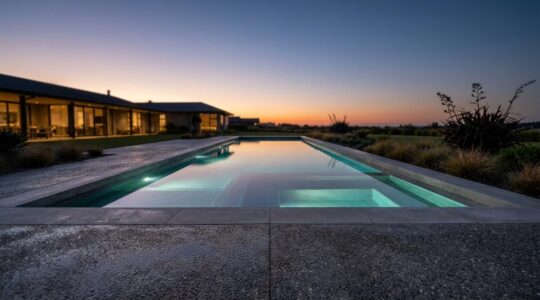
Why Reinforced Concrete Pools Maintain Value Better Than Vinyl Liners Over 20 Years?
A reinforced concrete pool is not a backyard feature; it is a permanent structural asset that appreciates with the property, whereas a vinyl liner pool functions as a depreciating liability…
Read more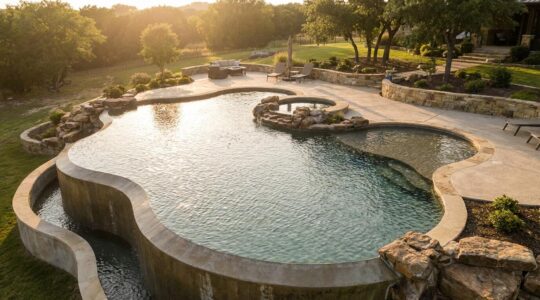
Why Shotcrete is the Only Viable Option for Complex Free-Form Pool Designs?
Contrary to the belief that pool materials are interchangeable, creating a true, lasting free-form pool is an act of structural sculpture where the medium is non-negotiable. Wet-mix shotcrete offers superior…
Read more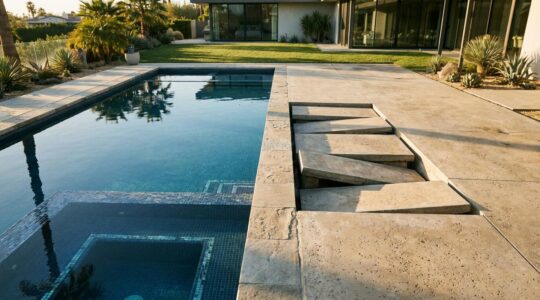
How to Fix Soil Subsidence Around Your Pool Deck Before Pipes Break?
A sinking pool deck is not a cosmetic issue; it’s a critical symptom of underground failure that can lead to broken pipes and escalating repair costs. Soil settlement is often…
Read more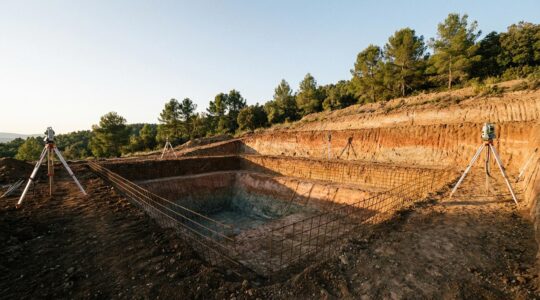
How to Ensure Structural Integrity on Clay Soil Without Spending a Fortune?
Building a pool on clay soil that lasts for decades is not about luck or excessive spending; it’s about precise, proactive engineering that prevents catastrophic, high-cost failures. A geotechnical soil…
Read more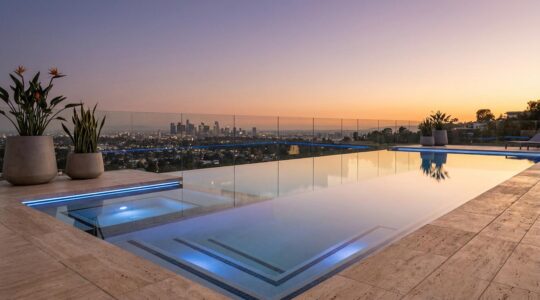
Which Luxury Pool Features Add Real Value to a $2 Million Property?
A luxury pool’s contribution to property value is not an amenity bonus, but a direct result of strategic investment in features that enhance marketability and minimize long-term ownership costs. Architectural…
Read more