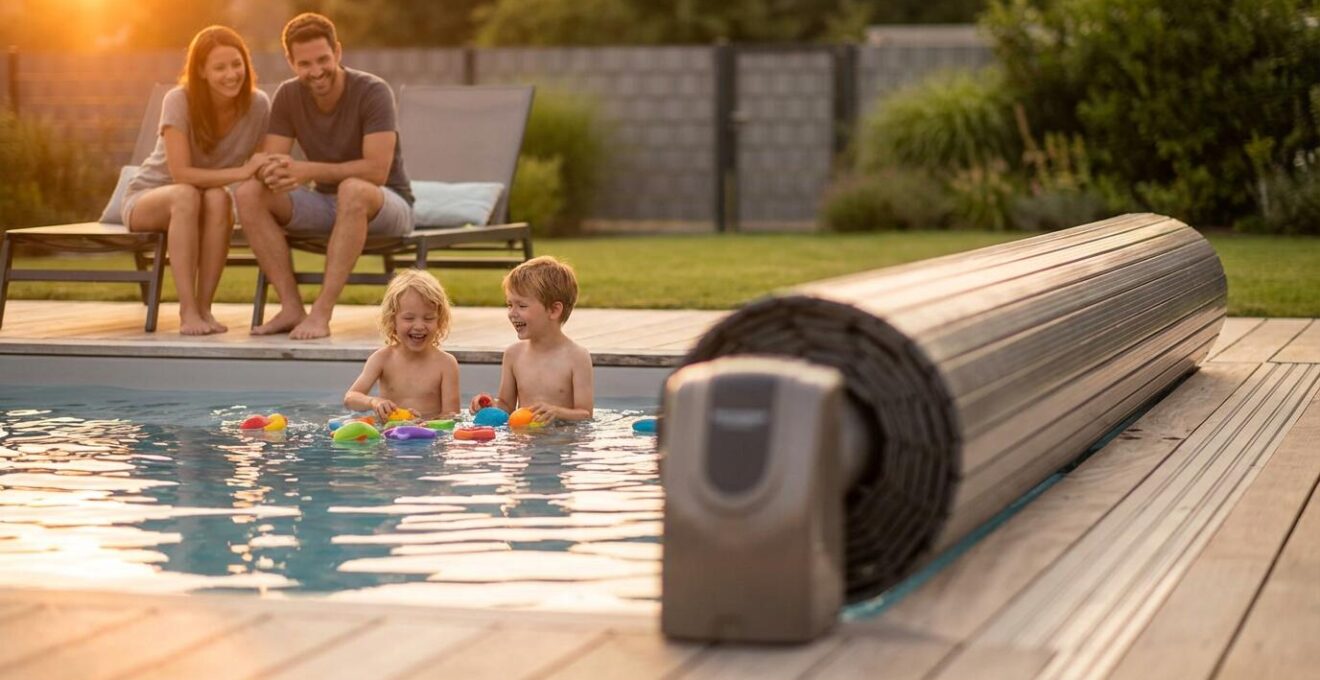
The right pool cover is not just a lid; it’s the central command of your pool’s safety and energy management system.
- Safety and savings are interconnected: high-end automatic covers often meet safety codes that can replace fencing and lower insurance premiums.
- Material science is critical: The wrong cover can degrade rapidly or fail to capture free solar heat, wasting money in the long run.
- Hidden chemistry is a major risk: A covered pool creates a unique chemical environment that can damage the pool itself if not managed correctly.
Recommendation: Shift your mindset from simply ‘covering’ the pool to actively ‘managing’ it as an integrated system where the cover, heater, and chemistry work in synergy.
For any parent with a pool, two concerns dominate: the safety of their children and the ever-increasing cost of operation. The standard advice is simple: get a pool cover. It’s presented as the one-stop solution for preventing accidents, retaining heat, and reducing water evaporation. This is true, but it’s a dangerously incomplete picture. Many owners invest in a cover only to see it disintegrate after a few seasons or find their energy bills are still stubbornly high.
The common approach focuses on the cover as a passive barrier. But what if the key to maximizing both safety and efficiency isn’t just about covering the water, but about understanding the dynamic forces at play underneath? The reality is that a pool cover creates a unique micro-environment. It interacts with UV radiation, traps chemicals, and alters the physics of heat transfer. Ignoring these interactions is the primary reason why so many covers underperform and fail prematurely.
This guide moves beyond generic advice. We will treat your pool and its cover as a complete, active management system. We will explore why some materials are destroyed by the sun while others thrive, how the wrong chemical balance under the cover can literally eat away at your pool’s structure, and how to synchronize your cover with your heating system to achieve maximum efficiency. By mastering these principles, you can make a truly informed decision that protects both your family and your finances for years to come.
This article will walk you through the critical factors you must consider, from material degradation and installation pitfalls to the advanced strategies for system integration. The following sections provide a comprehensive roadmap to choosing and managing the perfect pool cover.
Summary: A Consultant’s Guide to Pool Covers for Safety and Efficiency
- Why bubble covers degrade faster than foam in high UV areas?
- How to retrofit an automatic cover on an existing rectangular pool?
- PVC or Polycarbonate Slats: Which Offers Better Heat Gain via Solar Effect?
- The chemistry mistake under the cover that rots your coping stones
- When to remove the cover to prevent overheating and algae blooms?
- How to Maintain 28°C Water Temperature in October Without Bankrupting Yourself?
- How to Manage Your Pool Chemistry from Your Office Desk?
- Why Inverter Heat Pumps Are Worth the Extra Upfront Cost for Large Pools?
Why bubble covers degrade faster than foam in high UV areas?
The most common entry-point for pool owners is the blue bubble cover, but its vulnerability to the sun is its greatest weakness. The fundamental issue lies in material thickness and design. The bubbles, designed to provide an insulating air gap, create thin spots and internal stress points at their corners. These areas are prime targets for aggressive UV radiation and chemical attack. Industry analysis confirms that in high UV environments, the lifespan is drastically shortened. According to one study, bubble covers typically last a mere 2-3 years, compared to 5-7 years for solid foam covers.
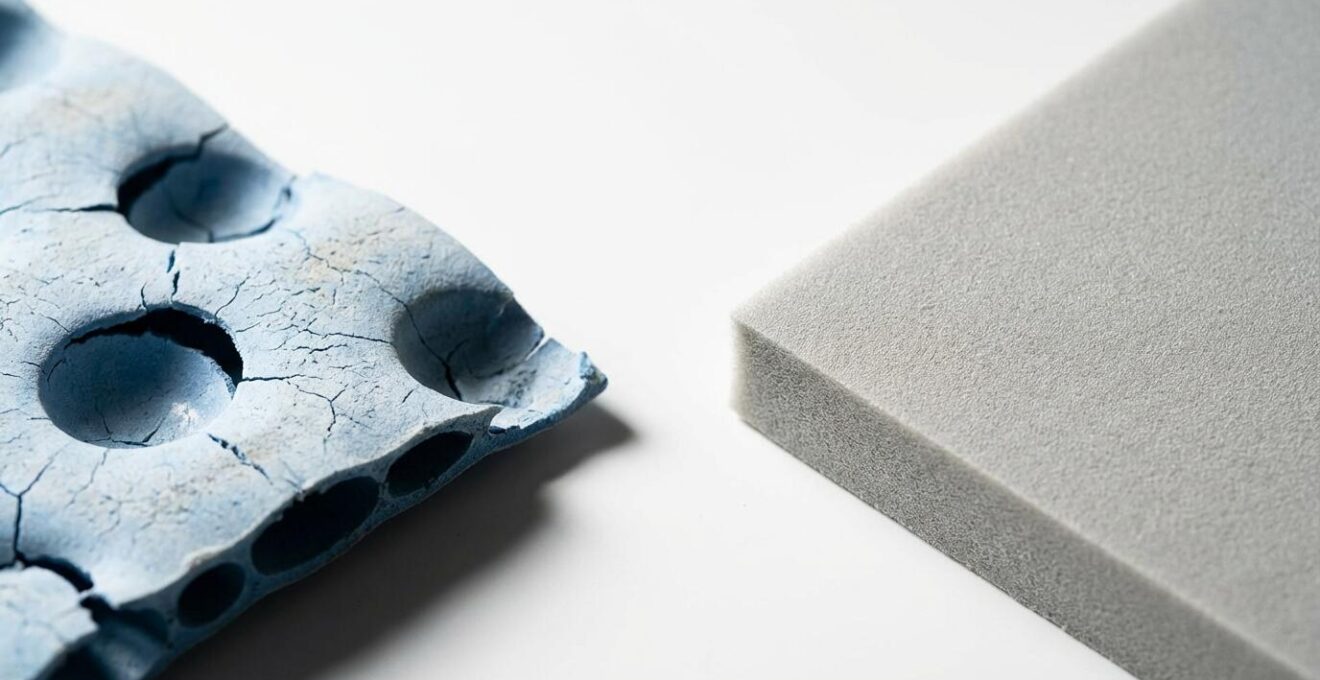
As you can see in this comparison, the UV-damaged bubble material becomes brittle, showing micro-cracks and discoloration, while the more robust foam structure remains intact. This systemic degradation isn’t just an aesthetic problem; as the material breaks down, it loses its insulating properties and can shed small plastic fragments into your filtration system. Advanced designs like GeoBubble, which use a more streamlined shape without sharp corners, have been shown to last up to 50% longer by eliminating these inherent weak points and incorporating better UV stabilizer packages.
To extend the life of any cover, a crucial but often overlooked step is allowing the pool to “off-gas” after a chemical shock. Trapped high concentrations of chlorine gas are highly corrosive. Adhering to a strict 30-minute waiting period after shocking before replacing the cover can significantly reduce chemical degradation.
How to retrofit an automatic cover on an existing rectangular pool?
For parents, an automatic cover represents the gold standard in safety. It transforms from a simple accessory into an integrated safety barrier. The most significant benefit is its ability to provide “isolation safety,” completely sealing the pool and preventing a child from even seeing the water, which removes the temptation. In fact, many high-quality systems are certified to meet ASTM F1346-91 safety standards. A case study from Pool Covers, Inc. highlights that covers meeting these standards can often replace secondary fencing requirements in many jurisdictions, which can also lead to a potential reduction in homeowner’s insurance premiums.
However, retrofitting one onto an existing pool is a construction project, not a simple DIY task. Success hinges on avoiding several critical pitfalls. The installation requires careful planning around the pool deck’s structure, electrical supply, and drainage. Overlooking these details can lead to costly repairs and a malfunctioning system. Professional installation is paramount to ensure the tracks are perfectly aligned for smooth, long-term operation.
Your Action Plan: 5 Critical Retrofit Pitfalls to Avoid
- Assess Coping Stone Integrity: Before installing mounting rails, test the load-bearing capacity of your coping stones. Older or improperly installed stones can crack under the tension and weight of the system.
- Budget for Dedicated Electrical Work: An automatic cover motor requires a dedicated 20-amp GFCI circuit. This is not a simple plug-in device and must be factored into the total project cost.
- Plan for Motor Housing Drainage: The recessed box housing the motor and roller mechanism must have adequate drainage to prevent water accumulation, which leads to corrosion and motor failure.
- Prevent Debris Traps: Choose a system with well-designed recessed tracks that include channels for debris to be flushed out. Poorly designed systems can become clogged with leaves and dirt, jamming the cover.
- Insist on Track Alignment Verification: The installer must verify that the parallel tracks are perfectly aligned. Even minor misalignments will cause the cover to bind, straining the motor and reducing the system’s lifespan.
By addressing these points proactively with your installer, you can ensure your investment not only provides unparalleled safety but also operates reliably for years to come.
PVC or Polycarbonate Slats: Which Offers Better Heat Gain via Solar Effect?
When you graduate to high-end automatic slatted covers, the choice of material becomes a crucial factor in your pool’s energy performance. The two dominant options are PVC and polycarbonate, and they interact with sunlight in fundamentally different ways. This isn’t just about insulation; it’s about active solar heating. Opaque PVC slats are excellent insulators, preventing heat loss, but they block sunlight. Translucent polycarbonate slats, on the other hand, are designed to let solar radiation pass through and heat the water directly—a phenomenon known as the greenhouse effect.
The performance difference is significant. Polycarbonate’s ability to transmit light allows for superior solar gain, making it a more effective “heater” on sunny days. Research from the Department of Energy shows that while opaque covers can reduce solar absorption by 20-40%, transparent or translucent covers minimize this reduction. This makes polycarbonate ideal for cooler or less sunny climates where maximizing every bit of free solar energy is paramount. Conversely, in very hot and sunny regions, opaque PVC might be preferable to prevent the pool from overheating.
| Material | Temperature Gain | Light Transmission | Durability | Cost Factor |
|---|---|---|---|---|
| PVC Slats | 3-5°C per day | Opaque (0-5%) | High scratch resistance | Standard pricing |
| Polycarbonate | 5-8°C per day | Translucent (20-40%) | Moderate scratch resistance | 30-50% higher |
As the table illustrates, polycarbonate offers a potential daily temperature gain of 5-8°C from solar energy alone, significantly higher than PVC. However, this performance comes at a premium, with polycarbonate slats costing 30-50% more. The decision ultimately hinges on your climate and budget. For maximum passive heating, polycarbonate is the clear winner, but it requires a higher upfront investment.
The chemistry mistake under the cover that rots your coping stones
One of the most insidious and costly mistakes a pool owner can make happens silently, right under the cover. By preventing evaporation, a cover also stops chemical “off-gassing.” While this is great for reducing chlorine consumption, it traps carbon dioxide (CO2) from the atmosphere and from swimmers in the water. This trapped CO2 dissolves into the water, creating a weak acid known as carbonic acid. The result is a steady, stealthy drop in the pool’s pH level, making the water acidic.
This acidic water then becomes aggressive, seeking to balance itself by leaching alkaline materials from its surroundings. The primary target? The calcium carbonate in your pool’s plaster, grout, and, most visibly, your expensive travertine or limestone coping stones. This chemical chain reaction is a well-understood phenomenon. As the Department of Energy’s pool guidelines explain:
Cover prevents outgassing -> CO2 builds up -> carbonic acid forms -> pH drops -> acidic water attacks calcium-based materials
– Department of Energy Pool Chemistry Guidelines, Swimming Pool Covers Energy Guide
The damage starts subtly but can lead to irreversible pitting, a gritty texture, and crumbling grout lines. The key to prevention is more vigilant monitoring. When a pool is covered for extended periods, you must test and adjust your pH and alkalinity levels more frequently than you would with an uncovered pool. The early warning signs are often visible long before major damage occurs. Be on the lookout for a white, powdery residue on grout lines (efflorescence) or a sandy texture developing on the surface of your coping stones.
When to remove the cover to prevent overheating and algae blooms?
A cover is a powerful tool for heat retention, but it can be too effective. In the height of summer, a solar or automatic cover can push water temperatures above the ideal range (around 28-30°C), creating two significant problems. First, excessively warm water is an ideal breeding ground for algae. Second, chlorine becomes less effective at higher temperatures, meaning you need more of it to keep the water sanitized, which in turn accelerates the chemical degradation of the cover itself. This creates a vicious cycle of overheating and chemical overuse.
The solution is active management: strategic venting. You must allow the pool to “breathe.” This involves removing the cover for a set period each day to allow excess heat and trapped gases to escape. This simple act dramatically reduces the risk of an algae bloom. Recent testing shows the impact is significant, indicating that implementing a 1-2 hour daily venting period reduces algae risk by 40%. The best time for this is typically in the late afternoon or early evening, allowing the pool to release the intense heat built up during the day.
This is where automation provides a huge advantage. Modern smart systems can be programmed to handle this for you. For instance, systems like AutoGuard can be set to automatically open the cover during the “golden hour” of late afternoon for a venting cycle. These systems can even synchronize the cover’s operation with the filtration cycle, ensuring maximum efficiency. This level of automated active management ensures the pool maintains optimal temperature and chemical balance with minimal daily intervention from the owner, achieving both safety and efficiency 365 days a year.
How to Maintain 28°C Water Temperature in October Without Bankrupting Yourself?
Extending the swim season into the cooler months is the dream, but the fear of a massive energy bill is a harsh reality. Trying to heat an uncovered pool in October is like pouring water into a bucket full of holes. The vast majority of heat is lost through surface evaporation. A high-performance cover is not just an accessory in this scenario; it is the single most effective tool for cost control. Studies consistently show that a quality cover can reduce pool heating costs by 50-70% by virtually eliminating evaporative heat loss.
However, the cover is just the first layer of a multi-pronged heat management strategy. To truly optimize for warmth and efficiency, you need to think in terms of a three-layer system that retains, generates, and captures heat in the most intelligent way possible.
- Layer 1: Maximum Retention (The Base). This is your high-insulation automatic or foam cover. Its job is to lock in the heat you already have, especially overnight when air temperatures plummet. This is the foundation of your entire strategy.
- Layer 2: Efficient Generation (The Engine). This is your heat source, ideally a modern inverter heat pump. Instead of running it during peak daytime hours, run it during off-peak electricity periods (often overnight) to “charge” the pool with heat while costs are lowest. The cover will then trap this heat for use the next day.
- Layer 3: Opportunistic Capture (The Bonus). This involves using supplementary, low-cost methods to capture free solar energy. During sunny autumn days, you can use solar rings or even a liquid solar cover in conjunction with your main cover to grab extra degrees without spending a cent on electricity.
By combining these three layers, you shift from a brute-force approach (blasting a heater 24/7) to a sophisticated, active heat management system. You use the cover to retain heat, the pump to generate it efficiently at the cheapest times, and the sun to supplement it for free.
How to Manage Your Pool Chemistry from Your Office Desk?
The principles of pool management are clear, but daily execution can be a challenge for busy parents. Fortunately, technology now allows for the “brains” of your pool system to be managed remotely. Smart pool ecosystems integrate all the key components—sensors, chemical dosers, pumps, and even the automatic cover—into a single, unified platform accessible from your smartphone or computer.
These systems go far beyond simple timers. A smart controller with an integrated sensor (like the iopool system) continuously monitors key parameters like pH and ORP (Oxidation-Reduction Potential, a proxy for sanitizer level). It analyzes this data and automatically activates dosing pumps to dispense precise amounts of liquid chlorine or acid only when needed. This eliminates the guesswork and human error associated with manual dosing. Crucially, the system can be programmed to know when the cover is on or off. It can adjust its dosing strategy accordingly, for instance, by reducing chlorine injection when the cover is closed to prevent the chemical buildup we discussed earlier.
The result is a pool that largely manages itself. The system maintains a stable chemical balance, sends you alerts when supplies are running low, and provides a detailed history of your pool’s health. This allows you to have peace of mind, knowing the water is safe and balanced, without the need for daily manual testing and dosing. You can check your pool’s status from your office desk and receive a notification if any parameter drifts out of the optimal range, turning a constant chore into a simple oversight task. This represents the ultimate in pragmatic, protective pool ownership.
Key Takeaways
- A cover’s true value lies in its role as the central component of an integrated pool management system, not as a standalone product.
- Material science dictates performance: Polycarbonate slats actively heat water via solar gain, while foam offers superior insulation and longevity over bubble covers.
- Covered pools require more frequent pH monitoring to prevent acidic water from forming and damaging pool surfaces like coping stones and plaster.
Why Inverter Heat Pumps Are Worth the Extra Upfront Cost for Large Pools?
For a large pool, a heat pump is a necessity, not a luxury. But choosing a standard, single-speed (on/off) model is a classic example of a false economy. While the initial purchase price is lower, the long-term operating costs are drastically higher. This is where inverter technology becomes the most pragmatic choice. Unlike a standard pump that runs at 100% power and then shuts off, an inverter heat pump has a variable-speed compressor. It starts at high power to reach the desired temperature, then intelligently throttles down to a very low power mode (e.g., 20-50% capacity) to simply maintain that temperature.
This “cruise control” approach is vastly more energy-efficient. It avoids the constant, power-hungry stop-start cycles of a standard unit. The savings are substantial. For example, Fairland’s X20 study reveals up to 60% annual electricity cost savings compared to traditional on/off pumps. This efficiency also translates to a much quieter operation and a significantly longer lifespan for the unit, as the components are under less stress.
| Feature | Standard Heat Pump | Inverter Heat Pump |
|---|---|---|
| Initial Cost | $3,000-$4,500 | $4,500-$7,000 |
| Annual Operating Cost | $1,200-$1,800 | $480-$720 |
| Noise Level | 65-75 dB | 45-55 dB |
| Lifespan | 8-10 years | 15-20 years |
| Breakeven Point | N/A | 2-3 years |
As the data shows, the higher upfront cost is typically recouped within 2-3 years through energy savings. However, this entire equation falls apart without a high-performance cover. An efficient heat pump is only half the system. As one HVAC industry expert aptly put it:
An inverter heat pump without a high-performance cover is like a state-of-the-art air conditioner in a house with all the windows wide open.
– HVAC Industry Expert, Pool Heat Pump Efficiency Guide
The heat pump generates heat efficiently, and the cover’s job is to keep it where it belongs: in the water. They are two halves of the same whole, working together to deliver a warm, affordable swimming experience.
To truly protect your family and your budget, the next logical step is to stop thinking about individual components and start assessing your pool as a complete system. Evaluate how a high-performance cover can integrate with your heating and sanitation equipment to create a safe, efficient, and automated environment.
Frequently Asked Questions about Pool Management and Covers
Can smart systems replace all manual testing?
No. While smart systems are excellent for continuously monitoring and adjusting pH and sanitizer levels, periodic manual testing remains essential. Key parameters that most sensors do not measure, such as Cyanuric Acid (CYA), Total Alkalinity, and Calcium Hardness, must still be checked manually to ensure the overall health and balance of your pool water.
How often should remote sensors be calibrated?
To maintain accuracy, most manufacturers recommend that remote pH and ORP sensors be calibrated on a monthly basis. Regular calibration ensures that the data your smart system is using to make decisions is correct, preventing under- or over-dosing of chemicals. It is a simple but critical maintenance step.
What happens if the internet connection fails?
Quality smart pool systems are designed with redundancy in mind. If the internet connection is lost, the system does not simply shut down. It will typically continue to operate based on its last known settings or preset local programs, maintaining essential functions like filtration. Once the connection is restored, it will sync back up with the cloud platform and resume full smart functionality.