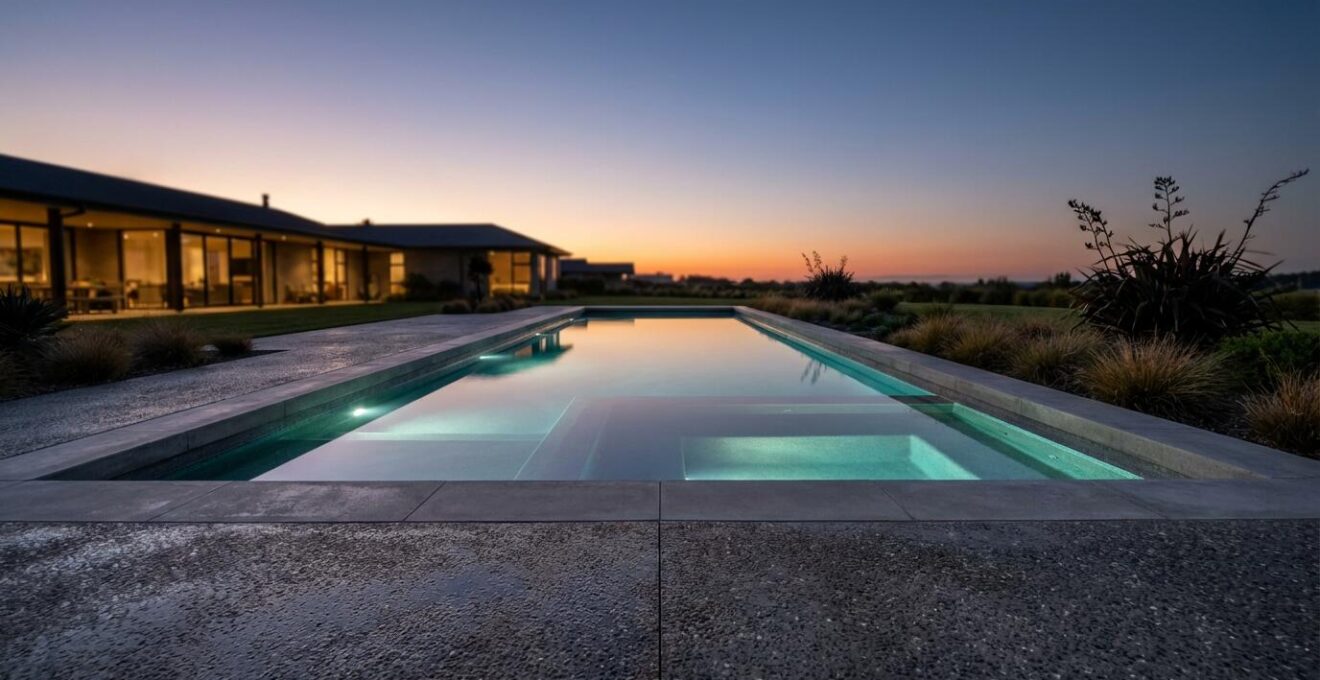
A reinforced concrete pool is not a backyard feature; it is a permanent structural asset that appreciates with the property, whereas a vinyl liner pool functions as a depreciating liability with a finite replacement cycle.
- The concrete shell offers a 50+ year lifespan, allowing for multiple “renewal” cycles (resurfacing) that adapt to new technologies and design trends without complete demolition.
- Vinyl liners require total replacement every 7-10 years, representing a recurring capital expense that adds no long-term equity to the property.
Recommendation: Homeowners focused on long-term capital improvement should view the higher initial cost of concrete not as an expense, but as an initial investment in a permanent, value-adding structural element of the real estate.
When evaluating a significant capital improvement like a swimming pool, long-term homeowners and property investors must look beyond the initial installation cost. The prevailing debate often simplifies the choice to a mere trade-off between the upfront expense of concrete and the lower entry price of vinyl liners. This perspective, however, misses the fundamental difference in how these two options perform as real estate assets over a multi-decade horizon. A pool is not just for swimming; it’s an integral part of your property’s financial lifecycle.
The conversation must shift from “what does it cost today?” to “how does this investment behave over 20 years?” A vinyl liner pool is, by its nature, a temporary installation. Its value is highest on day one and depreciates to zero with every passing year, culminating in a mandatory and costly replacement. A reinforced concrete pool, conversely, should be viewed in the same category as the home’s foundation. It is a permanent, structural element that can be renewed, repaired, and updated, allowing it to retain and even grow its value alongside the property itself. This guide dissects the structural and financial mechanisms that underpin this crucial distinction, providing a clear framework for making a sound, long-term investment decision.
This article will explore the critical factors, from resurfacing economics to structural repair capabilities, that establish the superior long-term value of concrete pools. The following sections provide a detailed analysis for the discerning property owner.
Summary: An Investor’s Guide to Pool Construction and Long-Term Value
- How to resurface a concrete pool without removing the original shell?
- Why the tile line cracks first and how to fix the bond beam?
- Concrete vs Fiberglass: Which Material Truly Lasts 50+ Years?
- The plastering mistake that leads to slow leaks in concrete shells
- When to choose concrete for commercial-grade durability in residential settings?
- Which Luxury Pool Features Add Real Value to a $2 Million Property?
- Why Shotcrete is the Only Viable Option for Complex Free-Form Pool Designs?
- How to Fix Soil Subsidence Around Your Pool Deck Before Pipes Break?
How to resurface a concrete pool without removing the original shell?
The single greatest advantage of a concrete pool from an asset perspective is its inherent renewability. Unlike a vinyl liner, which must be completely discarded and replaced, a concrete shell is a permanent canvas. Resurfacing is not a mere repair; it is a renewal cycle that allows the owner to upgrade the pool’s aesthetics and technology without altering its core structure. This process involves draining the pool, preparing the existing surface by chipping or sandblasting, and applying a new finish. This ability to be “reborn” is central to its long-term value proposition.
The cost of this renewal is a key financial data point. According to 2024 industry data, resurfacing a concrete pool costs approximately $6,500 per 1,000 square feet, a significant investment but far less than a total rebuild. More importantly, each cycle allows for an upgrade. A pool originally finished with standard plaster in the 1990s can be upgraded to a high-performance pebble or glass bead finish today, effectively resetting its aesthetic lifespan and boosting its appeal. This adaptability ensures the pool never becomes functionally or visually obsolete. Industry analysis confirms that concrete pools maintain structural integrity for over 50 years, accommodating multiple such resurfacing cycles. This stands in stark contrast to vinyl pools, which necessitate a complete liner replacement every 7-10 years—a recurring expense that adds no lasting value.
The choice of resurfacing material directly impacts the length of the next renewal cycle and the return on investment. A standard plaster finish may be cost-effective but offers a shorter lifespan, while premium finishes provide decades of durability.
| Material | Cost per sq ft | Lifespan | ROI Impact |
|---|---|---|---|
| Standard Plaster | $4-6 | 10 years | Standard |
| Pebble Finish | $10-12 | 20+ years | High |
| Glass Bead | $15-20 | 20+ years | Premium |
| EcoFinish Polymer | $10-15 | 15-20 years | High |
Ultimately, the ability to resurface means a concrete pool’s value is not tied to a single, depreciating surface but to the enduring strength of its underlying shell.
Why the tile line cracks first and how to fix the bond beam?
For a long-term investor, understanding an asset’s common failure points and their reparability is crucial. In concrete pools, hairline cracks in the waterline tile are often the first sign of stress. This is not a sign of catastrophic failure but rather evidence that a specific structural component—the bond beam—is performing exactly as designed. The bond beam is the thick, reinforced concrete perimeter at the top of the pool shell that provides the structure with its rigidity and serves as the foundation for the coping and tile.
This component is engineered to absorb the majority of environmental stress, from ground movement to the immense pressure of freeze-thaw cycles. As a leading industry expert explains, this is a feature, not a bug. In the “Swimming Pool Steve Technical Guide,” the point is made with clarity:
The bond beam is designed as the pool’s ‘expansion joint,’ absorbing the brunt of freeze-thaw cycles and ground movement, thus protecting the main structural shell from catastrophic stress
– Swimming Pool Steve, Swimming Pool Steve Technical Guide
Because the bond beam is designed to be the point of flex, it is also the most common area for cosmetic issues like tile cracks to appear. The good news for the property owner is that this is a localized and highly repairable issue. The fix addresses the root cause without requiring a full pool replacement, reinforcing the concrete pool’s status as a serviceable asset. The process is methodical and targets the specific point of failure, preserving the rest of the structure.
Action Plan: Bond Beam and Tile Line Repair
- Drain and Inspect: Lower the water level to fully expose the bond beam and tile line. Use dye testing on visible cracks to trace the paths of water migration and identify the full extent of the damage.
- Demolition and Cleaning: Carefully remove all damaged tiles and grout. Thoroughly clean the exposed bond beam surface, removing any loose material to ensure a strong bond for the repair.
- Structural Repair: Apply a high-strength hydraulic cement or use epoxy injection methods to fill and seal all structural cracks within the bond beam, restoring its monolithic integrity.
- Retiling: Install new waterline tiles using a flexible, waterproof adhesive and grout specifically formulated to accommodate minor movement and temperature fluctuations.
- Seal Expansion Joints: Finish by applying a high-grade, elastomeric caulk to the expansion joint between the pool coping and the deck, providing a final layer of flexible protection.
This repairability stands in stark contrast to a tear in a vinyl liner, which often requires a full, costly replacement and can lead to hidden damage from water escaping behind the liner.
Concrete vs Fiberglass: Which Material Truly Lasts 50+ Years?
When considering a generational asset, a 20-year horizon is just the beginning. The ultimate measure of a pool’s structural value is its ability to last 50 years or more. This brings the conversation to the core materials: reinforced concrete versus a prefabricated fiberglass shell. While fiberglass is often marketed for its smooth surface and quick installation, its long-term structural performance and value retention are fundamentally different from concrete. A fiberglass pool is a manufactured product with a finite lifespan determined by its gelcoat and structural flexibility.
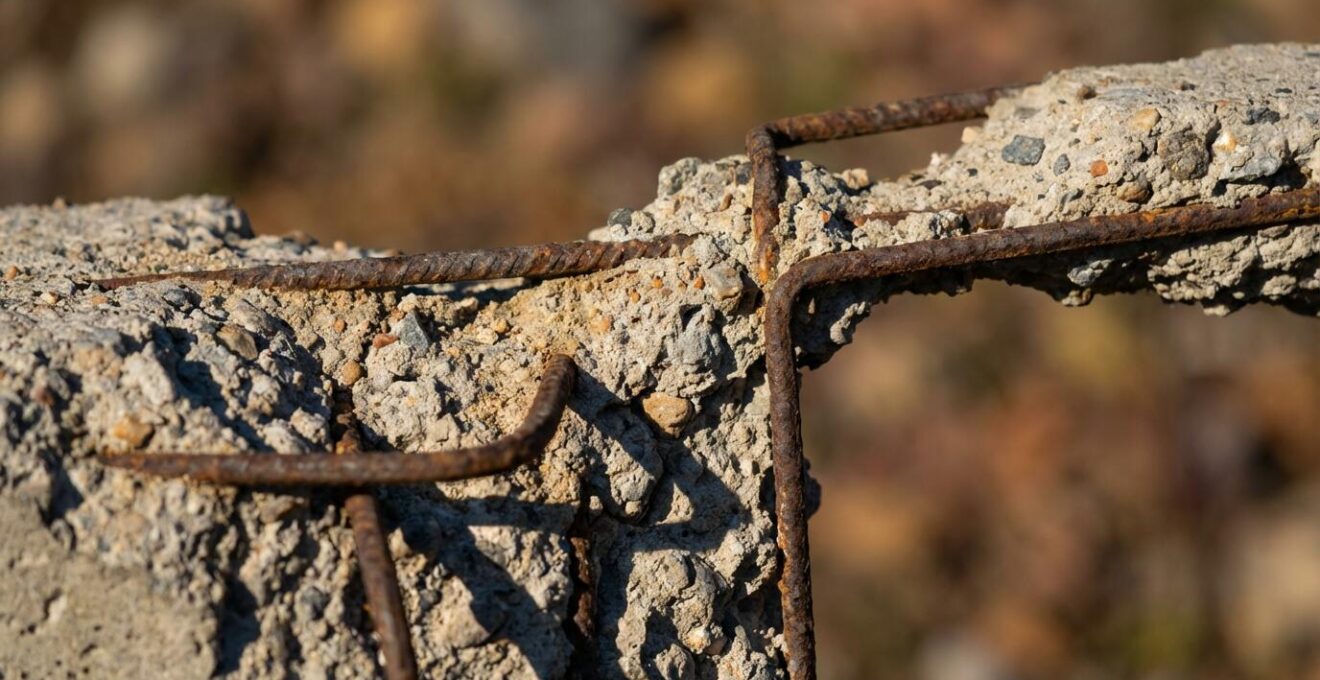
A reinforced concrete pool, on the other hand, is a custom-built structure. Its longevity is not dependent on a single surface layer but on the symbiotic strength of steel rebar and concrete. The steel provides tensile strength (resisting pulling forces), while the concrete provides compressive strength (resisting crushing forces). This composite structure is what allows for the construction of city bridges, skyscrapers, and, on a smaller scale, a pool shell designed to last for generations. Engineering data consistently confirms that properly installed concrete pools maintain a 50+ year for shell structure. The shell itself is permanent; only the interior finish is a renewable component.
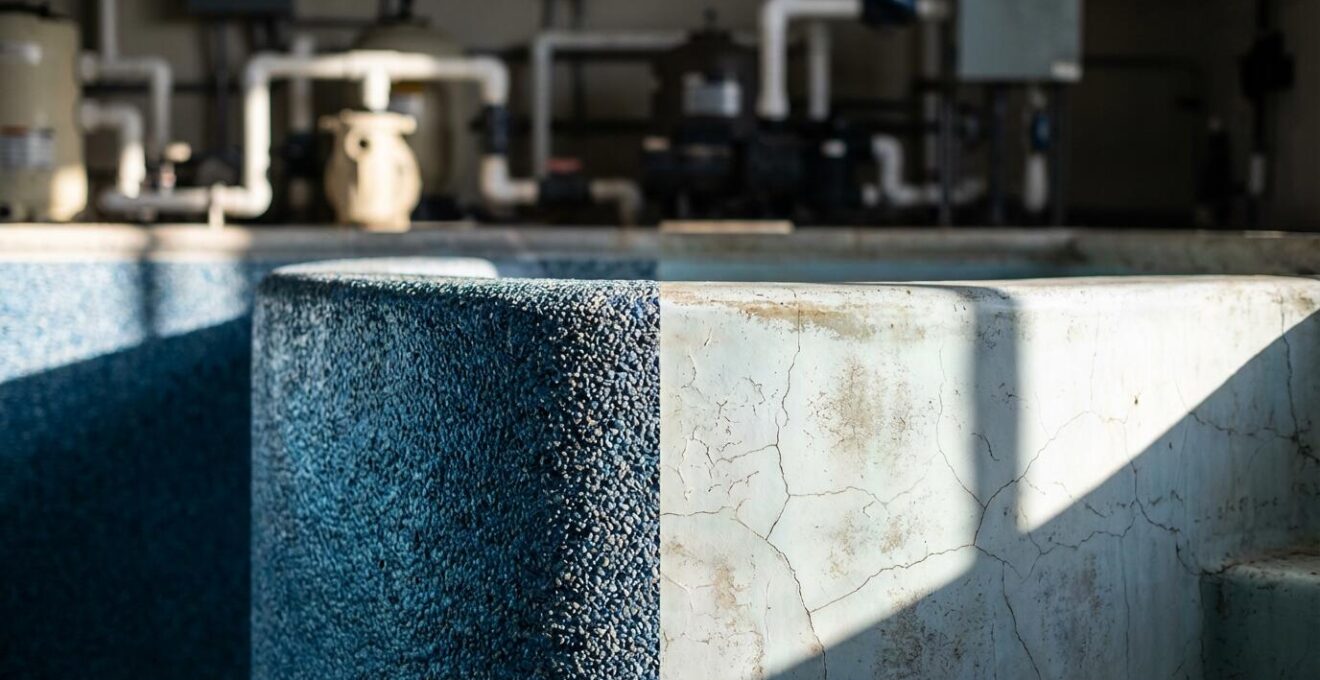
In contrast, a fiberglass shell’s value is tied to its gelcoat finish. Over 15-25 years, this finish can degrade, leading to chalking, fading, and spider cracks. While it can be refinished, the process is complex and costly, and the repaired shell never quite regains its original monolithic strength. Furthermore, fiberglass pools are more susceptible to damage from ground shifts or improper water balance, which can cause bulges or cracks in the shell that are difficult, if not impossible, to repair seamlessly. The concrete pool’s ability to be resurfaced repeatedly gives it a clear advantage in achieving true multi-generational longevity.
For the long-term investor, the choice is clear: one material offers a path to permanent structural integrity, while the other presents a timeline with a fixed endpoint.
The plastering mistake that leads to slow leaks in concrete shells
An informed investor must also understand an asset’s potential vulnerabilities. For concrete pools, one of the most insidious issues is a slow, almost undetectable leak. While opponents might point to this as a weakness, the reality is that these leaks are overwhelmingly caused by a specific, preventable application error, not a fundamental flaw in the material itself. The most common culprit is the formation of a “cold joint” during the plastering phase.
A cold joint occurs when the application of plaster is paused long enough for one section to begin curing before the next wet section is applied. This creates a weak seam or micro-gap in the plaster layer, which, over years of hydrostatic pressure, can become a vector for water migration. According to professional pool inspectors, this single mistake accounts for a significant portion of chronic issues; it’s reported that improper plastering technique, particularly the creation of cold joints, is responsible for 35% of slow leaks in concrete pools. This highlights the absolute necessity of hiring certified, experienced applicators who can plaster the entire pool in one continuous session.
However, even when this mistake occurs, the concrete pool’s serviceability provides a solution that is far superior to the alternative in a vinyl pool. A slow leak in a vinyl liner is often a precursor to catastrophic failure, requiring a full replacement costing thousands. In a concrete pool, a leak from a cold joint can be precisely located using dye testing and repaired through targeted epoxy injection. This repair costs a fraction of a full replaster—and exponentially less than a vinyl liner replacement—while restoring the shell’s watertight integrity. This transforms a potential defect from a catastrophic liability into a manageable maintenance item, further cementing the concrete pool’s status as a durable, repairable asset.
The key takeaway is that even the primary failure mode of a concrete shell is both preventable through proper craftsmanship and economically repairable when it does occur.
When to choose concrete for commercial-grade durability in residential settings?
The decision to opt for a reinforced concrete pool transcends simple preference when certain property conditions or use-cases demand commercial-grade durability. For a long-term homeowner, identifying these scenarios is key to maximizing property value and minimizing future liabilities. A concrete pool is not just a stronger choice; in some situations, it is the only structurally sound and financially prudent option. Research consistently shows that while any pool can add enjoyment, concrete pools are recognized by appraisers as a significant capital improvement. This is reflected in data showing that concrete pools typically add a 5-8% home value increase, a figure that other types struggle to match over the long term.
Certain situations demand this level of structural performance. For luxury rental properties or multi-family estates anticipating heavy, year-round use, a vinyl liner’s fragility is a significant liability. A concrete shell is built to withstand the traffic of hundreds of users. Moreover, for properties built on hillsides or with complex topography, a concrete pool can be engineered to act as an integral part of the landscape’s retaining wall system, providing a dual structural and recreational purpose that a prefabricated shell cannot. This integration is a hallmark of high-end architecture.
The following table illustrates scenarios where the higher initial investment in concrete is not just recommended but essential for the property’s long-term stability and value.
| Property Type | Recommended Pool Type | Key Advantage | 10-Year Cost |
|---|---|---|---|
| Luxury Rental | Reinforced Concrete | Handles 300+ use days/year | $85,000-$200,000 |
| Multi-Family Estate | Reinforced Concrete | Supports heavy traffic | $85,000-$200,000 |
| Hillside Property | Reinforced Concrete | Acts as retaining wall | $85,000-$200,000 |
| Standard Residential | Vinyl Liner | Lower initial cost | $65,000-$125,000 |
In these cases, choosing concrete is not a luxury; it is a fundamental investment in the property’s core infrastructure and long-term financial performance.
Which Luxury Pool Features Add Real Value to a $2 Million Property?
On a high-value property, a pool must be more than a basin of water; it must be an architectural feature that enhances the estate’s overall aesthetic and monetary worth. This is where reinforced concrete’s capabilities truly separate it from any alternative. The features that add quantifiable value in an appraisal are those that are permanent, structural, and integrated—qualities that are the exclusive domain of custom concrete construction.
Appraisers are trained to distinguish between personal property and permanent real estate improvements. A standalone, plastic hot tub, for example, is considered personal property and adds zero value to the home’s appraisal. An integrated concrete spa, built into the pool’s structure and sharing its circulation and heating systems, is seen as a permanent upgrade. The Professional Appraisers Association’s guidelines are explicit on this point:
An integrated concrete spa might retain 50-70% of its cost in an appraisal, while a standalone hot tub is considered personal property with zero value added to the real estate
– Professional Appraisers Association, 2024 Luxury Property Valuation Guidelines
This principle applies across a range of high-impact features. A knife-edge perimeter overflow, which creates a stunning mirror-like water surface, is only possible with the precise engineering of a concrete shell. Structural deep-end viewing windows, cantilevered decks that seem to float over a slope, and integrated fire bowls are not add-ons; they are bespoke architectural elements that a vinyl or fiberglass pool simply cannot support. These features require a monolithic structure that can be shaped and reinforced to handle immense and complex structural loads. For an owner of a $2 million property, investing in these features is a direct investment in the property’s marketability and appraisal value.
Consider these value-adding features, all uniquely suited to concrete construction:
- Knife-Edge Perimeter Overflow: Creates a seamless, mirror-like water surface that merges with the deck.
- Integrated Spa: A spa built into the pool’s structure, sharing heating and filtration for a unified aesthetic and function.
- Deep-End Viewing Window: A thick, acrylic panel built into the pool wall, creating a dramatic underwater observatory.
- Cantilevered Sections: Portions of the pool structure that extend over a slope without visible support, an impressive architectural feat.
- Integrated Fire & Water Features: Fire bowls or waterfalls built directly into the concrete structure, creating a permanent and dramatic ambiance.
These features transform the pool from a recreational amenity into a cornerstone of the property’s luxury identity and financial worth.
Why Shotcrete is the Only Viable Option for Complex Free-Form Pool Designs?
The true measure of a construction method’s value lies in its ability to execute a unique vision without compromise. For homeowners desiring a pool that is a true work of art—with organic curves, naturalistic grottos, or dramatic vanishing edges—the construction method of choice is unequivocally shotcrete. Shotcrete, a method of applying concrete pneumatically at high velocity, creates a seamless, monolithic vessel that is essential for achieving complex geometries. This is not possible with prefabricated panels (fiberglass) or flexible liners (vinyl), which are limited to a library of predetermined shapes.
The engineering advantage of shotcrete is its ability to create a true composite material on site. The process involves building a cage of steel rebar in the desired shape and then spraying the concrete mixture around it, completely encasing the steel. This creates a single, joint-free structure where the concrete’s compressive strength and the steel’s tensile strength work in perfect symbiosis. This monolithic construction is what enables the creation of features like integrated boulders, underwater benches, and multi-level designs that flow with the landscape. A vinyl liner, by contrast, can only be draped into a pre-dug hole, and a fiberglass shell is a rigid, factory-made shape that must be craned into place, forcing the landscape to conform to it.
This level of customization and structural integrity comes with a trade-off in time. While a vinyl liner pool can be installed in weeks, engineering analysis shows that complex shotcrete pools require a 3-6 months installation period. For the long-term investor, this extended timeline is not a deterrent but an indicator of the quality and permanence of the construction. It is the time required to build a lasting architectural feature, not to install a temporary appliance. The result is a one-of-a-kind asset that is fully integrated with the property and impossible to replicate with mass-produced methods, giving it a unique and enduring value.
Ultimately, shotcrete provides the freedom to design a pool that is an extension of the home’s architecture and the owner’s vision, a level of bespoke value that other materials cannot approach.
Key Takeaways
- A concrete pool shell is a 50+ year asset; its surface is a renewable component, separating its structural life from its aesthetic life.
- Concrete’s primary failure points (bond beam, plaster joints) are engineered to be serviceable, making it a repairable asset, not a disposable one.
- The ability to integrate structurally with the landscape and support high-value architectural features gives concrete a definitive edge in property appraisal value.
How to Fix Soil Subsidence Around Your Pool Deck Before Pipes Break?
One of the most significant long-term risks to any in-ground pool is soil subsidence—the gradual sinking or settling of the ground around the structure. This can be caused by soil erosion, poor compaction during construction, or changing water tables. For a homeowner, this is not just a cosmetic issue; it can lead to cracked decks, uneven coping, and, most critically, sheared plumbing lines, resulting in catastrophic leaks and costly repairs. How each pool type responds to this threat is a final, crucial test of its long-term value as an asset.
A vinyl liner pool is exceptionally vulnerable to soil subsidence. The structure consists of separate components: the excavated hole, sand base, wall panels, and the liner itself. When the ground shifts, it can create voids beneath the liner, causing it to stretch and potentially tear. The shifting can also misalign wall panels or damage the relatively fragile plumbing. Often, the only solution is to excavate, re-grade, and replace the entire pool. For a concrete pool, the story is entirely different. Its monolithic, reinforced structure acts as a rigid, self-supporting vessel. While the surrounding deck may settle, the pool shell itself is far more resistant to movement.
More importantly, when subsidence does occur around a concrete pool, there are permanent, engineering-grade solutions. Techniques like foam jacking (injecting polyurethane foam to lift slabs) or the installation of helical piers (steel piles screwed deep into stable soil to support the structure) can re-level the deck and even the pool shell itself. These are permanent structural repairs. Attempting these methods on a vinyl pool risks puncturing the liner or cracking the wall panels. Addressing deck issues alone can be a significant expense, as pool deck resurfacing to address subsidence costs $2,250 to $3,750, but this is minor compared to a full replacement.
| Solution Method | Concrete Pool | Vinyl Pool | Cost Range |
|---|---|---|---|
| Foam Jacking | Highly Effective | Risk of Liner Damage | $300-800/area |
| Helical Piers | Permanent Solution | Not Recommended | $1,500-3,000/pier |
| Mudjacking | Good for Minor Issues | May Cause Shifting | $500-1,500/area |
| Complete Replacement | Last Resort | Often Necessary | $5,000-15,000 |
This resilience in the face of geological stress is the ultimate proof of the concrete pool’s status as a permanent, durable asset, while the vinyl pool’s fragility confirms its position as a temporary, high-risk liability.
Frequently Asked Questions About Concrete Pool Construction
What causes cold joints in pool plaster?
Cold joints occur when the application of plaster is interrupted, allowing one section to begin setting before the next wet section is applied. This creates a weak bond between the sections that can become a future leak path. It is purely an issue of craftsmanship.
How long should professional plastering take?
To avoid cold joints, a certified and experienced crew should complete the entire plastering process for an average-sized residential pool in one continuous session, typically lasting 6 to 8 hours. Any significant pause risks the integrity of the finish.
Can cold joint leaks be repaired without replastering?
Yes. In most cases, leaks originating from cold joints can be precisely located and sealed from within the structure using specialized epoxy injection techniques. This targeted repair is significantly less expensive than a full replastering and effectively restores the shell’s watertight integrity.