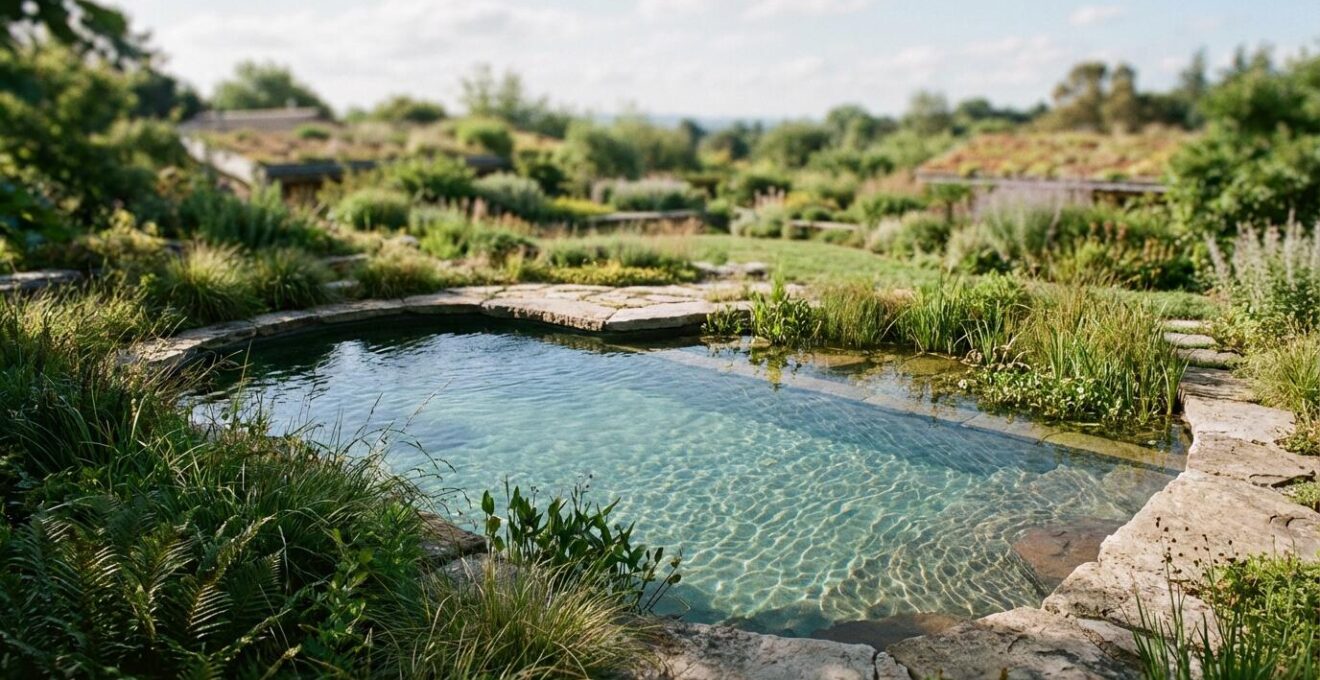
The “clean” feeling of a traditional chlorine pool is a wellness paradox; you’re often swimming in a cocktail of regulated toxins that can harm your health.
- Conventional pools create disinfectant by-products like chloramines and trihalomethanes, which are linked to skin irritation, respiratory issues, and are even considered carcinogenic.
- Modern eco-friendly systems (Mineral, UV, Ozone) don’t just reduce chemicals—they create biocompatible, therapeutic water that actively soothes skin and improves well-being.
Recommendation: Shift your focus from simply sanitizing your pool to transforming it into a proactive health asset for your family by evaluating modern, non-toxic water treatment solutions.
For many pool owners, the sharp, “sanitary” smell of chlorine is the scent of a clean, safe summer. It’s a routine: test the water, add the chemicals, and trust that the pool is ready for the family. But what if that feeling of “fine” is a carefully constructed illusion? What if the very chemicals used to ensure safety are silently contributing to skin conditions like eczema, triggering asthma, and exposing your loved ones to a host of toxic by-products? This is the wellness paradox of modern swimming pools. Many people believe saltwater pools are a “natural” alternative, but they operate by generating their own chlorine, perpetuating the same fundamental issues.
The conversation around pool sanitation is evolving beyond a simple environmental debate. It’s becoming a crucial discussion about long-term health and proactive wellness. The real question is no longer just about reducing your carbon footprint, but about fundamentally changing the water your family is immersed in. It’s about moving from a sterile, chemical-laden environment to one that is biocompatible, therapeutic, and genuinely restorative. This isn’t about compromising on cleanliness; it’s about achieving a superior level of sanitation through smarter, healthier technology.
This guide will deconstruct the true costs—both financial and health-related—of sticking with a traditional chlorine system. We will explore the science behind biocompatible water, detail how to convert your existing pool into a health-promoting oasis, and demystify the technologies that make it possible. It’s time to redefine what a “clean” pool truly means and transform it from a seasonal chore into a year-round wellness asset.
In the following sections, we will break down the financial realities, the conversion process, the key technologies, and the profound health benefits of making the switch. This comprehensive overview will provide you with the clarity needed to make an informed decision for your home and family’s well-being.
Summary: A Guide to Upgrading Your Pool for Health and Sustainability
- How much do traditional chemicals really cost you per season compared to natural systems?
- How to convert a chlorine pool to a mineral system without draining all the water?
- UV vs Ozone: Which Supplemental Sanitizer Reduces Chemical Use by 80%?
- The “Natural Pool” scam that leaves water unsafe for swimming
- When to run your eco-pump to maximize sanitization with solar energy?
- How Bio-Mineral Filtration Relieves Eczema Symptoms for Daily Swimmers?
- Why Magnesium Pools Are the New Standard for Wellness Retreats at Home?
- How to Maintain 28°C Water Temperature in October Without Bankrupting Yourself?
How much do traditional chemicals really cost you per season compared to natural systems?
The financial argument for sticking with chlorine often hinges on its low upfront cost. A bucket of tablets seems far more economical than investing in a new sanitation system. However, this view is shortsighted and ignores the total cost of ownership (TCO). When you factor in seasonal chemical refills, corrosive damage to equipment, and the hidden health costs of chemical exposure, the picture changes dramatically. A traditional system is a constant expense, whereas a natural system is an upfront investment that yields long-term savings.
Natural systems significantly reduce the need for ongoing chemical purchases, often by 80% or more. But the savings extend beyond just chemicals. Eco-friendly pools are designed for efficiency. For instance, advanced pumps are a cornerstone of these systems, and modern variable-speed pumps can save pool owners over $300 annually in electricity costs alone. Furthermore, the less corrosive nature of mineral-treated water extends the life of your pool heater, liner, and plumbing, deferring expensive replacement costs. While the initial investment for a full conversion to a natural system can be significant, ranging from $7,500 to over $10,000 for advanced setups, the return on investment is measured in both dollars and well-being.
To truly understand the financial impact, you must look beyond the first season. A five-year analysis reveals a compelling story where lower operational expenses and reduced wear-and-tear on equipment begin to offset the initial installation cost, creating a clear path to long-term value.
Your 5-Year Cost-Benefit Checklist: Chlorine vs. Natural System
- Calculate Initial Investment: Tally the upfront cost for equipment. (e.g., Oxygenated/Mineral Systems: ~$7,500-$10,700 vs. Traditional Chlorinators: ~$1,500-$2,500).
- Project Annual Chemical Savings: Estimate your current yearly spending on chlorine, shock, and algaecides. A natural system typically reduces this by at least 80%.
- Factor in Energy Savings: Compare your current pump’s energy consumption to that of a variable-speed pump, which often runs at a lower, more efficient speed for longer periods.
- Assess Equipment Longevity: Consider the corrosive effects of high chlorine levels on your pool’s surfaces, heater, and plumbing. Factor in a reduced likelihood of premature replacement with a natural system.
- Quantify Health-Related Savings: Account for potential savings from reduced spending on skin irritation treatments (creams, lotions) and less frequent replacement of faded swimwear.
How to convert a chlorine pool to a mineral system without draining all the water?
The thought of converting a pool often conjures images of a construction zone: draining thousands of gallons of water, extensive replumbing, and weeks of downtime. Fortunately, upgrading to a modern bio-mineral system is a far simpler and less disruptive process. These systems are designed to be retrofitted into existing pool plumbing, making the transition smooth and efficient. You can transform your pool from a chemical-dependent liability to a health-promoting asset in a matter of hours, not weeks, and without wasting a single drop of water.
The core of the conversion involves integrating a mineral cartridge system into the plumbing line after the filter and before the water returns to the pool. This is a straightforward plumbing task. The first step is to test your pool’s current water chemistry and gradually neutralize the high levels of chlorine. Once the water is balanced, the mineral system is installed inline. Unlike saltwater generators, most mineral systems require no complex electrical wiring, as they operate passively by releasing a controlled dose of silver and copper ions as water flows through them. These minerals act as a natural sanitizer and algaecide.
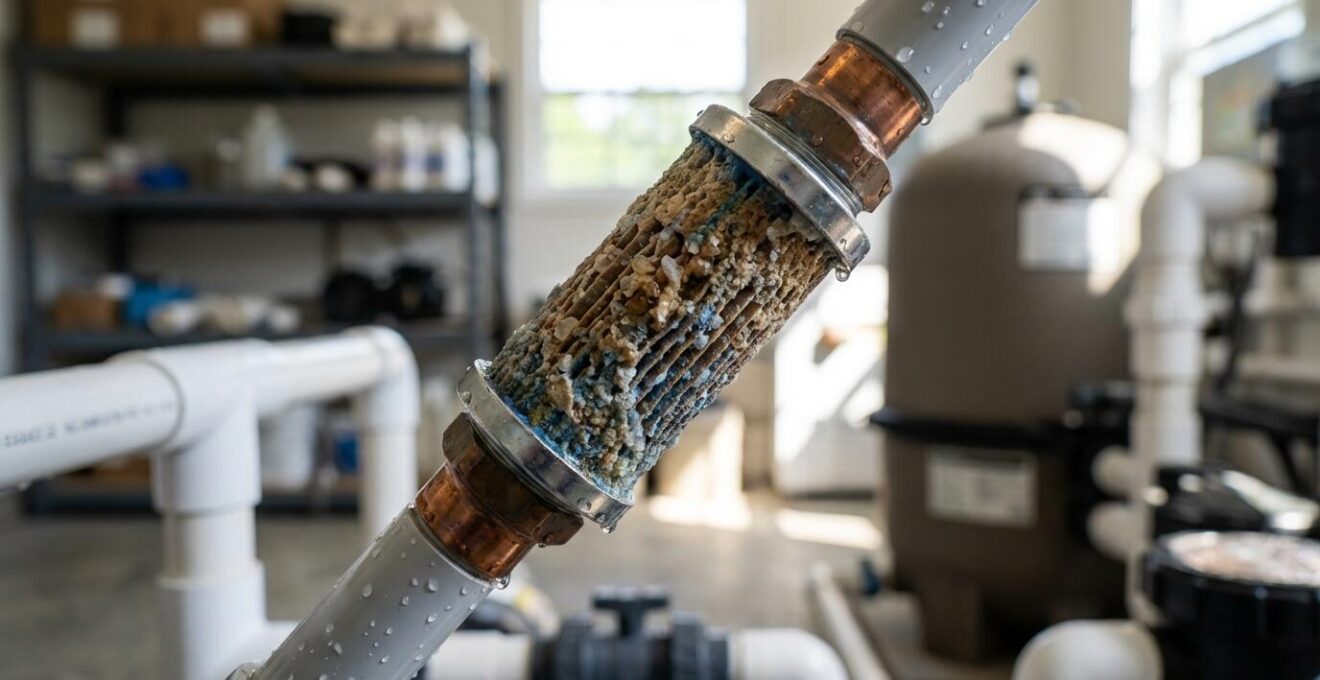
Once installed, a mineral reservoir is added, which typically lasts for an entire six-month swim season. A small, supplementary dose of chlorine (or another oxidizer) is still used, but the required levels are drastically lower—around 0.5-1.0 ppm, similar to drinking water standards, compared to the 2.0-5.0 ppm in a traditional chlorine pool. This minimal level is just enough to oxidize contaminants, while the minerals do the heavy lifting of sanitizing, creating water that is both incredibly clean and gentle on the body.
UV vs Ozone: Which Supplemental Sanitizer Reduces Chemical Use by 80%?
While mineral systems form the foundation of many eco-friendly pools, supplemental sanitizers like Ultraviolet (UV) and Ozone are the force multipliers that enable a near-total reduction in chemical use. These technologies work by destroying contaminants on a microscopic level, acting as a powerful line of defense that purifies water before it even returns to the pool. They are the key to achieving water that is not just clean, but truly pristine. Both UV and Ozone are highly effective, but they operate differently and are suited for different needs.
A UV system works passively. As water is pumped from the pool, it passes through a chamber containing a powerful UV-C lamp. This intense light instantly neutralizes 99.9% of harmful microorganisms, including chlorine-resistant pathogens like Cryptosporidium and Giardia. It’s a point-of-contact sterilization that leaves no residual chemicals in the water. An Ozone system, by contrast, is an active sanitizer. It generates ozone gas (O3), a powerful oxidizer, and injects it into the water line. The ozone actively destroys contaminants, oils, and lotions, and then quickly reverts to regular oxygen (O2), leaving the water exceptionally clear and fresh. For the ultimate in non-chlorine sanitation, Advanced Oxidation Process (AOP) systems combine both UV and Ozone in a single unit, creating hydroxyl radicals that are even more powerful than ozone alone.
The following table, based on data from an analysis of non-toxic pool solutions, breaks down the key differences to help you decide which technology best fits your pool and lifestyle.
| Feature | UV Systems | Ozone Systems | Combined AOP |
|---|---|---|---|
| Sanitization Type | Passive (water passes through) | Active (works in water) | Both passive and active |
| Chemical Reduction | 60-70% | 60-90% | Up to 95% |
| Installation Cost | $1,500-$3,000 | $2,000-$4,000 | $4,000-$7,000 |
| Best For | Low bather load | High bather load | Maximum sanitization |
| Residual Effect | None | Yes | Yes |
The “Natural Pool” scam that leaves water unsafe for swimming
The term “natural pool” often evokes idyllic images of swimming in a pristine, plant-filled pond. While these true natural swimming pools (NSPs) exist, they are complex ecosystems that rely on a large, dedicated “regeneration zone” where aquatic plants filter the water. They are beautiful but require specific expertise and significant space. A dangerous misconception has emerged where some pool owners, in an attempt to go “natural,” simply stop adding chlorine to a standard pool. This is not a natural pool; it’s a stagnant, un-sanitized pond that quickly becomes a breeding ground for dangerous bacteria, algae, and pathogens, making it completely unsafe for swimming.
The real danger lies in the very chemicals we trust for sanitation. The goal isn’t just to eliminate chlorine, but to replace it with a system that provides superior, verifiable sanitization without creating harmful by-products. This is where the “wellness paradox” of chlorine becomes starkly clear. As experts in natural filtration technology point out, the industry often overlooks the dark side of chlorination.
Chlorination in drinking water over the past 20 years has led to the discovery of 600 toxic disinfectant by-products. The main ones: chloramines and trihalomethanes are now regulated in most countries and recognised as toxic, and, in the case of trihalomethanes, carcinogenic… Whilst the swimming pool industry perpetuates its health and wellness tag, there is a ‘wellness paradox’ where swimmers are exposed to unregulated toxic chemicals.
– Clear Water Revival, Natural Swimming Pool Filtration Technology
A modern eco-friendly pool—often called a bio-mineral or semi-natural pool—bridges this gap. It uses technology like mineral ionizers, UV, and ozone to achieve scientifically proven sanitation, eliminating the need for high chemical levels and their toxic side effects. It provides the safety and clarity of a traditional pool with the gentle, healthy water of a natural spring. It’s the intelligent, safe middle ground between a chemical-heavy pool and an un-sanitized pond.
When to run your eco-pump to maximize sanitization with solar energy?
An eco-friendly pool is more than just its water; it’s a holistic system where every component works in synergy to maximize efficiency and sustainability. The heart of this system is the variable-speed pump, and how you schedule its operation can dramatically impact both your energy bills and the effectiveness of your sanitation. The old-school mindset of running a single-speed pump for a fixed “8 hours a day” is obsolete. A smart, modern approach involves aligning pump runtime with natural energy sources and your pool’s actual usage patterns.
The key is to run your pump when energy is cheapest or free. If you have solar panels on your home, this is a game-changer. By scheduling your pump’s main filtration cycle during peak solar production hours (typically 10 AM to 4 PM), you can effectively run your pool for free. This timing also has a secondary sanitization benefit: the sun’s natural UV rays help break down contaminants in the water, complementing the work of your UV or mineral system. For maximum effectiveness, the pump should be programmed to run at a lower speed for a longer duration. This slow, steady circulation increases “dwell time”—the amount of time water spends inside your UV or ozone sanitizer—ensuring a more thorough and energy-efficient purification process.
Beyond the pump, other small upgrades contribute to overall efficiency. For example, switching to modern LED pool lights can use up to 80% less energy than outdated incandescent bulbs while providing superior illumination. Smart automation systems can tie everything together, syncing the pump’s operation with solar panel output and sanitizer needs, ensuring the pool only uses the precise amount of energy required at any given moment.
- Run during peak solar hours (10 AM – 4 PM) for free energy and maximum natural UV exposure.
- Program for low RPMs over longer periods to increase sanitizer dwell time and reduce energy draw.
- Schedule a short, high-speed cycle immediately after heavy use (like a pool party) for rapid debris removal.
- Use smart automation to sync the pump with real-time solar output and sanitizer demands.
- Avoid running 24/7. A properly automated system only runs when necessary, maximizing efficiency.
How Bio-Mineral Filtration Relieves Eczema Symptoms for Daily Swimmers?
For parents of children with eczema or anyone with sensitive skin, a traditional chlorine pool can be a source of dread. The harsh chemicals strip the skin of its natural oils, leading to dryness, itching, and painful flare-ups. This often forces a choice between enjoying the pool and managing skin health. Bio-mineral filtration, particularly systems enriched with magnesium, completely changes this dynamic. Instead of being an irritant, the pool water becomes a soothing, therapeutic environment that can actively relieve eczema symptoms.
The magic lies in creating biocompatible water. Chlorine and its by-products are aggressive irritants that disrupt the skin’s delicate barrier. In contrast, magnesium-rich water is renowned for its hydrating and anti-inflammatory properties. A clinical study published in the International Journal of Dermatology found that bathing in magnesium-rich salt solutions resulted in a significant reduction in skin roughness and redness. The study concluded that magnesium enhances skin barrier function and boosts hydration. When your pool water mirrors this therapeutic composition, swimming is no longer a cause of irritation but a form of relief.

This isn’t just a scientific theory; it’s a lived experience for many families who have made the switch. The difference is often immediate and profound, transforming the post-swim routine from a desperate rush to the shower to a feeling of soft, hydrated skin.
Case Study: Eva’s Eczema Relief
Brisbane mother Natalie McKeering shared the story of her daughter, Eva, 11, who suffers from severe eczema. After swimming in a regular chlorine pool, Eva would experience intense itching and tingling, requiring an immediate shower. Her condition became so bad during the dry season that she had to stop swim squad. Recently, she swam in a pool treated with a magnesium and ozone combination. Natalie reported that Eva didn’t need to shower afterwards, noting, “The water was so much more gentle on her skin and it actually felt softer and more hydrated afterwards.”
Why Magnesium Pools Are the New Standard for Wellness Retreats at Home?
The concept of soaking in mineral-rich water for health benefits is not new. For centuries, civilizations have sought out natural mineral springs for their healing properties—a practice now known as balneotherapy. Today, a magnesium pool brings this ancient tradition of therapeutic immersion into your own backyard. It elevates the pool from a place of recreation to a private wellness retreat, offering benefits that extend far beyond simple swimming to encompass stress relief, muscle recovery, and overall vitality.
Magnesium is a vital mineral for bodily function, playing a key role in over 300 enzymatic reactions. It’s essential for muscle relaxation, nervous system regulation, and energy production. Soaking in magnesium-rich water allows for transdermal absorption, a highly efficient way for the body to replenish its magnesium levels. This is why a swim in a magnesium pool can leave you feeling profoundly relaxed and rejuvenated. It helps soothe sore muscles after a workout, eases tension, and promotes a sense of calm and well-being. The water itself feels noticeably different—silky, soft, and smooth, without the stickiness or odor of chlorinated water.
The tradition of submerging in mineral-rich dense bodies of water can be traced back to the earliest civilizations… This practice is known as ‘balneotherapy’. Soaking in a magnesium pool is in fact, the simplest form of balneotherapy! The mineral-medicinal waters can produce the same desired revitalising effect due to vital salts and minerals scientifically proven to heal the body.
– Mineral Swim
This stark contrast in experience is why magnesium systems are becoming the default choice for high-end wellness retreats and health-conscious homeowners. The focus shifts from fighting against the water’s chemistry to working with it to create a health-enhancing environment. The difference is clear across every aspect of the swimming experience.
| Aspect | Traditional Chlorine Pool | Magnesium Pool |
|---|---|---|
| Skin Feel | Drying, irritating | Soft, silky, hydrating |
| Eye Irritation | Common red eyes | No irritation |
| Hair Health | Brittle, damaged | Maintained natural oils |
| Eczema Impact | Triggers flare-ups | Soothes inflammation |
| Therapeutic Value | Recreation only | Muscle recovery, stress relief |
| Water Maintenance | Weekly chemical balancing | Self-regulating minerals |
Key Takeaways
- The “clean” smell of chlorine is often from chloramines, irritants that indicate a problem, not a solution.
- Eco-friendly systems are not just about reducing chemicals; they create biocompatible water that is actively good for your skin and health.
- The true cost of a pool includes long-term chemical expenses, energy use, and equipment wear-and-tear, where natural systems offer significant savings over time.
How to Maintain 28°C Water Temperature in October Without Bankrupting Yourself?
Extending the swim season into the cooler months is a dream for many pool owners, but the fear of skyrocketing heating bills often keeps that dream at bay. Maintaining a comfortable 28°C (82°F) in October seems like a luxury reserved for the wealthy. However, applying the same principles of efficiency and sustainability used in eco-friendly sanitation can make year-round swimming surprisingly affordable. The key isn’t to generate more heat, but to be smarter about preserving the heat you already have.
The single greatest cause of heat loss in a pool is evaporation. A staggering 70% of heat escapes from the water’s surface. Therefore, the most impactful and cost-effective heating strategy is to use a high-quality pool cover. According to the Department of Energy, simply covering your pool when not in use can cut heating costs by up to 70%. This simple step acts as a lid, trapping warmth and preventing your investment from literally vanishing into thin air. For added protection, a liquid solar cover can be used as a supplement, creating an ultra-thin, invisible barrier that further reduces evaporation.
Your choice of heater also plays a crucial role. While gas heaters provide rapid heating, they are notoriously inefficient. An electric heat pump is a far more sustainable choice. It doesn’t create heat; it captures it from the ambient air and transfers it to the water, a process that makes it up to three times more energy-efficient than a gas heater. To further protect your warm water, consider creating natural windbreaks with fencing or landscaping to reduce heat loss from wind blowing across the surface. By combining these strategies, maintaining a warm, inviting pool through autumn becomes a manageable reality, not a financial burden.
- Install a pool cover: The most crucial step, reducing heat loss from evaporation by up to 70%.
- Use a heat pump: More energy-efficient than gas heaters for consistent temperature maintenance.
- Create windbreaks: Fencing or landscaping can shield the pool surface from wind, a major source of convective heat loss.
- Run the pump strategically: Use a variable-speed pump on a low setting overnight to circulate warm water and maintain a stable temperature.
- Consider solar heating panels: A fantastic supplement for free daytime heating, directly harnessing the sun’s energy.
You have now seen that the transition to an eco-friendly pool is not a compromise but a comprehensive upgrade. It is a deliberate shift from a model of chemical dependency to one of proactive health, sustainability, and long-term value. The time has come to stop asking if your chlorine pool is “fine” and start asking if it’s truly contributing to your family’s well-being. Evaluating your current setup against these modern, health-first solutions is the logical next step in transforming your pool into the wellness asset it was always meant to be.